
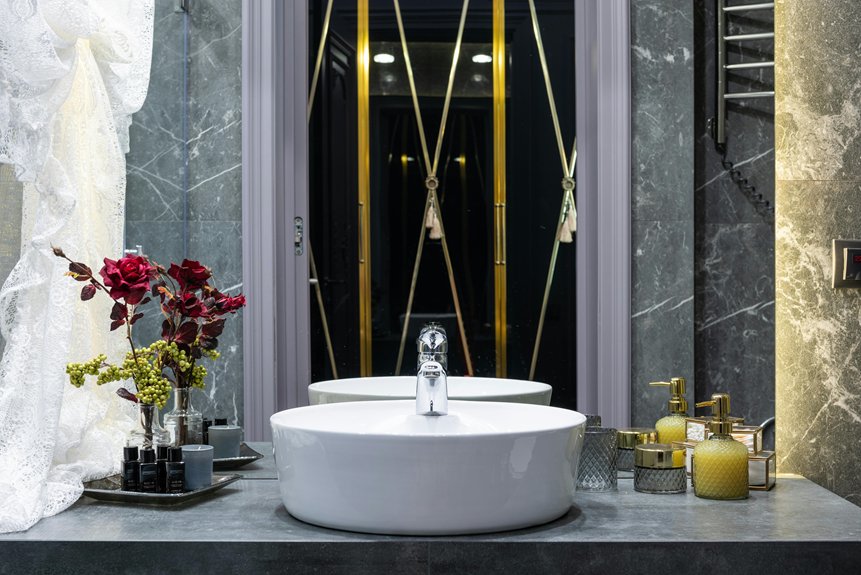
Your bathroom’s final price tag depends on seven interconnected factors. Size sets your baseline—powder rooms run $3,000–$6,000, master baths $15,000–$50,000+. Then scope matters: cosmetic updates cost $2,000–$7,000, while full gut remodels demand considerably more. Material quality, hidden plumbing and electrical costs, labor percentages, premium features like smart mirrors, and your geographic location all stack up fast. One designer put it bluntly: clients want high-end bathrooms on limited budgets. Understanding how these seven pieces interact reveals where your money actually goes.
Bathroom Size Sets Your Baseline Budget
Why does bathroom renovation always feel like choosing between feeding your kids and funding their future therapy sessions?
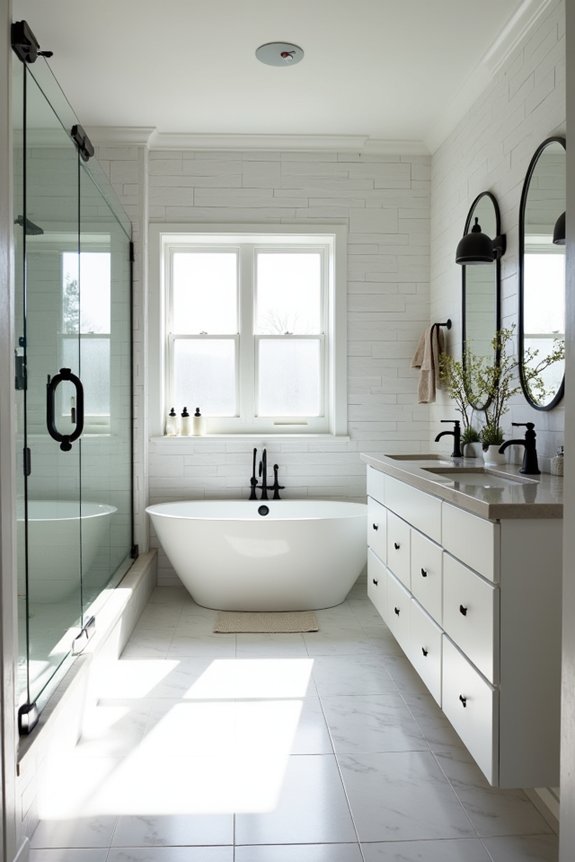
Your bathroom size determines everything—it’s the foundation of your baseline budget. A powder room runs $3,000–$6,000, while master bathrooms balloon to $15,000–$50,000+. I learned this the hard way when my contractor casually mentioned my “modest” bathroom actually required gutting walls.
Larger bathrooms demand more materials: extra tiles, bigger vanities, wider showers. Labor costs climb accordingly. That 200-square-foot master? It’s not just bigger—it’s exponentially more complex. Your renovation scope scales with square footage. Minor updates cost $2,000–$7,000; major overhauls? $15,000–$50,000 depending on project scale.
As one designer told me, “People underestimate how bathroom layout changes multiply expenses.” Understanding your space’s actual dimensions prevents sticker shock when your professional contractor reveals the truth.
Scope of Work: Cosmetic Updates vs. Full Gut Remodels
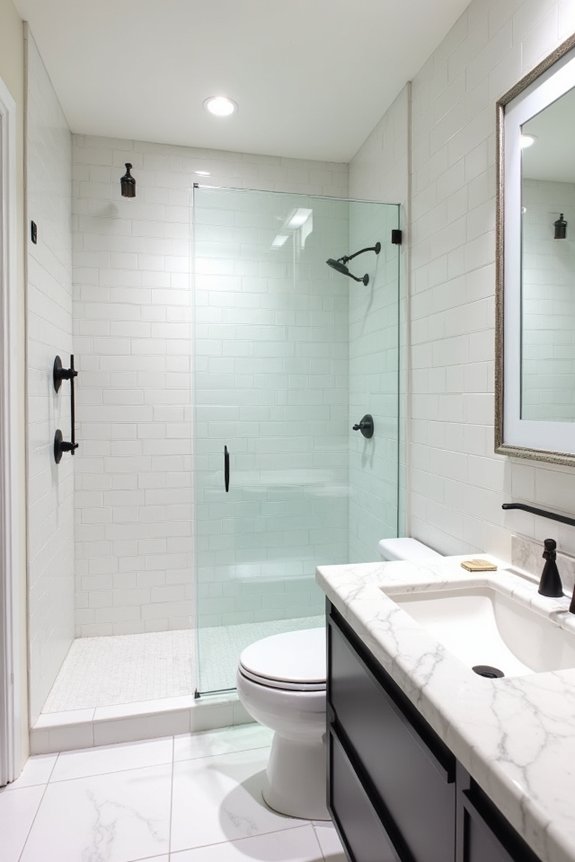
When I first eyeballed my bathroom’s peeling paint and that one tile that’d been crooked since 2009, I figured a quick cosmetic refresh—new mirror, fresh fixtures, maybe some caulk heroics—would cost me pocket change, and honestly, I wasn’t entirely wrong. But then I started asking designers about full gut remodels, and they’d launch into this whole speech about replumbing and electrical upgrades like I’d just casually mentioned demolishing a load-bearing wall, which taught me the hard way that cosmetic updates and major renovations live in completely different financial universes. The difference comes down to this: you can apply paint and swap out hardware for $2,000–$7,000 in about a week, or you can rip everything to the studs, reconfigure plumbing, install new cabinetry, and spend $15,000–$50,000+ over months while inspectors show up unannounced like unwanted relatives.
Cosmetic Updates and Refreshes
How’d you know when your bathroom’s crossed the line from “needs a facelift” to “needs an exorcist”? That’s when cosmetic updates enter the chat. I’m talking fresh paint, new fixtures, swapped-out hardware—the stuff that makes your bathroom actually look like it belongs in 2024, not a 1987 time capsule.
Here’s the thing: cosmetic updates run $2,000–$7,000 depending on your design choices and material quality. You’re avoiding permit headaches, keeping labor costs down, and honestly? You’ll see results in weeks, not months. Regional differences matter—your contractor selection significantly impacts the final outcome. The scope of work stays tight, timelines stay manageable, and your budget stays relatively protected.
Major Renovations and Complexity
Once you’ve accepted that slapping fresh paint on your bathroom’s walls won’t fix the fact that your toilet’s basically auditioning for a horror film, you’ve entered full gut remodel territory. Here’s where bathroom remodel costs spike dramatically—we’re talking $15,000–$50,000+ for major renovations involving complexity that cosmetic updates simply can’t touch.
When you’re reconfiguring plumbing and electrical work or changing your layout, you’re not just hiring a painter. You’re bringing in skilled trades, navigating permit costs, and sourcing new materials strategically. The scope of work demands longer timelines and serious budget planning.
I learned this the hard way: my “quick bathroom refresh” morphed into discovering rotting subfloors and outdated wiring. Labor requirements exploded. Suddenly, that budget I’d confidently scribbled on a napkin looked hilariously naive.
Material Quality: Budget, Mid-Range, or Luxury

Why does picking bathroom materials feel like choosing between eating ramen forever or going full marble-clad mansion? I get it—your budget screams ceramic tiles ($50–$100 per square foot), but your Pinterest board whispers marble ($300+). Here’s the truth: material quality directly shapes both your upfront costs and long-term headaches. Basic options keep things lean; mid-range materials ($100–$200) balance durability with affordability; luxury finishes? They demand respect—and serious cash.
Your countertops, tiles, and fixtures aren’t just aesthetic choices. They’re commitments. Premium materials like travertine boost resale value and withstand spilled toothpaste better than bargain alternatives. Labor costs climb too when installers wrestle with intricate stone versus forgiving porcelain.
Align your material choices with realistic goals. Luxury doesn’t guarantee happiness—but it does guarantee sticker shock when the invoice arrives.
Hidden Costs: Plumbing, Electrical, and Permits
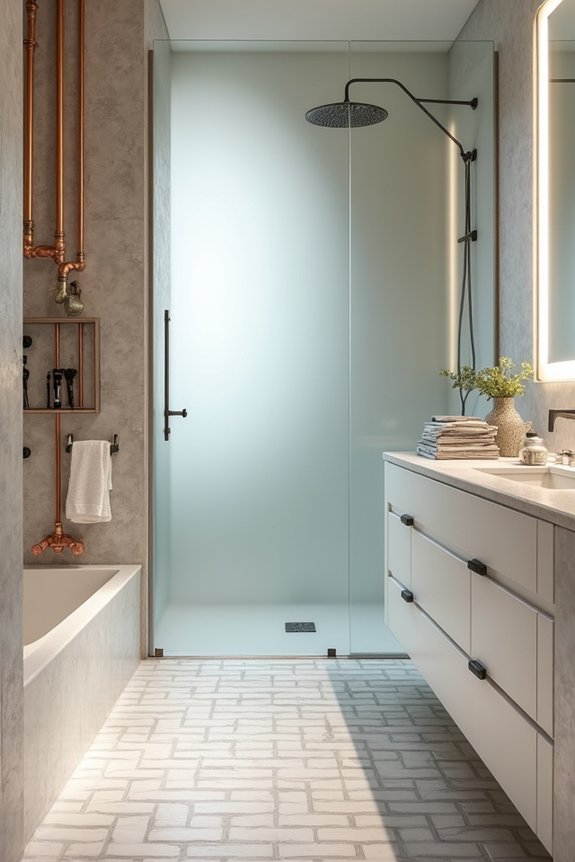
When I started planning my bathroom renovation, I naively thought permits were like optional video game achievements—turns out they’re more like child safety locks, except ignoring them costs thousands in fines and undone work. Moving plumbing lines and upgrading electrical systems hit different (read: your wallet), since you’ll need licensed pros who charge like they’re performing surgery, not just rerouting pipes behind your walls. Between permit fees ranging from $200 to $1,500, inspection costs at various stages, and that terrifying 10–20% contingency buffer for whatever gremlins hide in your walls, these hidden expenses sneaked up on me faster than my kids finding ketchup packets in the bathroom cabinet.
Plumbing And Electrical Upgrades
Before you even think about picking out those fancy brass fixtures or installing heated towel racks, there’s a whole skeleton of pipes and wires lurking behind your walls—and honestly, that’s where the real money disappears.
Here’s what I’ve learned the hard way:
- Rerouting water lines and drainage systems demands specialized labor and materials that’ll strain your budget significantly
- New wiring and outlets require licensed professionals to maintain safety compliance and code adherence
- Permits and inspections aren’t optional—they’re non-negotiable requirements between you and potential problems
- Labor costs for plumbing upgrades and electrical upgrades far exceed cosmetic changes
Moving these hidden systems isn’t like slapping paint on drywall. Licensed professionals are necessary for long-term reliability. Material costs climb fast when you’re rerouting anything. Smart upgrades—low-flow fixtures, LED lighting—reduce future bills, but that upfront cost is substantial.
Permit Costs And Inspections
Once you’ve mapped out where those pipes and wires are going, you’ll hit another wall—literally a bureaucratic one—and that’s where permits and inspections enter the chat. Permit costs typically range from $200 to $1,500 depending on your location and project complexity. Yeah, I know—it stings. But here’s the thing: these inspection fees actually protect you. Local regulations dictate your materials, energy standards, and required upgrades, potentially inflating your budget faster than my kids destroy a bathroom. Skip permits? You’re risking fines or having contractors undo everything. Each inspection stage adds another line item, and permit delays plus unexpected regulatory hurdles can derail timelines spectacularly. Budget a contingency for these bureaucratic curveballs. It beats explaining to your spouse why inspectors shut down your project mid-renovation.
Labor and Contractor Decisions
How much of your bathroom budget actually goes to paying people to do the work? Labor costs typically consume 20-40% of your total project spend, and that’s where things get real. Here’s what I’ve learned about contractor decisions:
- General contractors streamline everything but charge professional fees
- Multiple quotes reveal wildly different scopes and pricing
- Specialized trades—plumbers, electricians—demand premium rates for expertise
- DIY sounds budget-friendly until you’re Googling “how to fix drywall at 11 PM”
Project complexity matters significantly. Hiring a general contractor saves stress and time, though your upfront costs climb. Getting quotes from different contractors helps you identify actual value versus inflated fees. Labor efficiency and scheduling directly impact your final bill, making contractor selection genuinely consequential for both budget and sanity.
Premium Features That Increase Your Budget
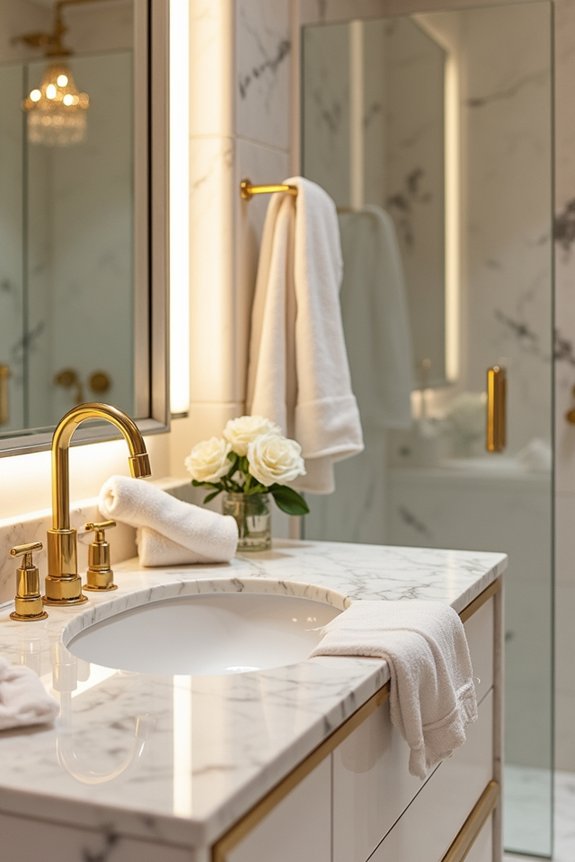
Want to know where bathroom budgets actually explode? Premium features. I learned this the hard way when I spotted a smart mirror—suddenly my straightforward bathroom remodel became a spaceship bathroom.
Here’s the thing: digital controls, rain showerheads, and heated floors aren’t just upgrades; they’re budget assassins. Add luxury vanities or glass enclosures, and you’re looking at serious money. Bespoke finishes? Forget it—that’s when contractors start quoting numbers that make you question your life choices.
My designer friend says it best: “Clients want Instagram bathrooms, but their bank accounts want 2005.” The complexity multiplies with each smart fixture. Installation timelines stretch. Specialized trades charge accordingly.
The trick? Prioritize ruthlessly. Choose which premium features genuinely serve you—not your envy.
Geographic Location and Market Rates
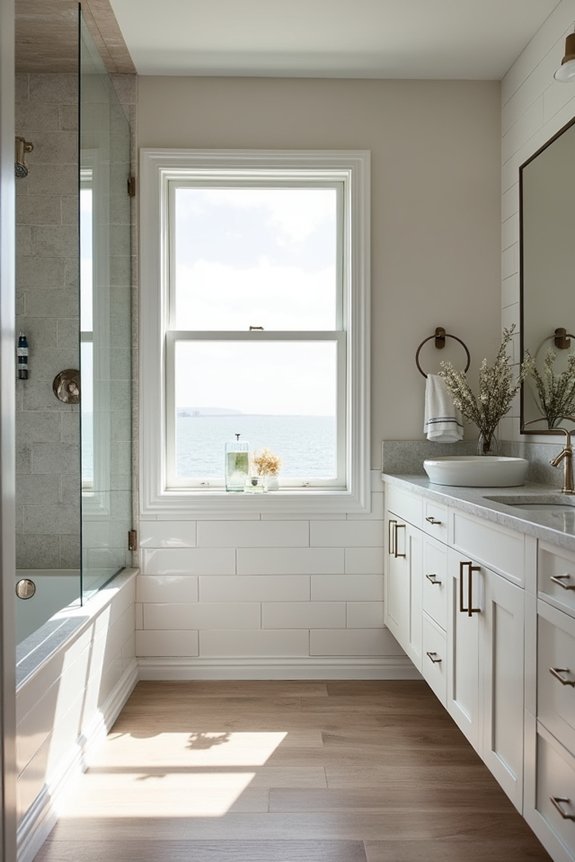
Where you live basically determines whether your bathroom remodel costs $5,000 or $50,000—and honestly, that’s before you’ve even picked out tile.
I learned this the hard way when I discovered my urban neighborhood charges labor rates that’d make my rural cousin spit out coffee. Geographic location isn’t just about bragging rights; it fundamentally shapes your bathroom costs through:
- Labor rates that spike dramatically in cities versus suburbs
- Material availability and shipping expenses tied to regional supply chains
- Local regulations and permit fees varying wildly by jurisdiction
- Market rates reflecting cost of living differences across areas
Urban areas charge premium prices because skilled trades demand higher wages. Meanwhile, permits in my city cost triple what they’d run elsewhere. Understanding these geographic benchmarks helps me avoid budget disasters—something my wallet desperately needed after discovering local market rates for specialty fixtures.