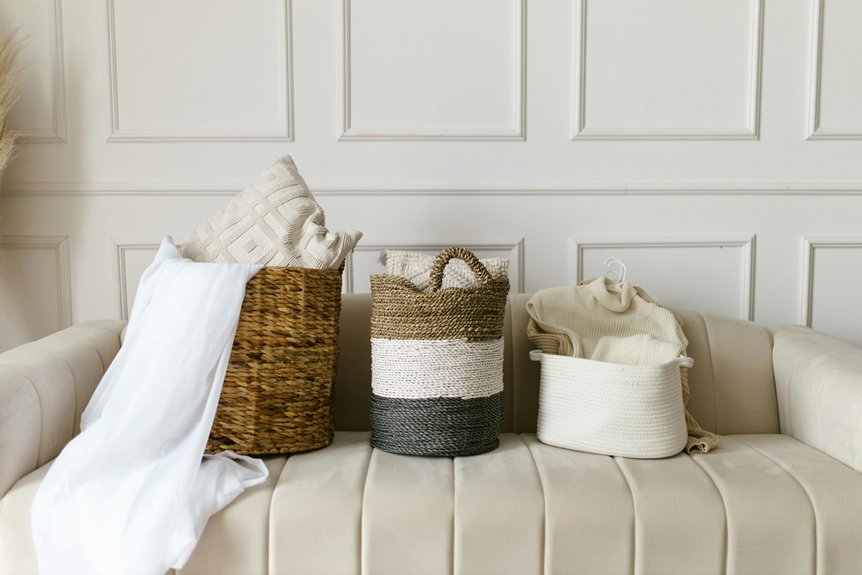
I used to stare at my empty baskets like they were decorative failures—until I realized they weren’t storage problems, but design opportunities waiting to happen. Dried botanicals, textured throws, seasonal treasures, stacked books, battery-operated lighting, natural ornaments, and strategic layering work together in small baskets as room features that show you’ve put thought into your space. The approach? Anchoring heavier pieces at the bottom prevents chaos while lighter accents float above, creating a deliberate, organized look. Stick around to discover exactly how each item works.
Dried Botanicals for Natural Texture
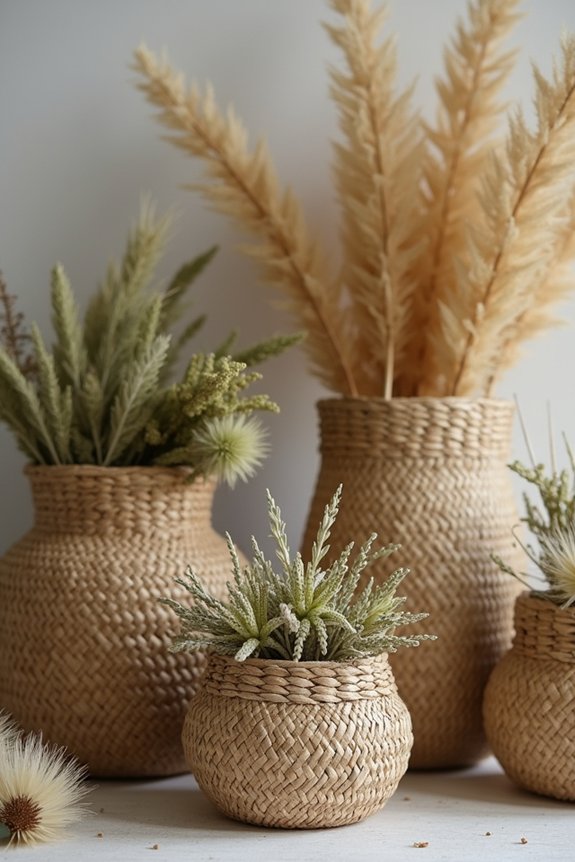
Why do we always wait until our living rooms look like a neglected greenhouse before we finally do something about it? I get it—I’ve stood in my living room, staring at drooping plants like they were judging my life choices. Dried botanicals in small decorative baskets solve this problem. I fill a wicker basket with pampas grass, eucalyptus stems, and dried flowers—zero maintenance required. They’re not dying; they’re *already dead*. That’s the beauty. Neutral tones create minimalist decor that doesn’t scream “I tried too hard,” while the natural texture adds rustic charm without demanding water schedules. A light-colored basket works with your overall aesthetic, whether you’re channeling Scandinavian calm or bohemian wanderlust. Finally, something that looks deliberate while requiring absolutely nothing from me.
Textured Textiles and Twine Accents
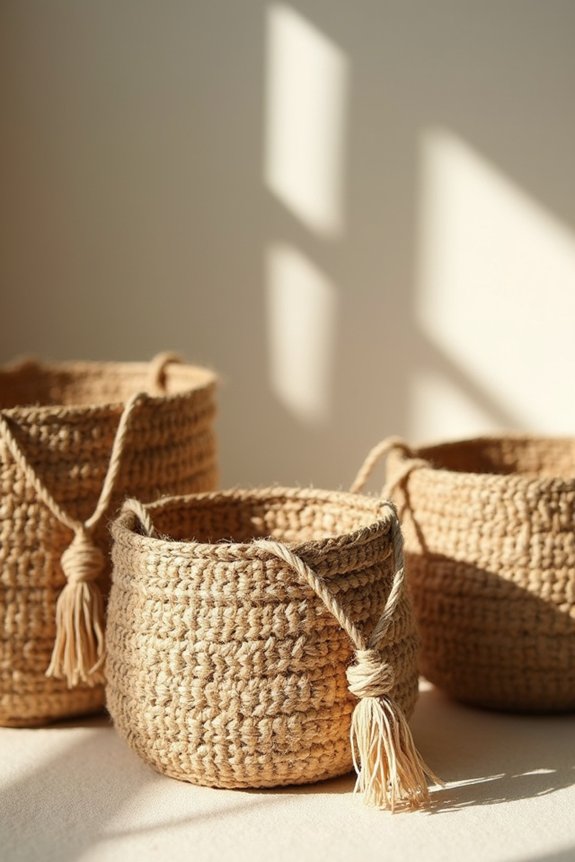
I’ve learned the hard way that layering fabrics—throws, cushions, blankets—creates the depth that makes a basket look intentional rather than like I just shoved my kids’ rejected blankets somewhere, and I swear by natural twine and rope accents because they tie the whole look together (pun intended) without screaming “I tried too hard.” Designer Sibella Court nails it when she says woven materials echo authenticity, which basically means my basket suddenly looks like it was carefully put together instead of like a receptacle for mysterious sticky stuff and orphaned socks.
Layering Fabrics For Depth
How do you make a small basket look intentionally styled instead of like a forgotten laundry pile? I’d mastered the art of cramming—until I discovered layering fabrics for actual depth. Start with heavier woven blankets at the bottom, then stack knits and velvet ribbons on top. This textile textures strategy creates visual weight that matters. I now arrange my small baskets with neutral tones—creams, grays, taupes—that whisper sophistication rather than scream “I couldn’t find the hamper.” The artisanal display happens when you let fabrics slightly overflow, avoiding that suffocating boxed-in look. Mix your textures shamelessly. Woven blankets paired with soft knits? Excellent. That’s when your basket becomes a room-defining piece—no ketchup stains required.
Natural Twine And Rope
Natural twine and rope give a plain basket genuine character—which matters when you’re managing laundry and toy clutter. Wrapping jute or sisal around basket rims creates an artisanal look that hides yesterday’s socks. Twine-wrapped handles and lids grip better while delivering coastal farmhouse style without requiring Pinterest certification.
| Material | Best Use | Durability | Vibe |
|---|---|---|---|
| Jute | Rim wrapping | Excellent | Rustic warmth |
| Sisal | Handle binding | Superior | Organic texture |
| Cotton | Decorative weaving | Good | Soft elegance |
| Rope accents | Lid detailing | Excellent | Intentional craft |
Pair these natural textures with light neutral tones—keep spaces airy, not suffocating. Balance rope accents with linen and wood for decorative storage that reads as deliberate rather than haphazard.
Seasonal Treasures and Rotating Collections
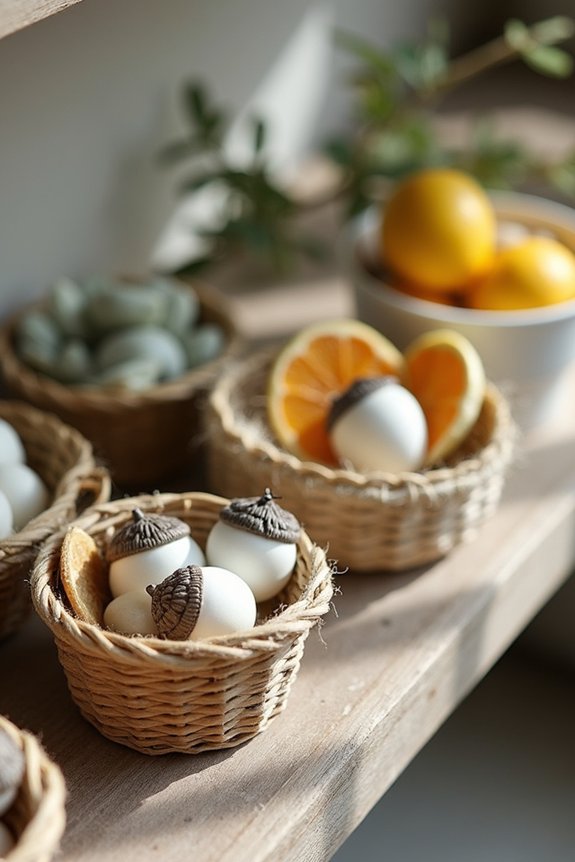
Why do we insist on keeping the same tired décor up year-round when swapping out a basket’s contents takes roughly the same time as finding matching socks?
Rotating seasonal basket displays takes minimal effort yet completely transforms your home’s vibe throughout the year.
I’ve discovered that rotating collections refresh my living room décor without requiring a complete overhaul. Here’s what works:
- Winter pinecones and greenery create cozy entryway styling
- Autumn pumpkins shift the seasonal treasures vibe instantly
- Summer seashells bring fresh energy to any room
- Spring stems refresh your decorative display effortlessly
- Candles rotate through themes without cluttering spaces
Baskets serve as flexible stages—moving between my entryway, living room, and dining area with barely any effort. By pairing natural textures with quick updates, I maintain cohesion while embracing seasonal change. The benefit? My baskets stay relevant, my décor feels purposeful, and I’m finally ahead of the decorating curve.
Stacked Books and Bound Displays
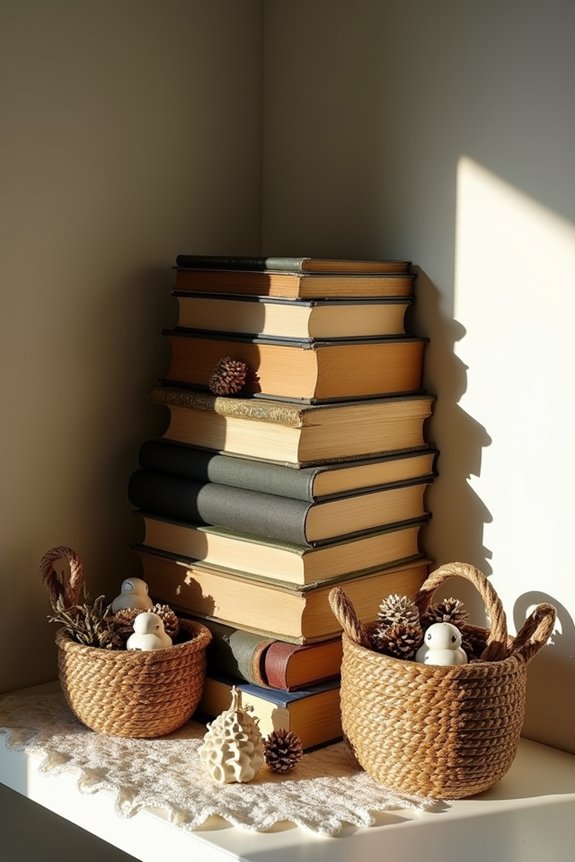
I’ll admit—I once stacked my books by color like some design-magazine dream, only to realize I’d arranged them by spine width, which somehow looked worse than my original “just shove it in there” method. The trick, as it turns out, is mixing hardcovers and paperbacks to create actual visual interest; those varied textures do the heavy lifting that my Pinterest fantasies promised but my execution failed to deliver. Layer them horizontally with complementary tones—warm leather-bound next to soft pastels, that kind of thing—and your basket reads less “failed librarian” and more like you actually know what you’re doing.
Creating Visual Height
How do you make a small basket feel like it’s commanding the room instead of cowering in the corner?
I discovered the answer: stacked books create instant vertical height. I arrange my book display with taller volumes at the back, shorter ones forward—a simple trick that brings visual weight and presence to the space.
Here’s what actually works:
- Mix hardcover and paperback spines for visual contrast that won’t put you to sleep
- Layer varied textures to catch light and draw eyes upward
- Balance the stack so it won’t topple like my parenting skills
- Crown it with a small candle or plant—the final detail that completes the arrangement
- Choose a sturdy basket that won’t collapse under literary ambition
That small basket now commands attention. Your spine colors become design elements. Suddenly, you’re not just organizing—you’re creating.
Mixing Textures and Tones
The real skill lies in stopping thinking of a basket as just storage and starting to see it as a texture playground—one where hardcover spines, paperback edges, natural weave, and bound leather can all coexist without looking like you raided a library’s clearance bin. Mixing stackable books with natural fibers like wicker, seagrass, or rattan creates genuine texture contrast. Pair hardcovers and paperbacks together; their varying spine colors boost visual interest right away. Position one decorative basket on your coffee table or shelf, layering a bound display on top as your focal point. This mixed textures approach—the tactile variety of paper against woven fibers—delivers that cohesive result designers work toward. It’s one of the simplest ways to change how a room looks without actually doing much work at all.
Battery-Operated Lighting for Warmth
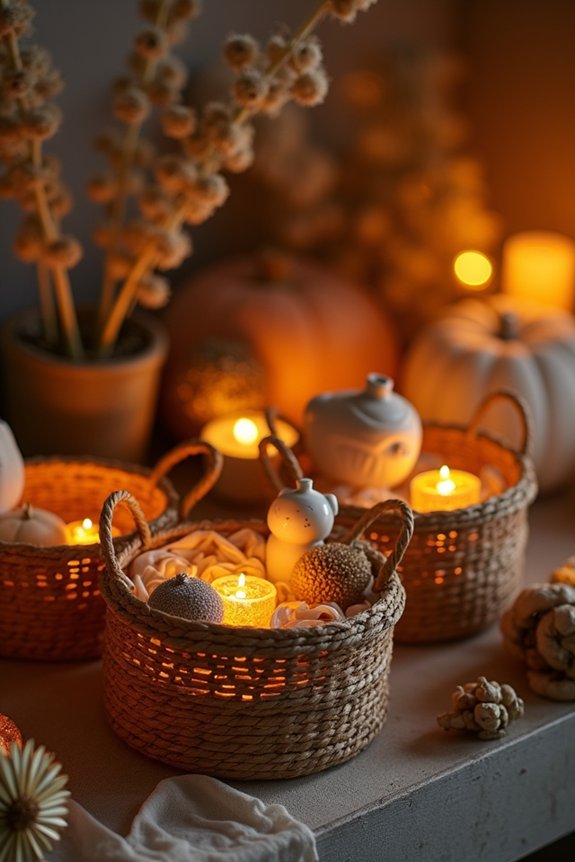
Ever notice how parents simultaneously forbid real candles (“Fire hazard!”) while demanding cozy ambiance like we’re living in a Pottery Barn catalog? Battery-operated lights solve this ridiculous paradox. I’ve discovered that LED pillar and string lights tucked inside deep baskets create that soft, atmospheric glow without the guilt—or the smoke detectors screaming at 2 a.m.
Here’s why I’m obsessed:
- Timer-enabled warmth that turns on automatically—no fussing
- Flameless candles that won’t combust your throw pillows
- Light peeking through woven gaps creates visual interest
- Zero outlets needed; pure cordless freedom
- Seasonal rotation keeps your room feeling fresh
Pair battery-operated lights with pinecones in winter or spring greens, and you’ve created an ordinary basket into something worth noticing—one that whispers, “I have my life together.” You’re welcome.
Natural Ornaments and Collected Keepsakes
Why do we hoard things—shells from vacations we barely remember, pinecones from that one autumnal walk, vintage bells that don’t match anything—yet feel guilty displaying them?
I’ve learned I’m not alone. Handwoven wicker, seagrass, and rattan baskets help me organize my guilt into deliberate decor. I arrange dried botanicals, shells, and pinecones with care—heavier pieces anchoring the bottom, lighter accents floating above. It feels purposeful, not haphazard.
These small baskets on my shelves suddenly say something: I’m someone who collects, who remembers. The texture and richness they bring isn’t clutter—it’s proof I lived somewhere. Mixing vintage and new natural baskets across my coffee table creates order, balancing what could’ve been chaotic into something genuinely bohemian.
My collected keepsakes finally belong.
Securing Your Basket: Liners, Layers, and Anchors
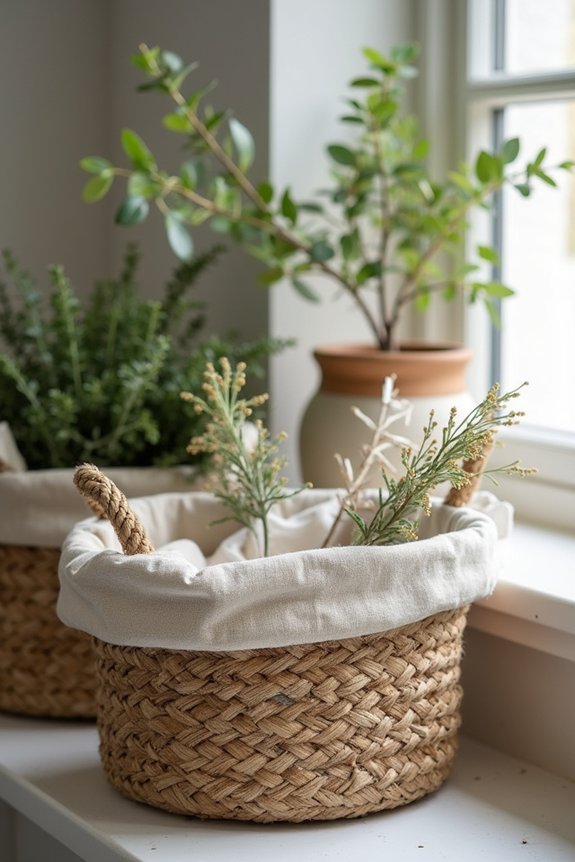
How many times have I watched a basket full of collected treasures tip sideways because I’d stacked everything like a Jenga tower without considering basic physics? I’ve learned that securing your basket requires intentional layering and smart anchors—the difference between organized storage and chaos.
Securing your basket requires intentional layering and smart anchors—the difference between organized storage and chaos.
Here’s what actually works:
- Liners catch spills—goodbye ketchup-stained fabric
- Heaviest objects anchor the bottom—stability wins
- Textiles and plush toys rest on top—visual balance achieved
- Removable fabric inserts adapt function—from decorative to planter with ease
- Weighted bases prevent shifting—especially important with toys and throws
I’m finding that echoing my basket’s material and color through liners creates unity in my space. These layers and anchors turn decorative storage into functional design—no tipping required. Finally, a system that actually holds together.