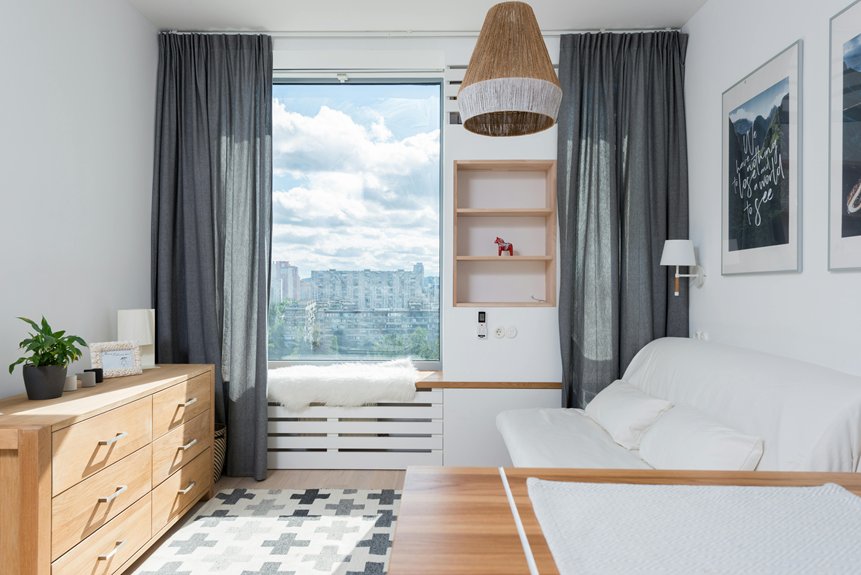
Decorating a small room typically runs $1,000 to $6,000—though I’ve seen people blow through that faster than a kid spills ketchup on a fresh sofa. Paint and walls eat 30–40% of your budget, furniture anchors the rest, and labor costs? They’ll surprise you if you’re not careful. Start with must-haves—solid sofa, rug, lighting—then reserve 10–15% for those “I *need* this” moments. DIY basics save serious cash, but sometimes hiring pros prevents expensive mistakes worth the premium.
Budget Ranges for Small Room Decorating: $1,000–$6,000
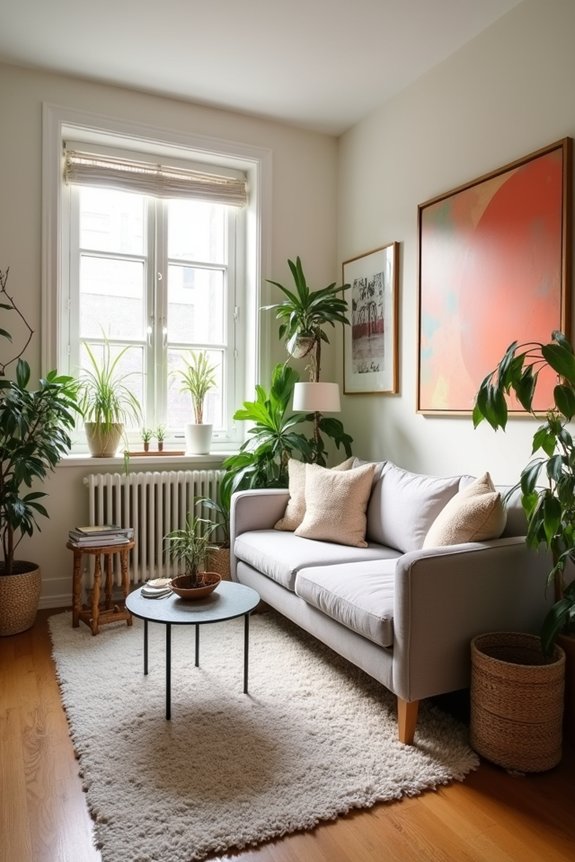
a decent sofa, coffee table, rug, and lighting that looks intentional rather than temporary. The trick is budget planning. Start with must-haves, reserve 10–15% for unexpected finds (because you will find them), and resist impulse-buying that ketchup-magnet wall art everyone’s obsessed with.
Where Your Money Goes: Paint, Furniture, and Labor
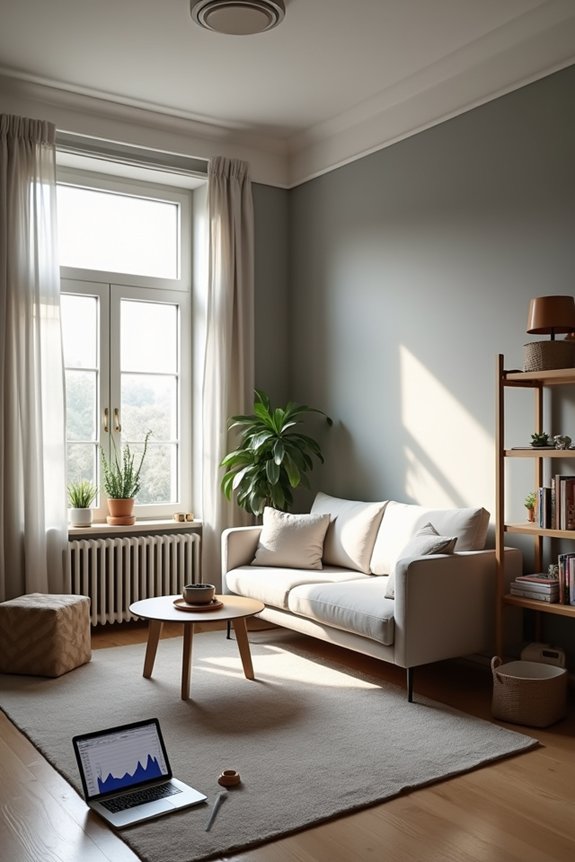
When I’m staring at my room’s dingy walls—wondering if that’s original 2005 eggshell or just accumulated dust—I realize paint and wall treatments eat up hundreds to thousands of dollars depending on whether you’re doing basic refresh or structural prep work that makes contractors suddenly text back. Furniture is where I genuinely lose track of money, oscillating between “$200 IKEA situation” and “mid-range sofa that doesn’t look like Chuck E. Cheese threw up on it,” though smart decorators focus their spending on high-use pieces like sofas and tables while DIYing the rest. Labor costs—which my parents somehow expected me to avoid by “just asking your handy friends”—can demolish your budget faster than a toddler with ketchup if you need installation, foundation work, or anything remotely structural.
Paint and Wall Treatments
How much of your decorating budget should actually go toward making your walls look decent instead of like a crime scene where someone spilled spaghetti sauce?
I’d estimate 30-40% of your decorating costs. Here’s where your money typically lands:
| Treatment Type | Budget | DIY Savings | Labor Impact |
|---|---|---|---|
| Basic paint refresh | $400–$1,000 | 60–70% | Significant |
| Premium wallpaper | $300–$1,000+ | Moderate | High |
| Custom textures | $500–$1,500 | Limited | Very high |
| DIY repainting | $100–$300 | 80%+ | Minimal |
Labor costs eat up serious cash—sometimes half your budget. But the point remains: DIY wall treatments reduce expenses dramatically. I tackled my daughter’s room myself, avoiding professional installation fees while keeping durable finishes that withstand marker attacks and mysterious sticky handprints. Prioritizing quality materials upfront saves money long-term.
Furniture and Labor Costs
the sofa that won’t fit through your door, the ketchup stain nobody warned you about. It’s not glamorous, but it’s real.
Budget-Friendly Decorating Ideas: What $3,000 Buys You
I’ll be honest—when I first heard you could work with a $3,000 budget for a small room, I thought someone was selling me a timeshare pitch, but the math actually checks out if you’re willing to prioritize ruthlessly: a solid sofa ($500–$1,000), a functional coffee table ($150–$400), strategic lighting ($100–$300), a cohesive rug ($200–$500), and carefully selected wall art ($200–$400) form the spine of your design, leaving breathing room for those thrifty finds and DIY projects that’ll give the space real substance rather than like a Chuck E. Cheese explosion. The trick isn’t spending less—it’s choosing *what* to spend on, which means your seating and rug anchor the room while everything else becomes an accent, not the main event. I learned this the hard way after covering my rental walls in ketchup-colored paint and wondering why it still looked like a dorm room, so I’ll say it plainly: one well-chosen piece beats five mediocre ones every time.
Essential Furniture Selections
When you’ve got three grand to furnish a living room—and you’re not the type to inherit mid-century modern pieces from a wealthy aunt—you’re standing at that sweet spot where you can actually buy things that won’t fall apart the moment your kid spills ketchup on them.
Here’s where your money lands: invest heavily in a solid sofa ($500–$1,000), place a quality rug ($200–$500) to ground the space, and grab a sturdy coffee table ($150–$400). These three pieces are your non-negotiables—they’re doing the heavy lifting. Then add lighting ($100–$300) that doesn’t scream “dorm room,” and finish with wall art and accessories ($200–$400) that actually match. You’re not pinching pennies anymore; you’re being smart. That’s the difference.
Strategic Decor Investments
How do you actually make $3,000 stretch across a room without ending up with furniture that smells like regret and particle board? The trick is investing strategically in small room decor that actually lasts. I’ve learned—sometimes painfully—that your budget works best when you prioritize durable pieces like a quality sofa ($1,000–$1,500) and a decent rug ($200–$500). These anchors justify splurging. Then comes the payoff: affordable upgrades in lighting ($500–$1,000) and wall art ($200–$400) create significant visual impact while staying within budget. Accent chairs ($400–$800) add personality at reasonable cost. Here’s where starter decorating gets fun—DIY touches like repainting walls or repurposing existing furniture stretch those dollars further. You’re balancing high-impact investments with budget-conscious choices, creating style that doesn’t scream “college dorm.”
Mid-Range Small Room Updates: $3,000–$6,000
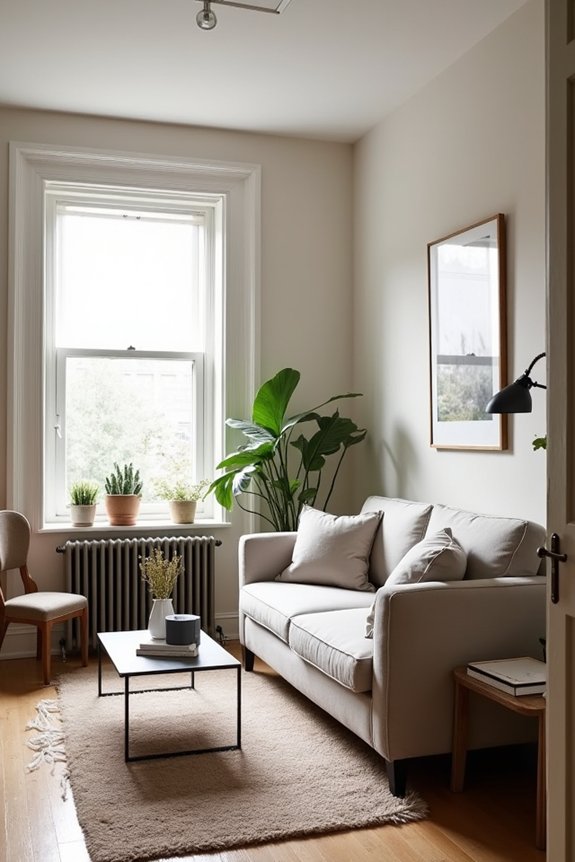
Why do we suddenly become our parents the moment we realize we can’t just throw a bean bag chair and call it interior design? That’s when the mid-range budget—$3,000 to $6,000—starts looking like actual grown-up territory. I’m talking quality furnishings without the designer price tag, thoughtful lighting that doesn’t scream dorm room, and decor that won’t crumble after one ketchup incident.
| Essential Item | Budget | Impact |
|---|---|---|
| Mid-range sofa | $1,200–$1,800 | Anchors everything |
| Accent chairs | $400–$600 | Functionality meets style |
| Lighting fixtures | $300–$500 | Sets the mood |
| Area rug | $200–$400 | Grounds the space |
We’re prioritizing must-haves while splurging on standout pieces. It’s the sweet spot where durability meets cohesion—finally adulting without completely selling out.
Save on Small Room Decor Without Cutting Corners
So there’s this moment—right around when you’ve upgraded from plastic storage bins to actual furniture—where you realize that decorating on a budget doesn’t mean accepting a room that looks like it’s perpetually waiting for move-out day.
I’ve learned that repurposing what you already own beats buying new every time. That tired bookshelf? Paint it. Those mismatched chairs? Reupholster them. DIY décor changes spaces without draining your wallet, and decluttering reveals forgotten items buried under Chuck E. Cheese cups.
Building a realistic budget with a 10-15% contingency cushion prevents panic when you spot that perfect lamp. Assign per-item targets, itemize ruthlessly, and you’ll stretch dollars further than expected. You’re not settling for less—you’re investing smarter.
DIY vs. Hiring: When to Call a Professional
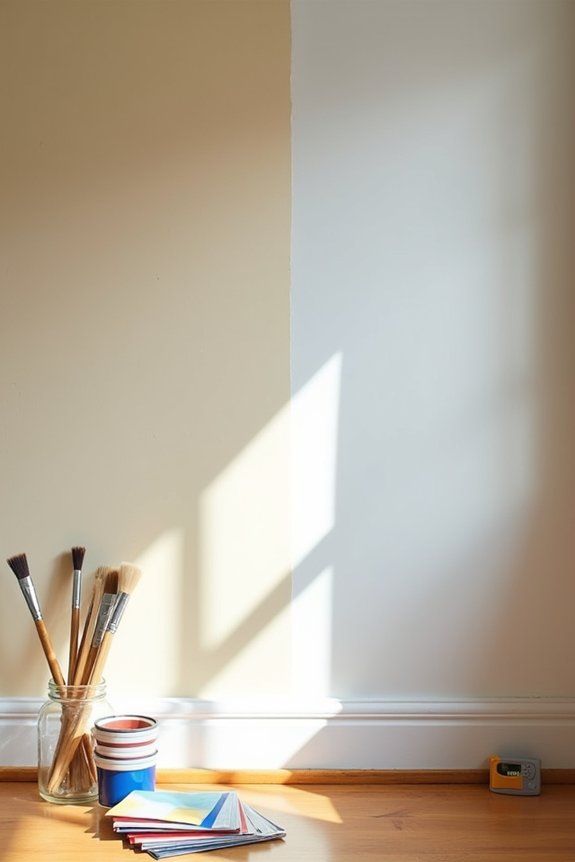
There’s a specific moment—usually around 2 a.m., standing in front of a wall you’ve painted three different shades of “greige”—when you wonder if hiring a professional designer might’ve saved you from this particular circle of hell.
Here’s the truth: DIY living room decor works well within a $1,500–$3,000 budget for basics. You’ll handle the sofa, coffee table, lighting. But when your furnishings budget grows, or you’re drowning in color-coordination decisions, professionals justify their 10–20% cost premium through sourcing expertise and durability assurance. I’ve learned—the hard way—that small rooms demand consistent styling. Complexity and custom pieces? That’s when you call someone. Your sanity’s worth more than that third greige attempt.