I’ve stared at that grease-covered void above my cabinets long enough to know it’s not just dead space—it’s an opportunity waiting to happen.
The trick? Plan for dust before you decorate, then layer displays with intentional height variation: tall vases anchoring back, mid-height baskets filling middle, short candlesticks grounding front.
Add warm wood textures, embrace odd groupings, and minimize clutter ruthlessly. Toss in strategic lighting, and that awkward real estate becomes a functional part of your kitchen design.
Stick around to discover exactly how.
Plan for Dust and Grease Before You Decorate
Why does the space above kitchen cabinets feel like a magnet for every airborne particle your stove produces? I learned this the hard way after decorating mine with cheerful ceramic bowls, only to discover them coated in a grimy film within weeks. The dust and grease settle there relentlessly, especially near the stove where splatters reign supreme. Before you hang anything up there, I’d ask myself honestly: Am I willing to clean this regularly? The reality is that maintenance matters here more than anywhere else in your kitchen. Choose materials you won’t dread wiping down—glass, ceramic, metal. Skip anything porous or fabric-based unless you enjoy scrubbing ketchup residue off your décor. Plan strategically, and you’ll keep that space looking deliberate rather than neglected.
Build Height Above Your Kitchen Cabinets With Layered Displays
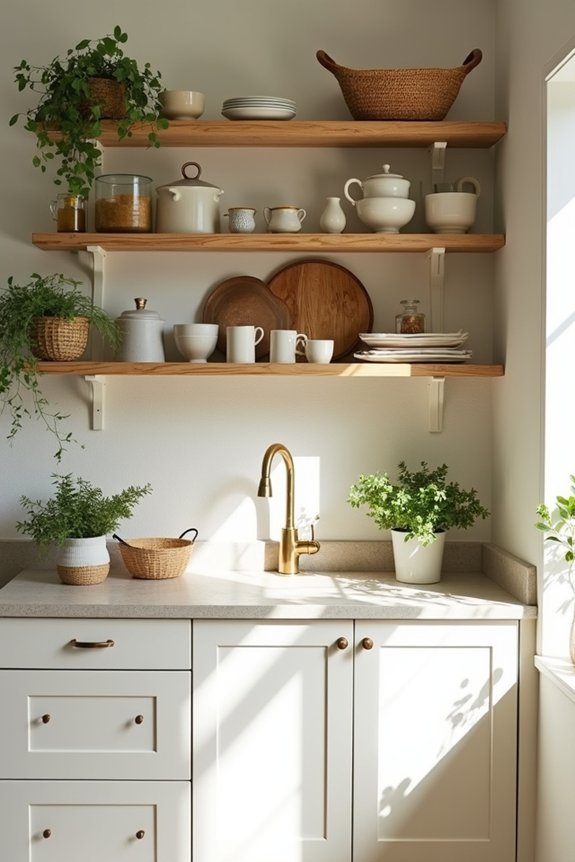
How do you turn a flat, dusty shelf into something intentional? I’ve stared at my bare upper cabinets wondering the same thing. The answer? Layered displays that work.
Turning bare upper cabinets into intentional displays means mastering layered design through strategic height variation and thoughtful styling.
I’m talking strategic height variation—it makes a real difference:
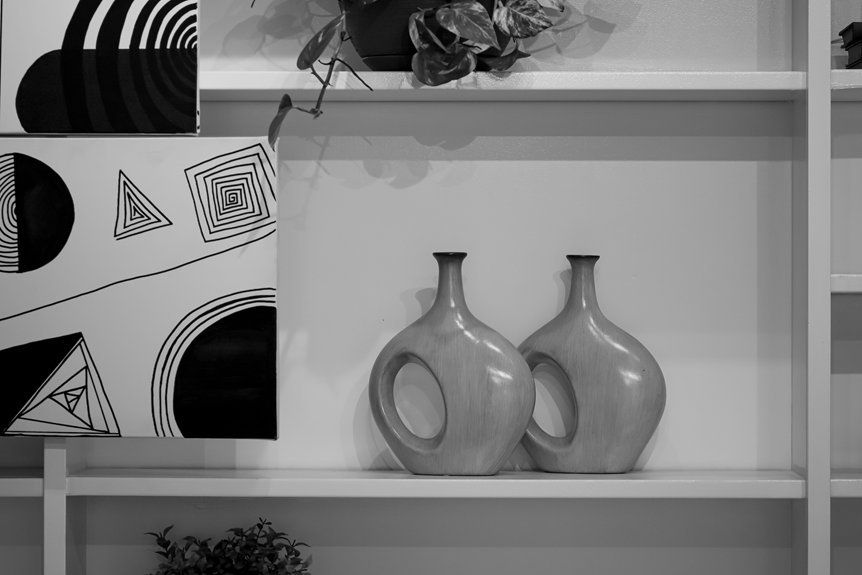
- Tall vases anchor the back, creating visual backbone
- Mid-height baskets fill the middle ground without blocking sightlines
- Short candlesticks ground the front, preventing that awkward floating feeling
- Occasional cookbooks add texture while pretending you actually cook
Here’s what I’ve learned: decor above cabinets shouldn’t whisper—it should create conversation through dimension. Group items in odd numbers, vary heights intentionally, and that neglected real estate becomes worth looking at. Designer Shannon Winslow says it best: “Layered displays turn empty space into deliberate storytelling.”
Your kitchen’s finally joining the cool kids’ table.
Display Collections Using Repetition and Odd Groupings
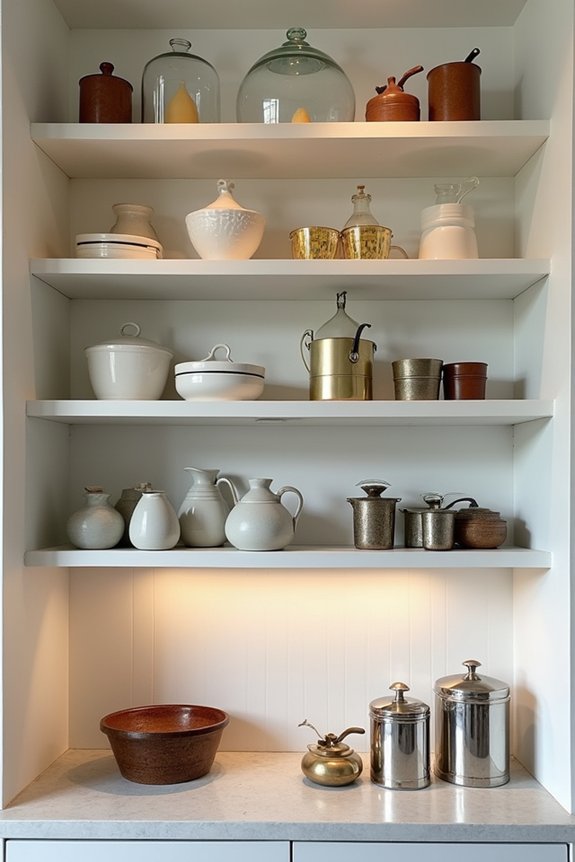
Once you’ve got your heights sorted, the real payoff arrives when you stop treating your collection like a yard sale and start thinking like someone who actually has their life together. I’m talking about thoughtful collections—not every plate you’ve inherited or candle that smells vaguely of vanilla.
Group items in odd numbers: three vases, five plates, seven candles. Varying heights creates that designer look you’re after. Repetition builds visual rhythm without feeling chaotic, which matters when your space above cabinets is basically real estate you’re renting from your own kitchen.
Skip the clutter. Display what you actually care about—the collection that doesn’t scream “impulse buy from HomeGoods.” Balance large and small pieces strategically. This restraint? It’s what separates intentional from exhausting.
Add Warm Wood Accents and Baskets for Texture
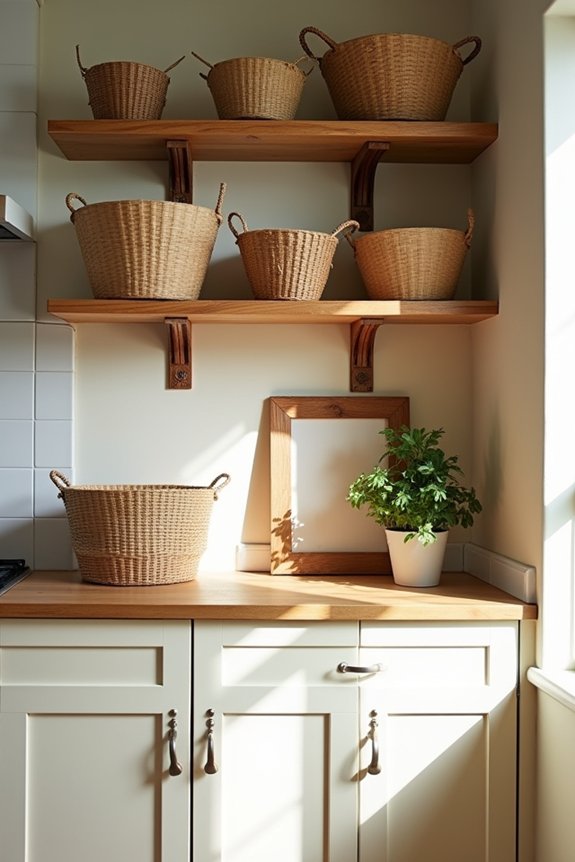
There’s something about bare kitchen cabinets that makes you feel like you’re living in a showroom nobody’s bought yet—which is exactly when warm wood swoops in to save you from looking like you just moved in last week.
Bare cabinets feel like a showroom nobody’s bought yet—warm wood is exactly what saves you from looking like you just moved in.
I discovered that wooden cutting boards and live-edge bowls aren’t just Instagram props; they actually work well with white cabinets. Layer in baskets for that “we have our lives together” vibe, and suddenly you’ve got vertical space decor that does the heavy lifting.
Here’s what works in your kitchen:
- Mix tall and short pieces to avoid looking sparse or cluttered
- Choose durable woods that resist grease buildup near cooking zones
- Stack baskets sideways for unexpected texture and warmth
- Pair everything with grays and blacks for gallery-like balance
The result? A kitchen that finally feels lived-in, not sterile.
Style Minimally to Avoid Visual Clutter
Why do we assume more stuff equals better decorating? I used to cram my space above cabinets like I was staging a Chuck E. Cheese display—tchotchkes everywhere, visual chaos incarnate. Then I discovered minimalism actually works. Designers swear by it: fewer, larger pieces create that calm aesthetic we’re all chasing.
I’ve learned the hard way. Three oversized ceramic vessels beat twelve mismatched decorative storage boxes. Odd numbers matter—one piece feels lonely, three feels deliberate. Vary heights, anchor everything securely, and you’ve nailed it.
The space above cabinets isn’t a dumping ground for daily-use clutter. Reserve it for genuine art, textured baskets, or pieces that work with your color scheme. Less maintenance, more appeal. That’s the minimalist approach I finally keep.
Store Seldom-Used Items While Maintaining Appeal
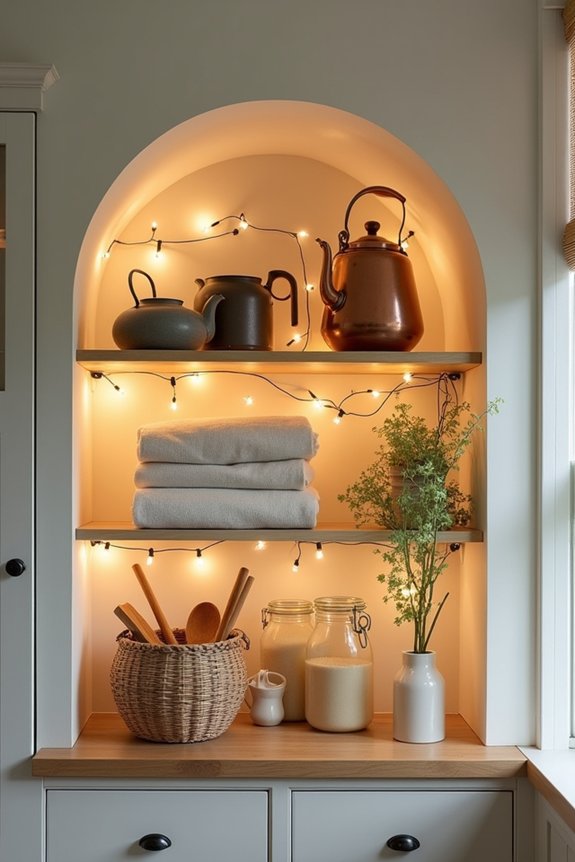
I’ve learned the hard way that stuffing my mother’s fancy serving platters and those Chuck E. Cheese cups I can’t throw away into prime cabinet real estate is basically admitting defeat—so I’ve started storing these seldom-used treasures above the cabinets instead, tucking them into labeled baskets that actually let me find things without creating an avalanche. Sure, there’s a delicious irony in my parents telling me to “display nice things” while also warning me that earthquakes exist, but lightweight containers solve both the beauty-and-function problem designers keep yammering about. The result? My counters have more breathing room, my seldom-used items stay accessible, and I haven’t had ketchup-stained serving ware blocking my everyday dishes—a practical outcome I didn’t know I needed until I stopped fighting my space.
Practical Storage Without Clutter
How do you store the stuff you’d never admit owning—the fancy serving platter from your mom, those artisanal breadboards still in their tissue paper, the collection of holiday trivets that somehow multiplied—without making your kitchen look like a clearance section at a home goods store?
Above-cabinet storage solves this practically. I’ve discovered that uniform display keeps things organized and deliberate. Here’s my approach:
- Corral items in matching baskets or containers
- Stick with lightweight pieces you won’t need daily
- Embrace seasonal rotation for variety
- Stack vertically to maximize space without overcrowding
The result? Your seldom-used treasures hide in plain sight. That breadboard collection becomes a polished display. Your mom’s platter finally earns its place—accessible yet unobtrusive. You’re not storing junk; you’re organizing with purpose.
Balancing Function And Beauty
The trick to above-cabinet storage isn’t hiding your stuff—it’s making people forget it’s stuff at all. I learned this the hard way after my mother-in-law spotted a stack of Chuck E. Cheese cups gathering dust above my cabinets. The space above cabinets screams potential, yet most of us treat it like kitchen Siberia.
Here’s what actually works: create a vignette using lightweight items—faux plants, woven baskets, vintage scales—arranged in odd numbers at varying heights. This storage organization approach turns necessity into deliberate design. Group similar textures together, rotate seasonally, and you’ve got visual interest without the “we’re hiding something” energy.
The beauty? Your vignette serves double duty—concealing those seldom-used serving platters while proving you’ve got taste. Suddenly, your space above cabinets becomes a conversation starter instead of a confession.
Use Lighting to Brighten the Space
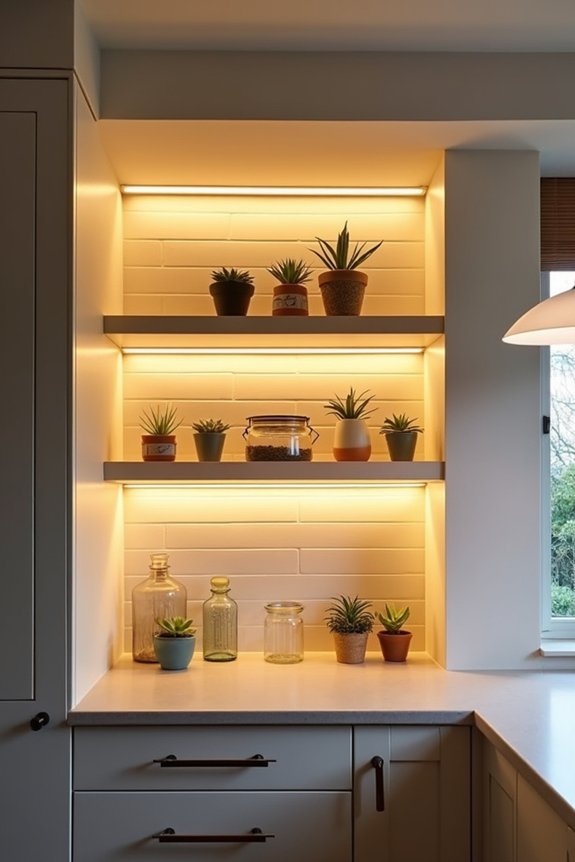
Ever notice how that dark void above your cabinets somehow collects dust, forgotten grocery store receipts, and the weird energy of a space nobody’s supposed to look at?
I get it—I’ve stared at mine wondering if something was living up there. Here’s the truth: strategic lighting makes that neglected zone look better. You don’t need fancy designer help for this one.
Consider these lighting options:
- LED strip lights under cabinet edges create soft, ambient glow
- Puck lights highlight individual decor pieces and add depth
- Warm color temperatures (2700–3000K) complement wood tones perfectly
- Easy-access fixtures simplify bulb replacement and grease cleaning
The ambiance you’ll create? It works. Your space above cabinets stops feeling like dead weight and starts feeling deliberate. Suddenly, that awkward real estate becomes part of your kitchen’s personality—not its forgotten stepchild.