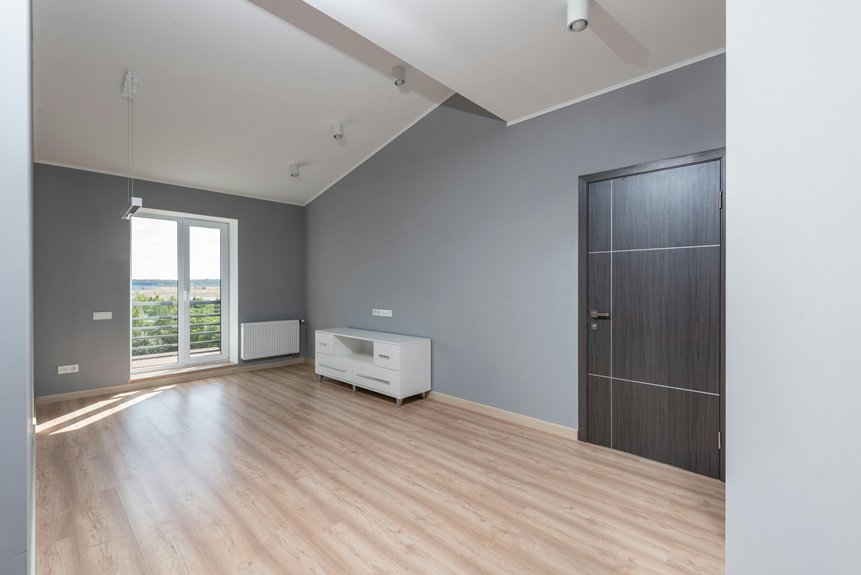
Yeah, empty rooms totally mess with your brain. Without furniture acting as visual anchors, your mind defaults to “smaller”—it’s like trying to judge distance without a reference point. Your parents swore the basement was “huge,” but then one couch appeared and suddenly you got it.
Staging reveals what emptiness hides: actual flow, usable zones, real dimensions. Bare walls amplify that claustrophobic feeling. Want to understand why your perception shifted so dramatically once things got placed?
How to Gauge Room Size Without Furniture
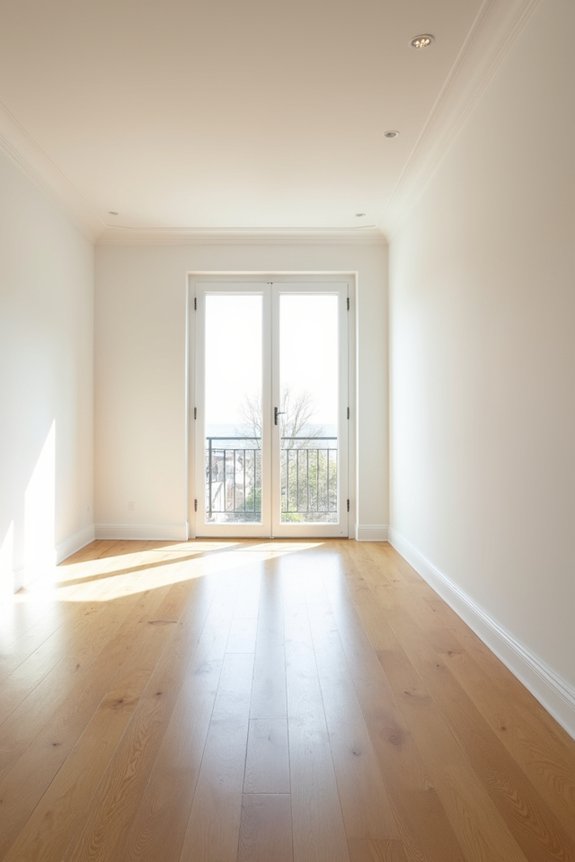
How many times have you walked into an empty house and thought, “Wow, this place is *huge*”—only to realize later that a single couch somehow shrinks it back to shoebox dimensions?
I’ve been there. Empty rooms lack scale cues, making it nearly impossible to judge actual size. Here’s what I’ve learned: measuring dimensions matters. Grab a tape measure, mark key measurements on your floor plan, and suddenly the space stops playing tricks on you. Better yet, mentally place a standard sofa—typically 84 inches—in that blank corner. Instantly, your brain has a reference point.
Staging layouts helps too. I sketch out living, dining, and sleeping zones before committing to anything. These defined areas clarify usable space, turning abstract emptiness into something tangible, something *real*.
Why Your Brain Struggles to Measure Empty Space
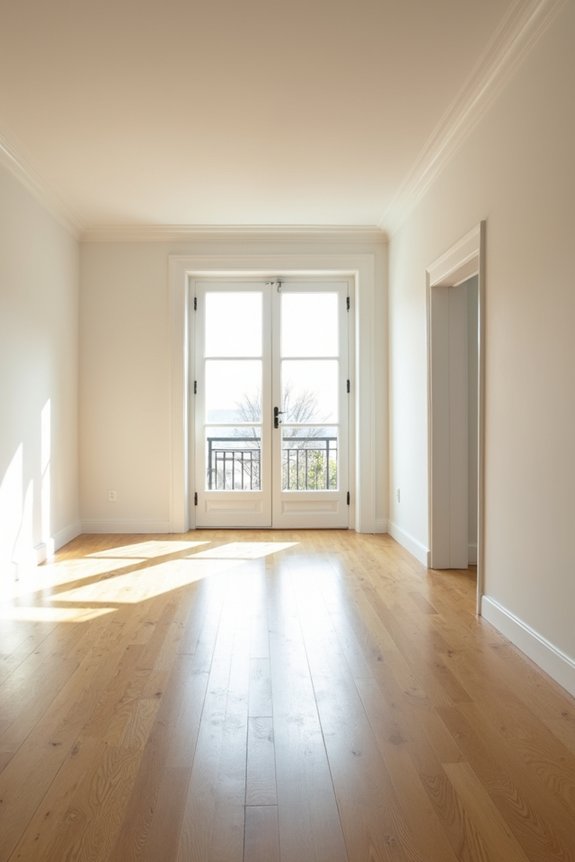
Ever notice how your eyes basically short-circuit the moment you step into a bare room? Your brain desperately wants visual cues—furniture, decor, anything—to anchor spatial perception. Without these anchors, measuring empty rooms becomes nearly impossible. Width, depth, height? Suddenly they’re all mysteries. Research from the Centre for the Built Environment confirms this struggle: our brains rely heavily on reference points to judge dimensions accurately. Strip those away, and you’re flying blind, wondering if your couch’ll actually fit or if you’re about to own a glorified walk-in closet. The emptiness amplifies uncertainty. Edges blur together. Flaws become glaringly obvious. Cold concrete and echoing footsteps won’t help either—they just reinforce that claustrophobic feeling. Your spatial perception’s taking educated guesses.
What Staging Actually Reveals About Your Home
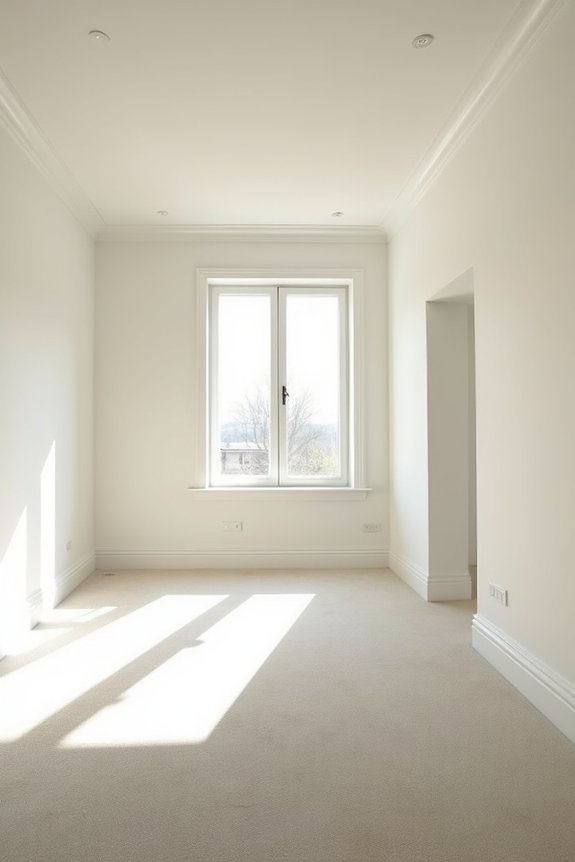
Now here’s where staging swoops in like a disappointed parent rearranging your messy bedroom before the in-laws arrive—except it actually works. Strategic furniture placement reveals what your empty rooms were desperately hiding: actual scale and flow. When I walked through my unfurnished apartment, I saw a sad void. After staging? Suddenly, I understood how my couch fit, where my dining table belonged, where guests could actually breathe without bumping elbows. Staging demonstrates real living scenarios—not just empty echoes bouncing off walls. It answers those nagging buyer questions: “Will my stuff fit here?” “Can I host dinner?” “Or am I destined for Chuck E. Cheese cups permanently?” By strategically placing furniture, you’re showing how emptiness becomes livable space. Your home stops being a geometry puzzle and becomes—finally—a place where you belong.
Mistakes That Make Homes Look Smaller
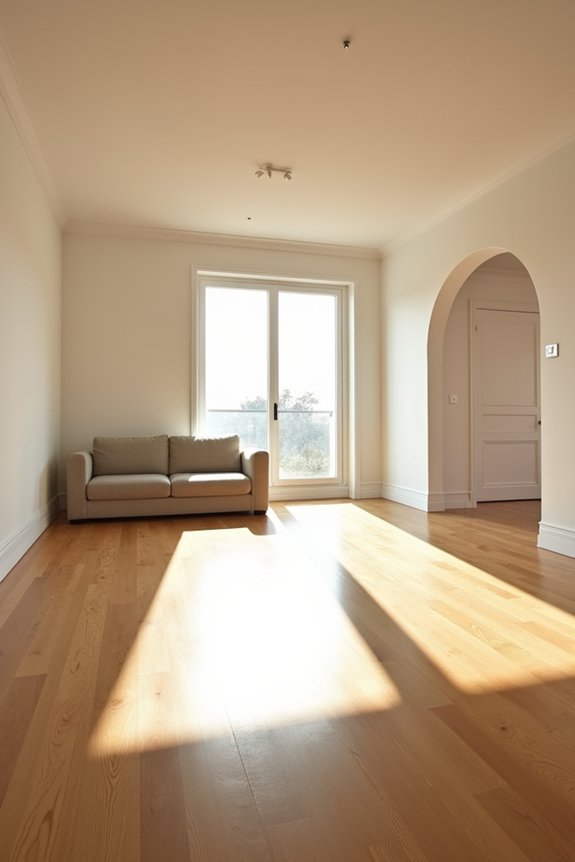
When you’re standing in an empty room, your brain’s doing something weird—it’s basically playing a game of architectural charades without the props. You’re missing visual anchors that ground perception, so your mind defaults to: smaller. Flaws that furniture would hide—scratches, wonky corners, that mysterious stain—suddenly scream for attention. Without reference points, judging width and depth becomes impossible. It’s like trying to estimate distance without landmarks.
| Staging Mistake | Why It Backfires | Perceived Size Impact |
|---|---|---|
| Leaving rooms completely bare | No visual anchors exist | Feels 30% smaller |
| Exposing wall imperfections | Draws focus to flaws | Creates cramped feeling |
| Removing all warm textures | Emotional coldness sets in | Amplifies emptiness |
Designer Sarah Chen notes, “Empty rooms trigger missing-element syndrome—buyers focus on what isn’t there rather than what could be.”
Staging vs. Moving In: What Changes After Furnishing
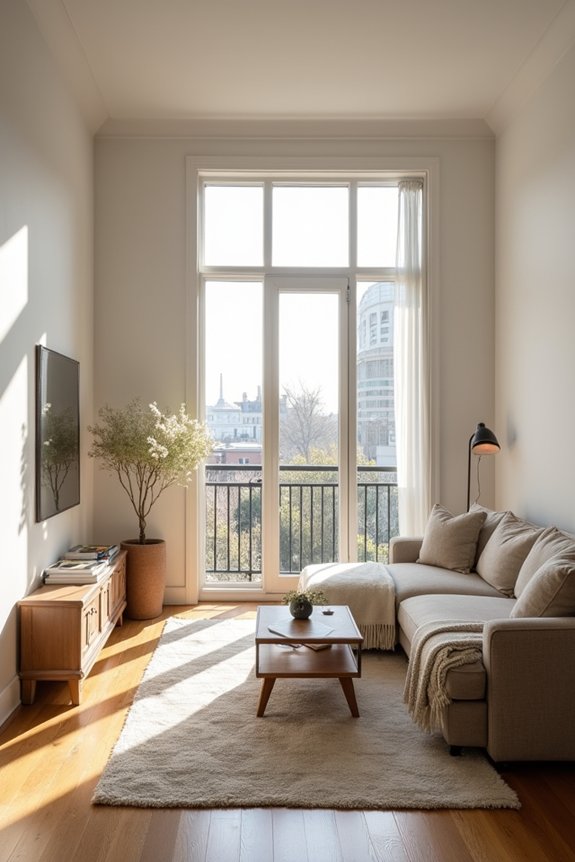
The moment you plop a couch into that depressing empty room—I’m talking real furniture, not some Instagram influencer’s minimalist fever dream—something shifts. Suddenly, your perceived space changes. That staging trick? It works because buyers can actually *see* themselves living there, not just measuring emptiness with their eyes like some architectural ghost hunt. You’ve got a corner sofa defining zones, a wall-mounted TV anchoring the room, pathways suddenly obvious where before existed only existential dread. The furnished buyer experience shifts dramatically—they’re not squinting at blank walls wondering if their grandmother’s armchair fits anymore. They’re extrapolating, imagining, *belonging*. Your home stops feeling like a depressing rental listing and becomes an actual life waiting to happen.