I’ve wasted thousands on backyard features nobody uses—fancy outdoor kitchens gathering dust while my kids demolish chicken nuggets indoors—but I’ve learned the ten renovations that actually deliver returns.
Stick to the 10–15% investment rule, prioritize lawn restoration and mature trees, then layer in hardscaping, shade structures, and landscape lighting.
Licensed contractors protect your resale value through permits and warranties.
The real advantage? Strategic placement beats impulse spending every time—and the specifics matter more than you’d think.
How Much to Invest: The 10–15% Rule and Budget Framework
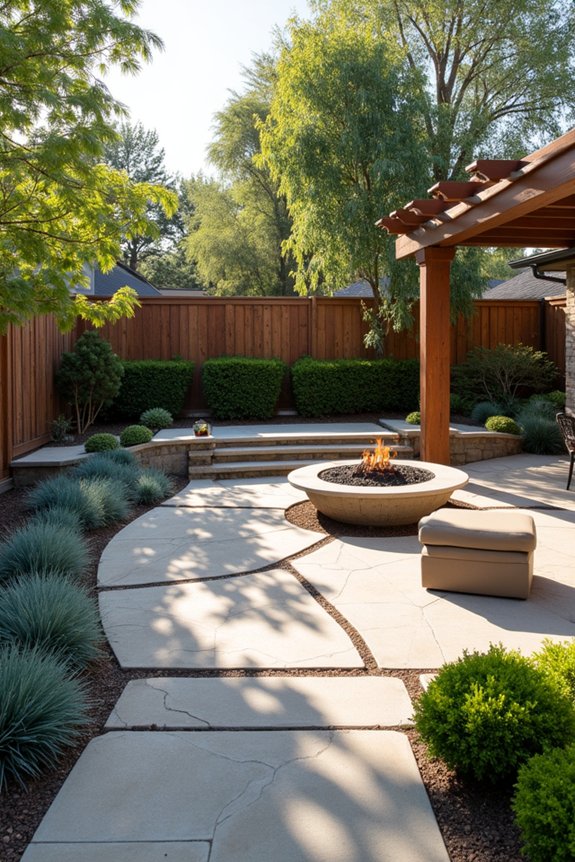
How much should you actually spend on your backyard before you’ve completely lost your mind—or your down payment fund? I’ve learned the hard way that the 10–15% rule saves you from becoming that neighbor with the half-finished deck and regret. This landscaping investment framework—endorsed by California designers—targets roughly 10–15% of your home value for outdoor ROI that actually sticks around at resale. The logic is sound. You’re hitting that sweet spot where professional hardscaping and durable materials boost resale value without draining your finances. My cousin spent 8% on a patio and recouped nearly everything; I once dropped 22% on a pergola nobody wanted. The difference between us? She followed the rule. I followed my Instagram feed. Your backyard doesn’t need to be a Chuck E. Cheese playground—it needs strategy.
Lawn Restoration and Maintenance: The Foundation of Outdoor Appeal (100%+ ROI)
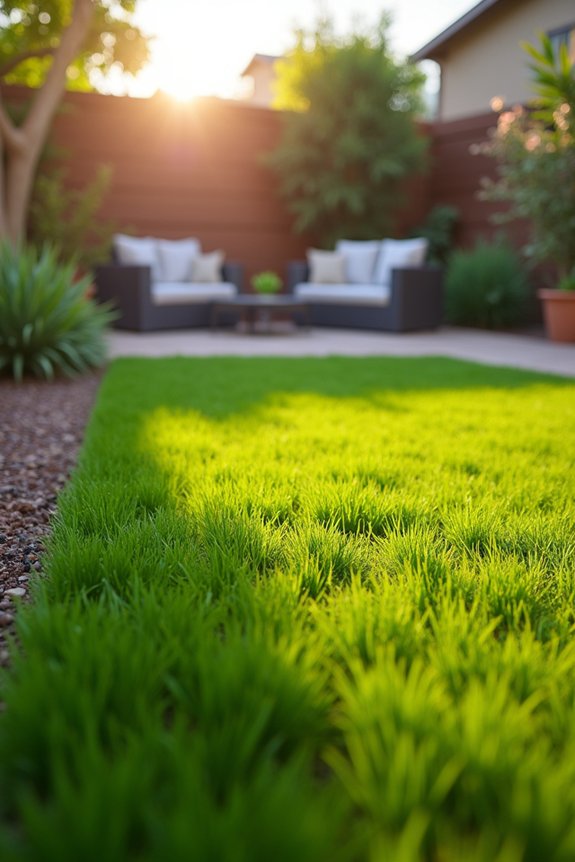
Why does a lawn matter more than we think? Because it’s the visual handshake between your house and the world—and honestly, I’ve learned this the hard way. A healthy lawn restoration isn’t just about aesthetics; it’s about ROI that actually works. We’re talking 100%+ returns, which means your $500–$5,000 investment gets fully recouped at resale. Core aeration paired with overseeding addresses those bare patches where your dog’s favorite bathroom spot used to be. Fall’s ideal for cool-season grasses; spring works for warm climates. Professional treatment runs $50–$80 monthly—a modest cost compared to the property value you’ll gain. Your future buyers will notice. More importantly, *you’ll* stop wincing at photos.
Mature Trees and Strategic Plantings: Long-Term Investments That Appreciate (100–200% ROI)
There’s something satisfying about watching a $300 sapling become a $10,000 asset—which is what happens when you plant the right tree in the right spot and then resist cutting it down during year three when it’s still spindly and disappointing.
Strategic plantings aren’t just about aesthetics; they’re investments that appreciate alongside your home’s value. Mature trees reduce cooling costs by 15–35%, which buyers notice on their electric bills. Specimen trees—think Japanese maples or flowering cherries—add $1,000–$10,000 in home value. Placement matters: well-sited trees boost privacy and energy savings, while poor positioning near foundations undermines your long-term ROI.
Plant early, stay patient, profit later.
Hardscaping: Patios and Walkways That Sell (100–200% ROI)
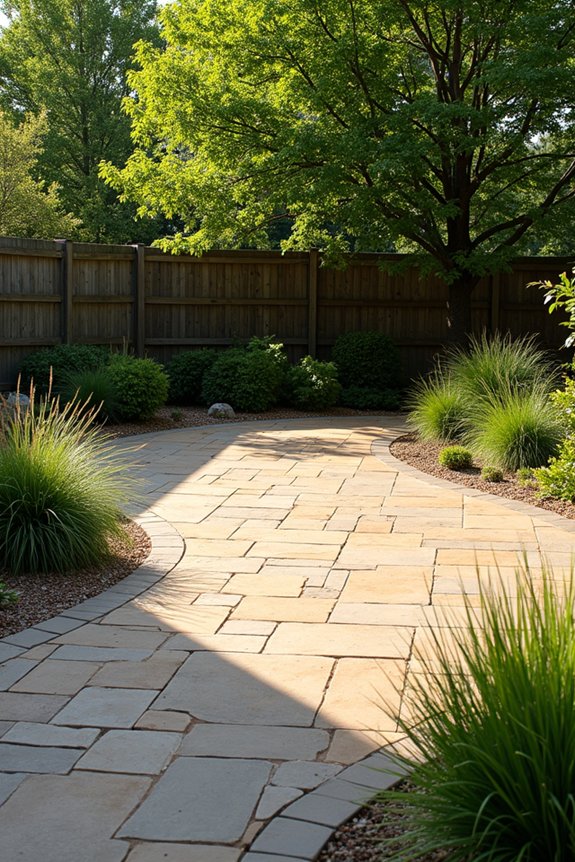
When I finally admitted that my cracked concrete slab—the one I’d been mentally photoshopping into something respectable for five years—wasn’t going to fix itself, I realized something: hardscaping is the difference between a backyard and an outdoor living space, between a listing that whispers and one that sells.
Professional hardscaping delivers 100–200% ROI. Here’s why you should care:
- Paver patios run $18–$45 per sq ft but add $30–$60 in perceived value
- Walkways yield 80%+ ROI while defining distinct outdoor rooms
- Retaining walls create usable space on slopes
- Durable driveways create strong first impressions
- Neutral aesthetic design maximizes resale appeal
You’re not just pouring concrete anymore—you’re building equity, hosting gatherings, and finally using that backyard your kids actually want to play in instead of abandoning for screens.
Deck Additions: Expanding Usable Square Footage (65–80% ROI)
A patio works fine if you’ve got level ground and the patience to watch concrete cure—but if you’re like me, you’ve got a sloped backyard, zero patience, and a vague sense that your kids need somewhere to exist besides the couch. That’s where a deck comes in. A 16-by-20-foot pressure-treated deck runs about $16,000, recouping roughly 65–80% at resale. Yeah, that’s not perfect—but it *is* real money back. You’re buying functional outdoor living space that doubles your home’s entertaining footprint, which buyers actually see in photos. Your deck becomes the difference between a backyard and a place where people actually want to gather instead of scrolling inside.
Pools and Spas: Market Expectations and Real Costs (60–80% ROI)
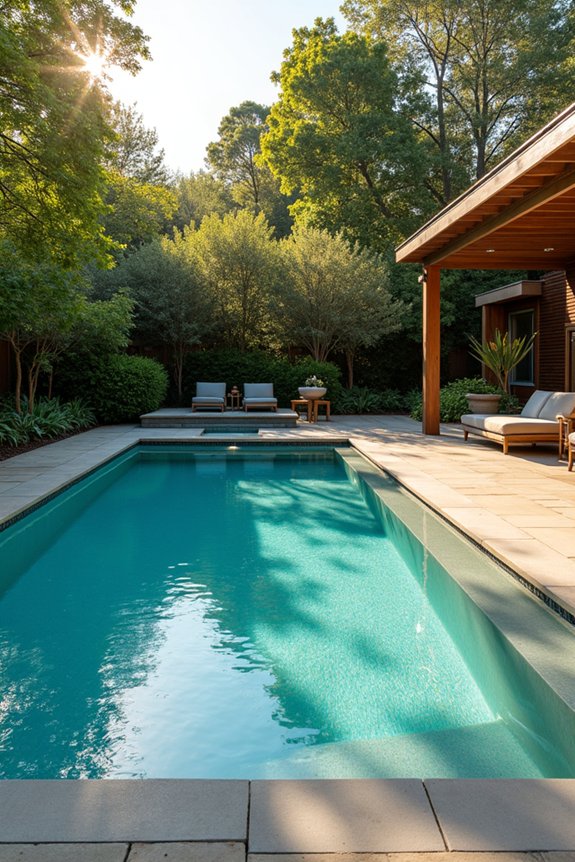
I’ll be honest—when I first priced out pools, I nearly choked on my coffee, because dropping $70,000–$130,000 on a backyard project felt less like an investment and more like financing my kids’ eventual chlorine addiction (the same kids who somehow find a way to spill ketchup on every lounger within a 20-foot radius). But here’s where my jealousy of neighbors with sparkling blue rectangles in their yards actually has merit: Southern California pools deliver a solid 60–80% ROI, potentially recouping $50,000–$100,000 at resale, especially for homes over $1 million where buyers apparently expect aquatic amenities like they expect working toilets. The real tension, though, isn’t between the sticker price and the payback—it’s between what buyers say they want (a resort-style oasis) and what they’ll actually maintain (spoiler: less than you’d think).
Market Demand and Expectations
Why do parents simultaneously claim pools are “money pits” while secretly scrolling through listings that feature them? I get it—we’re contradictory creatures. Here’s what the market actually whispers: in Southern California, pools command serious attention, especially above $1 million. Buyers aren’t just daydreaming; they’re hunting.
What drives this demand?
- Pool/spa ROI reaches 60–80%, with presence accelerating sales
- Hardscaping/landscape design creates cohesive outdoor living spaces
- Homes lacking pools often sit longer in competitive markets
- Outdoor kitchens complement pools, boosting overall appeal (55–70% ROI)
- Professional installations signal serious investment—buyers notice
The truth? A well-designed pool doesn’t just increase value; it signals you’ve joined the “we’ve got our lives together” club. Whether that’s accurate is another story entirely.
Installation Costs and Budget
The moment you’re standing in your backyard watching your kids actually use it instead of abandoning it for TikTok, you’ll realize you’ve made a different kind of investment entirely—one that’s less about recouping dollars and more about recouping sanity. Here’s the reality: installation costs run $70,000–$130,000, which sounds absolutely bananas until you factor in the ROI. You’re looking at 60–80% return, meaning your $100,000 pool could net $50,000–$100,000+ back at resale. Is it terrifying to commit that much? Absolutely. But pair it with outdoor living elements—a fire pit, lounge area—and you’re not just buying a hole filled with chlorine. You’re upgrading your entire backyard’s usability, which makes budgeting for this high-ticket improvement actually feel deliberate rather than reckless.
Resale Value and ROI Analysis
So here’s where the math actually gets interesting: that $100,000 pool isn’t just a chlorinated money pit—it’s a calculated bet on your home’s future resale value, especially if you’re sitting in Southern California or any market where pools’ve become less “nice-to-have” and more “non-negotiable for homes over $1M.” You’ll recoup 60–80% of your installation costs, which means your $70,000–$130,000 investment translates to roughly $50,000–$100,000 added back at sale—numbers that’d make a stock market enthusiast weep with envy.
Here’s what separates smart outdoor improvements from regrettable ones:
- Pools command premium ROI in competitive luxury markets
- Resale value climbs proportionally with home price tier
- High-visibility features influence buyer perception immediately
- Outdoor kitchens deliver solid 55–70% returns
- Professional hardscaping signals serious investment quality
Your backyard’s financial future depends on alignment with neighborhood expectations.
Outdoor Kitchens: High-Value Entertainment Upgrades (55–70% ROI)
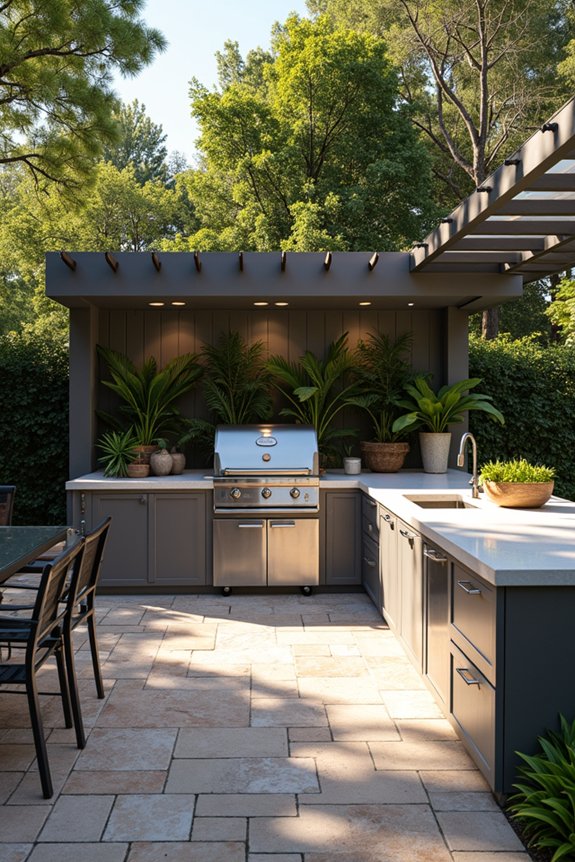
I once watched my neighbor install a built-in grill, and suddenly my backyard felt like a Chuck E. Cheese parking lot. But here’s the thing—outdoor kitchens actually deliver 55–70% ROI, making them legitimate investments, not just envy-inducing flex moves. You’re looking at $20,000–$40,000 spent, with $15,000–$30,000 in value added back. That’s real money talking. What separates winners from backyard regretters? Professional design-build execution and proper permitting. Your outdoor living spaces need cohesive design—think neutral tones, complementary landscaping, not mismatched chaos. These entertainment upgrades work because they facilitate faster home sales. They’re not about ketchup-stained memories anymore; they’re strategic lifestyle improvements that buyers actually want.
Shade Structures and Pergolas: Extended Outdoor Season (50–65% ROI)
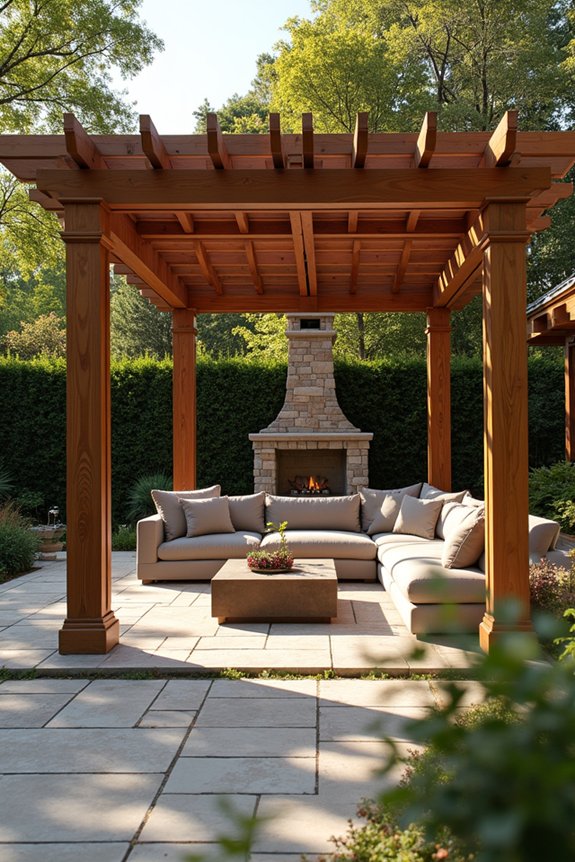
While outdoor kitchens demand serious dollar commitments, here’s where budget-conscious homeowners catch a break: shade structures like pergolas deliver nearly identical ROI (50–65%) without requiring you to remortgage your house.
I’ve watched my neighbors add pergolas to their yards—suddenly their patios became actual *rooms*, not just concrete slabs where kids spill ketchup on everything. Here’s what makes them work:
- Extend your outdoor living season by weeks
- Boost visual appeal with defined architectural elements
- Require less maintenance than full kitchen builds
- Pair beautifully with landscaping for maximum impact
- Deliver consistent ROI across warm climates like LA
Quality matters though. Premium materials and thoughtful design integration move the needle on perceived value. Skip the bargain pergola that reads as an impulse purchase—your ROI depends on it looking deliberate, not like an afterthought.
Landscape Lighting: Evening Appeal With Modest Investment (50–75% ROI)
How’s this for a backyard paradox: you spend all day telling your kids to stay inside where it’s safe, then the moment sunset hits, you’re desperately trying to coax them back outdoors for family time—except now you can’t see them, they’re tripping over deck stairs, and you’re standing in the dark wondering why you didn’t think this through?
Landscape lighting solves this mess. LED systems deliver 50–75% ROI, costing $2,000–$8,000 while adding $1,500–$6,000 in resale value. You’re basically getting paid to extend outdoor entertaining into evening hours.
| Feature | Impact |
|---|---|
| Pathway lighting | Safety + visibility |
| Tree uplighting | Architectural drama |
| Deck steps | Accident prevention |
| String lights | Entertaining ambiance |
| Professional design | Visual cohesion |
Professional installation beats DIY every time—your listing photos’ll actually look planned instead of like a gas station parking lot.
Hiring Licensed Contractors: Permits, Quality, and Resale Protection
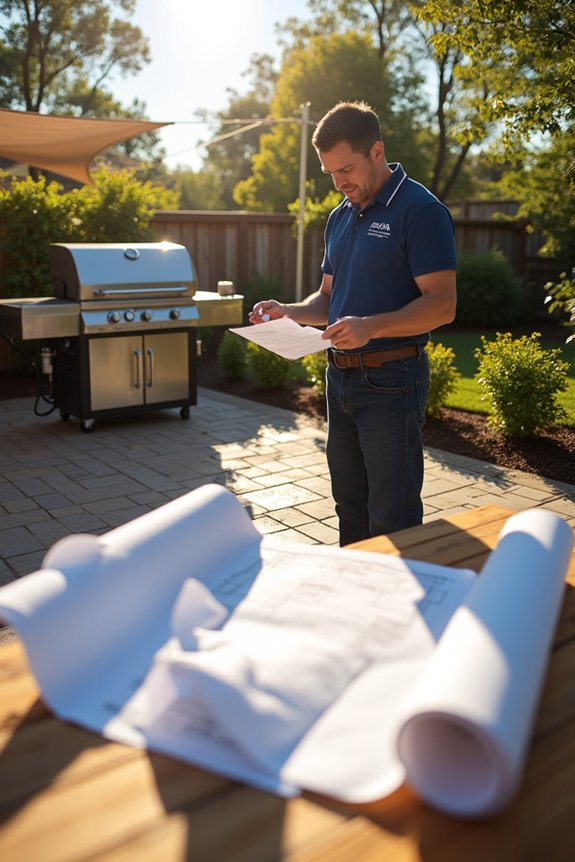
You know that moment when you’re about to hire your neighbor’s cousin who “does construction work” because he quoted you half the price of an actual licensed contractor?
I’ve been there. But here’s what I learned: unpermitted work tanks resale value faster than mystery stains on your couch.
Licensed contractors protect your investment through:
Licensed contractors protect your investment through permits, insurance, documentation, quality work, and actual warranties—real accountability that matters.
- Pulling permits that maintain code compliance
- Carrying insurance against liability disasters
- Documenting work for future buyers
- Delivering quality that doesn’t crumble mid-summer
- Providing warranties—actual accountability
Design-build firms streamline everything, collapsing timeline headaches into organized results. Get three bids, check references with photos of comparable projects, and demand transparent pricing upfront.
Your future self—the one selling this place—will thank you.