
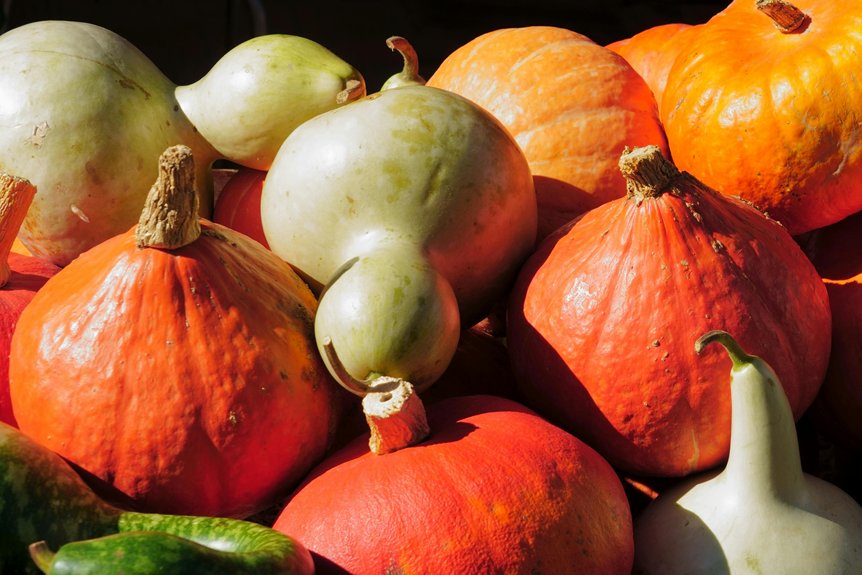
Most small decorative pumpkins aren’t actually edible—I learned this after roasting a wax-coated farmer’s market find into rubbery disappointment. Here’s the thing: painted, glittered, or sealed pumpkins are hard passes, period. Some dual-purpose varieties like white or blue-hued types can work if you verify with the grower first. But honestly? Decorative breeds taste bland and fibrous anyway. Skip the gamble unless you’ve confirmed food-safe status directly from the source—which beats the Chuck E. Cheese prizes of the pumpkin world by miles.
Are Decorative Pumpkins Actually Edible?
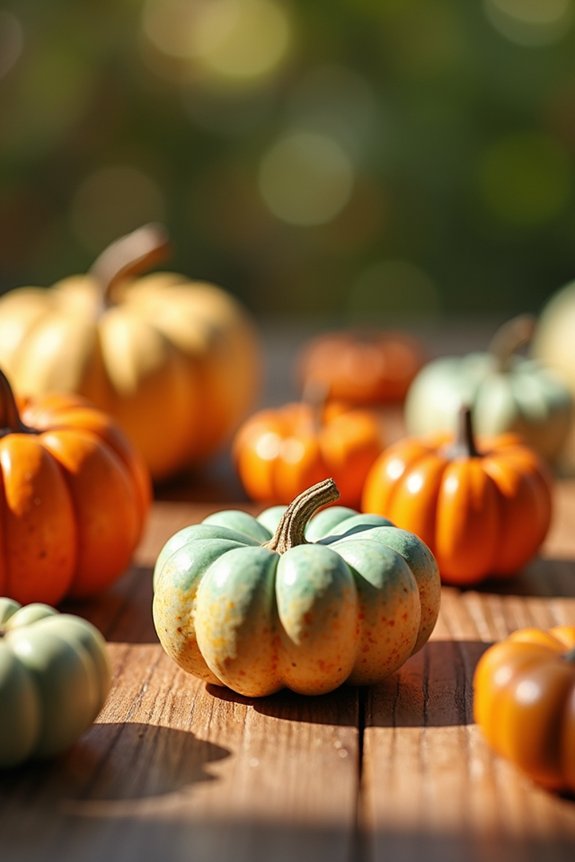
safe-to-eat verification matters. You can’t just assume your Instagram-worthy pumpkin won’t taste like cardboard or worse, harbor hidden toxins. The disconnect is real—my mom swears her decorative pumpkins are “totally edible,” yet I’ve watched her paint them neon orange. Talk to growers, check sources, and skip anything that’s already been treated, waxed, or sealed for display. Your taste buds—and stomach—will thank you.
Identifying Ornamental Pumpkins You Shouldn’t Cook
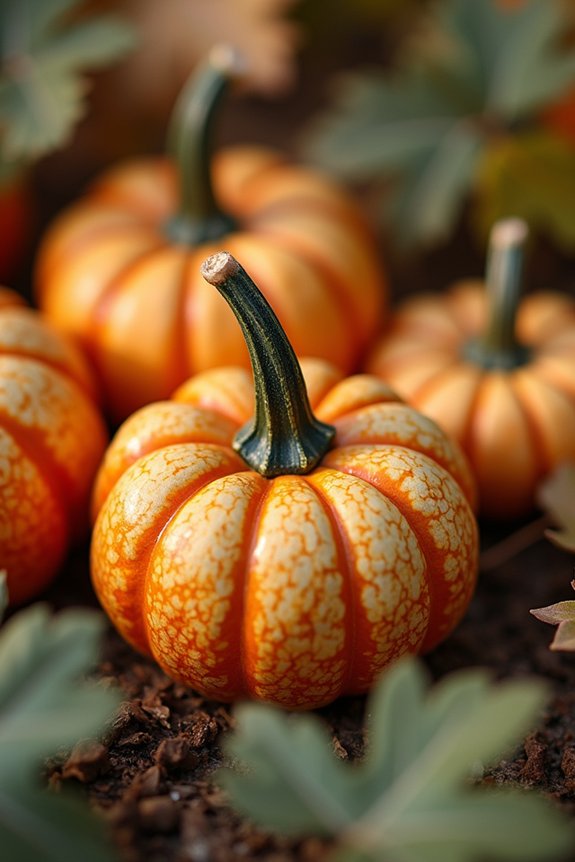
I learned the hard way that those gorgeous painted pumpkins sitting in store displays—the ones with glitter, wax coatings, and artful designs that make mine look like sad orange lumps—are not safe to cook with. You need to spot the red flags: if it’s been sealed, carved into a jack-o’-lantern, or covered in anything shinier than a natural pumpkin skin, your kitchen and your stomach will benefit from walking away. The safety risks are real—cooking with non-food-grade treatments can introduce toxins, so when I’m unsure (which is often), I toss it in the compost bin and call it a learning experience rather than risk my family’s dinner.
Visual Markers To Avoid
How’s your track record with identifying which pumpkins’ll actually taste good versus which ones’ll make your dinner guests regret showing up?
I’ve learned the hard way that ornamental pumpkins wear their fakeness like bad spray tan. Look for non-uniform coloring, suspiciously shiny coatings, and shapes so perfectly symmetrical they’d make a geometry teacher weep. These decorative varieties are display only—their bright cosmetic finishes practically beg you to admire them from across the room instead of near your cutting board.
Here’s what I check: painted surfaces, glitter (obviously), and that waxy seal that screams “don’t eat me.” Carved jack-o’-lanterns are absolute no-gos—surface contamination plus structural damage equals kitchen regret. When you’re uncertain about edible safety, just compost it. Seriously. Your stomach’ll thank you for dodging that bullet.
Safety Risks When Cooking
When you’re standing in your kitchen holding what you *thought* was a legitimate pumpkin, here’s the brutal truth: not all decorative varieties’ll survive the cooking process without potentially poisoning your whole crew. Painted, waxed, or glittered pumpkins? Absolutely off-limits—those coatings harbor safety risks that’ll ruin your dinner plans faster than spilled ketchup on fabric. Even worse, many decorative pumpkins aren’t pesticide-free, meaning they’ve been treated with chemicals designed for looks, not consumption. Carved jack-o’-lanterns collect bacteria and mold during their shelf life—genuinely gross stuff. People with actual edible varieties have an advantage: they’ve verified their source with the grower beforehand. When doubt creeps in, compost it instead. Your stomach’ll thank you.
Which Decorative Varieties Are Safe to Eat
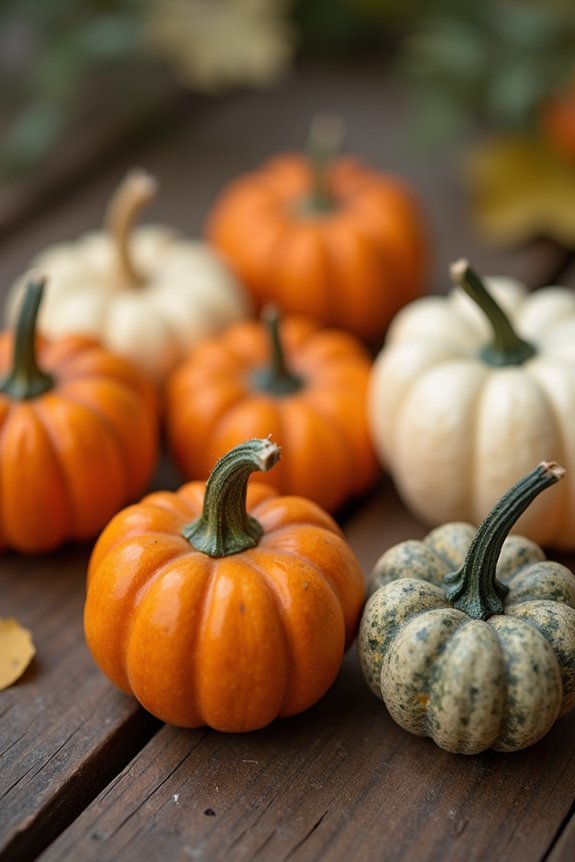
I learned the hard way that not all cute little pumpkins deserve a spot in my soup pot—some varieties are genuinely edible (hello, white and blue-hued cultivars), while others are basically decorative impostors that’ll wreck your dinner faster than my kids can demolish a birthday cake. Before I start chopping, I ask the grower directly which varieties are actually food-safe, because assuming a pumpkin is edible based on its adorable appearance is the same logic that makes me think I can parent like the Instagram moms do. Verifying safety isn’t paranoia; it’s the difference between a delicious autumn meal and a stomach situation that rivals the time my son brought home that questionable Chuck E. Cheese cup full of “special juice.”
Edible Variety Identification
Why does every decorative pumpkin look like it could feed a family of four, yet half of them taste like you’re chewing a wet cardboard box?
I’ve learned the hard way that identification matters. Not all edible varieties wear name tags, so here’s what I’ve discovered: dual-purpose pumpkins—white, blue-hued, and ribbed types—are your safest bets. These varieties actually taste decent, unlike their purely decorative cousins bred for appearance alone.
Before cooking, I always ask the grower directly about dual-purpose status. Unpainted specimens without wax or glitter are non-negotiables. The microwave test—softening the skin for 2–3 minutes—helps when I’m uncertain, though seller confirmation beats guesswork.
Skip carved jack-o’-lanterns and hard-shell gourds entirely. Use only whole, intact pumpkins. You’ll avoid the cardboard experience this way.
Safety Verification Before Cooking
How’d you know that white pumpkin sitting in the grocery store display isn’t just a pretty face with nothing edible underneath? You’d ask the grower or seller—that’s edibility verification 101. I learned this the hard way, nearly roasting what turned out to be a purely ornamental specimen. Cultivation varieties matter enormously. Some decorative pumpkins are dual-purpose food options; others? Total phonies. Before cooking, skip the painted or waxed ones entirely—they’re basically the Chuck E. Cheese cups of the produce world, better admired than consumed. When you’re eyeing those gorgeous ribbed blue varieties, confirm they’re food-safe, unpainted, and treatment-free. When in doubt, don’t risk it. Your digestive system—and your dignity—will thank you.
How to Prepare and Cook Edible Decorative Pumpkins
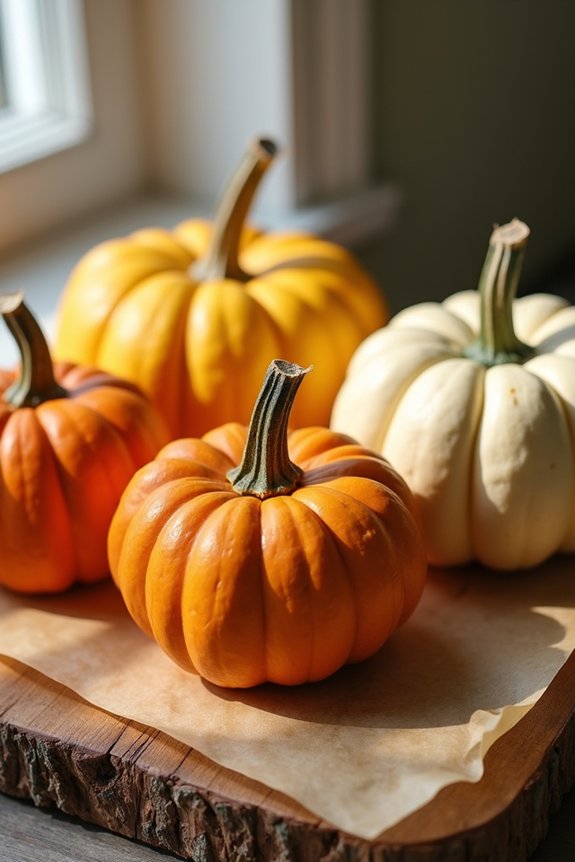
Preparing a decorative pumpkin for the kitchen requires a completely different mindset than preparing it for the porch—which, frankly, I learned the hard way after confidently slicing into a glossy, shellacked specimen that’d been baking in the sun for six weeks.
Start by selecting unpainted, food-safe pumpkins. I microwave mine for 2–3 minutes to soften the skin, then cut about an inch below the stem. Scooping out seeds and filaments comes next—messy but necessary. I season the inside generously with salt and pepper, roast upside down on foil until the flesh yields to a knife’s pressure.
Once you’ve nailed the preparation basics, you’ll find the process becomes straightforward. You’re not just decorating anymore; you’re actually cooking.
Why Decorative Pumpkins Often Taste Bland or Fibrous
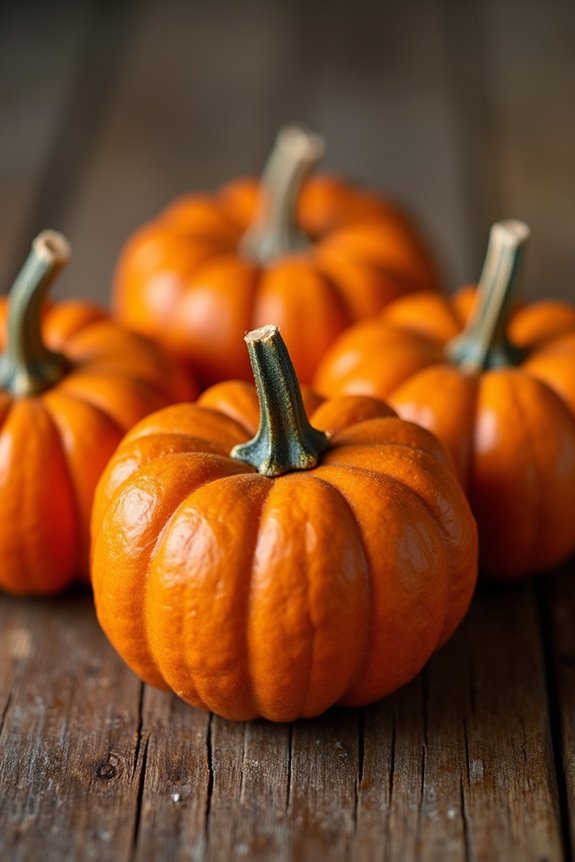
Ever bitten into a decorative pumpkin expecting something flavorful and got stringy disappointment instead? Yeah, I’ve been there. See, breeders prioritize looks over taste—those gorgeous white pumpkins you see at farmers markets? They’re bred for visual appeal, not flavor. Your decorative pumpkin likely contains more fiber than actual substance, turning into mush or tough strings when cooked. Even varieties that are actually edible weren’t engineered for culinary excellence. I learned this the hard way, serving my family bland puree that made everyone question the decision. The problem: decorative pumpkins sacrifice taste for appearance and shelf life. Culinary varieties, by contrast, get the attention growers should’ve lavished on those pretty specimens gathering dust in your entryway.
Where to Source Edible Decorative Pumpkins Year-Round
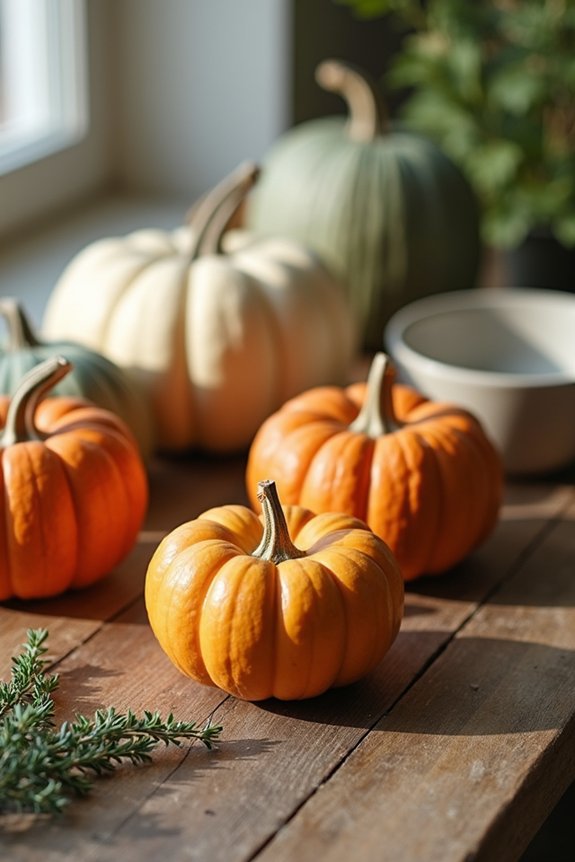
You want unpainted, food-safe pumpkins—avoid anything that’s been glossed, glittered, or sealed like it’s heading to a fall photoshoot. Smooth varieties often signal dual-purpose potential, but verify edibility before committing. White and blue options increasingly pop up alongside traditional carving pumpkins year-round. Direct conversations with growers beat guessing games. They’ll tell you what actually works for roasting, purée, and stuffing beyond Halloween theatre.