I used to think updating my kitchen required draining my bank account, but here’s the truth—bold backsplashes, open shelving, and intentional lighting handle the heavy lifting without renovation costs. Toss in vintage finds that actually mean something, grow some herbs in terra-cotta pots, and anchor everything with a grounded color palette that speaks quietly rather than loudly. The real substance? Letting your kitchen tell your story instead of some designer’s vision. Stick around to discover exactly how.
Create Kitchen Focal Points With Bold Backsplashes
When my kitchen looked like a particularly depressing beige box—the kind of space where even the overhead lighting seemed disappointed in me—I realized I’d been staring at the wrong wall.
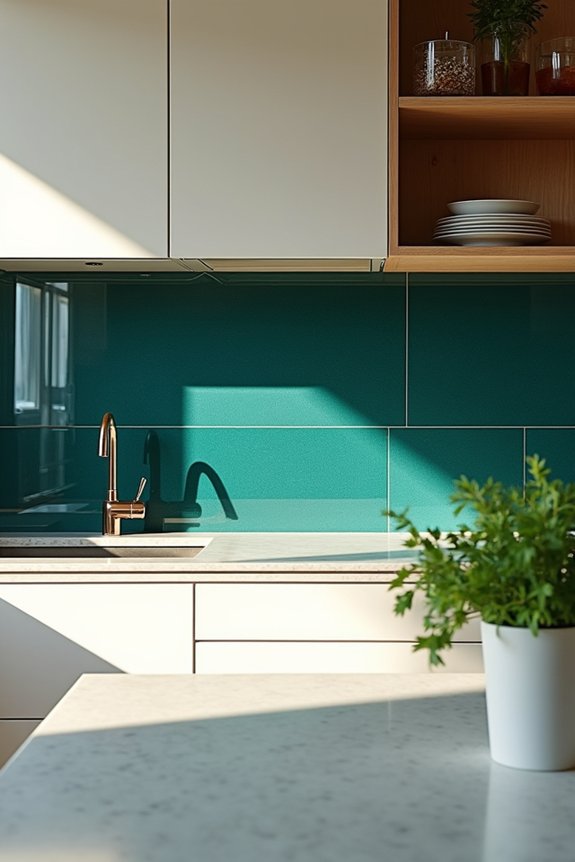
Bold backsplashes changed everything. By ditching upper cabinets for a striking scalloped quartz feature, I’d created actual drama—upward visual movement that made my galley kitchen feel less like a shoebox. The contrast? Pairing dark brass hardware against that luminous surface brought everything together in a cohesive, vibrant way.
Here’s what nobody tells you: when you eliminate upper cabinets in favor of a bold backsplash, small spaces suddenly feel more open. Add complementary finishes—black shelves, brass brackets—and you’re not fighting chaos anymore. You’re designing.
My kitchen stopped being where ketchup lived on every surface and started being somewhere I’d actually want people seeing.
Add Warmth With Kitchen-Safe Textiles and Details
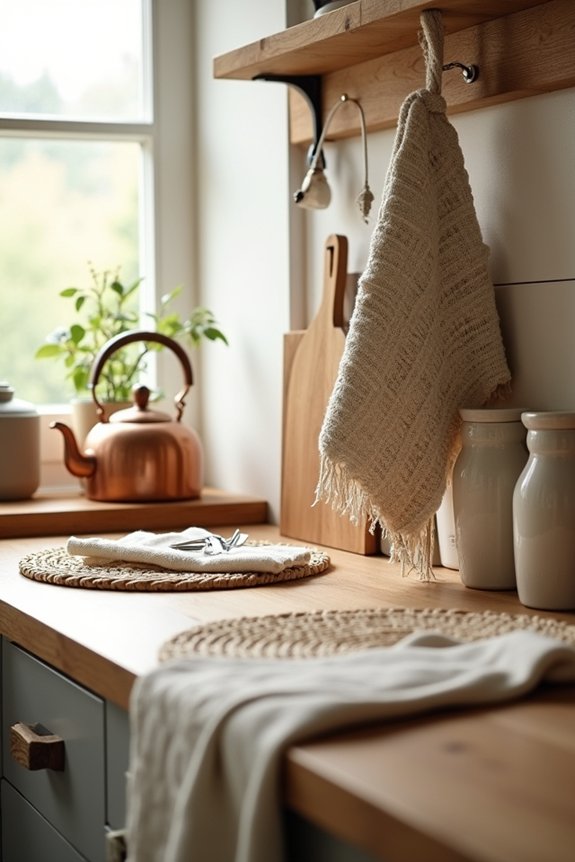
Here’s the thing—How’d I convince myself that a kitchen devoid of soft textiles was somehow more “practical”? Turns out, I’d absorbed my mom’s paranoia about ketchup stains and Chuck E. Cheese cups ruining everything. But curtains and textiles don’t just soften a space; they change how you actually want to use it.
I’ve started layering in fabrics strategically: statement curtains that reuse memory textiles, complementing chrome accents without demanding a full remodel. Soft textures like Scarlet Vine by Jasper work beautifully alongside cabinet layouts, concealing bins while creating genuine warmth. Add potted herbs in terra-cotta vessels, and suddenly my kitchen feels lived-in rather than sterile. Textiles aren’t frivolous—they’re permission to belong somewhere beautiful.
Open Your Shelving for Visual Lightness and Storage
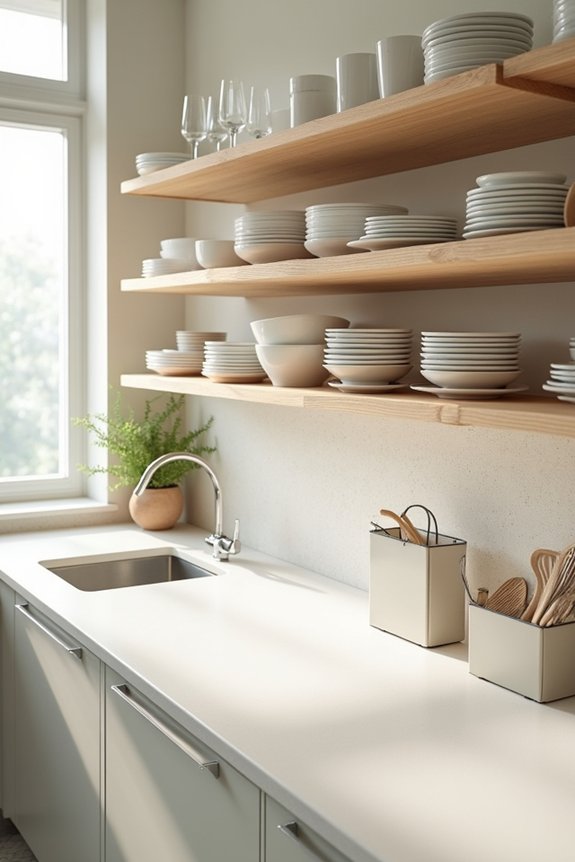
I’ve realized my kitchen cabinets—stuffed with mismatched mugs, expired spice jars, and mysterious Tupperware lids—are basically visual noise, so I’m considering open shelving to clear the space and stop hiding my chaos behind closed doors. The trick isn’t just ripping out cabinet doors and hoping for the best; it’s about pairing slim shelves with organized displays—think marble countertops matching marble shelves, strategically placed cookbooks, and those aesthetic wooden boards that make everything look deliberate (even when you’re eating cereal for dinner at 8 p.m.). Real designers agree that open shelving expands visual space while keeping everything accessible, which means I can finally stop pretending my parents were right about “a place for everything”—I’m just doing it where everyone can see my failures.
Visual Space Expansion Techniques
Because my kitchen’s upper cabinets were basically a graveyard of mismatched bowls and that one fancy serving platter I’d never use, I finally understood why designers kept raving about open shelving—and honestly, it changes how you think about kitchen storage.
Here’s what actually works for visual space expansion:
- Replace upper cabinets strategically with exposed shelving to eliminate that claustrophobic, cluttered feeling that screams “I have problems”
- Use cohesive materials—same marble across countertops and islands—creating flow that makes cramped spaces feel larger
- Style intentionally with cookbooks and boards, not Chuck E. Cheese cups, so your kitchen looks organized rather than ransacked
The trick? Pair slim metal shelves with rails underneath for garlic and utensils. Suddenly, your kitchen doesn’t whisper “hot mess.” It whispers “I’ve got my life together”—even if you’re still discovering mystery Tupperware lids.
Functional Storage Organization Methods
Most of us stuff our open shelves like we’re preparing for an apocalypse—until a designer casually mentions that “negative space is your friend,” and suddenly you realize you’ve been doing it backwards. I’ve learned that true *storage organization* through open shelving means being selective rather than accumulating everything. I now place my everyday dishes, spice racks, and frequently used utensils within arm’s reach, eliminating the counter clutter that once buried my workspace. Matching marble tones and wood accents create visual harmony—my shelves finally look deliberate rather than like a thrift store exploded. Slim metal rails maximize storage without overwhelming the room. Brass hardware and breathing room between items? That’s when my kitchen stopped feeling claustrophobic and started feeling like somewhere I’d actually want to cook.
Light Your Kitchen to Enhance Every Decoration Choice
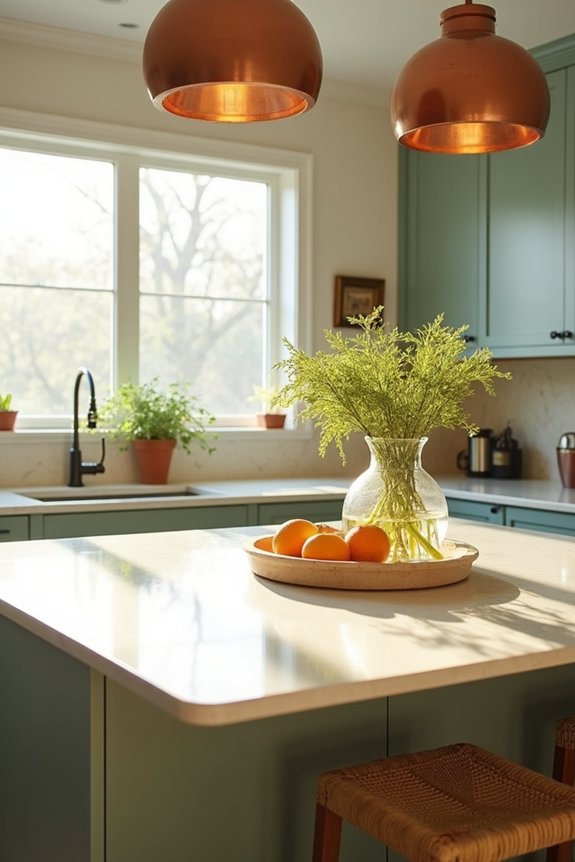
I learned the hard way that slapping overhead lights everywhere just makes my kitchen look like a Chuck E. Cheese—so I started layering different sources: pendant lights over the island for task work, ambient fixtures that don’t wash out my panda quartzite counters, and dedicated picture lights that actually make my gallery wall look planned rather than like something I’m hiding. Turns out, the right fixture placement doesn’t just show off your décor; it prevents those awful shadows on open shelving that make your herbs look like they’re staging a funeral, and it keeps the whole space feeling organized instead of chaotic. When I stopped thinking of lighting as an afterthought—you know, that thing my parents inexplicably ignored while demanding I “see what I’m doing”—I finally understood that every light choice either works with your design or works against it.
Layering Light Sources
How many times have you stood in your kitchen at 6 p.m. squinting at your gallery wall like you’re deciphering ancient hieroglyphics—only to realize the overhead light’s doing absolutely nothing except making everything look like a hospital cafeteria?
Combining ambient, task, and accent lighting fixtures creates actual depth instead of that sad, flat fluorescent vibe.
Here’s what I’m doing:
- Installing picture lights above my gallery wall to anchor meaningful plates and artwork
- Adding under-cabinet lighting coordinated with my backsplash to eliminate glare
- Strategically placing brass fixtures to enhance natural marble veining
The result? My kitchen functions better and looks more polished—like I actually planned this instead of inheriting a lighting situation from 1987.
Enhancing Color And Texture
Now that your lighting’s doing the arduous work—actually illuminating what’s in your kitchen instead of just making you squint—it’s time to let your color and texture choices work. I’m talking bold surfaces that make cramped spaces interesting, not Pinterest disasters.
| Design Choice | Why It Works |
|---|---|
| Panda quartzite counters | Creates focal point drama |
| Brass + black hardware | Balances bold backsplashes |
| Wood shelving with metal brackets | Provides warmth without clutter |
| Glazed tiles | Reflects light, expands space |
Texture layering—mixing materials strategically—adds depth without making your kitchen look like a craft fair exploded. Pair statement finishes with restraint elsewhere. Remove upper cabinets, redirect focus to backsplash details, and suddenly your tiny galley kitchen isn’t claustrophobic anymore. Bold kitchen design doesn’t mean chaotic.
Creating Ambiance With Fixtures
Because lighting’s basically the difference between “gallery-worthy kitchen” and “crime scene interrogation room,” it’s time to stop treating your fixtures like afterthoughts—they’re actually the hidden asset that makes every color choice, texture layer, and decorative object you’ve chosen actually *matter*.
Here’s what I’ve learned:
- Picture lights anchor gallery walls — they turn your favorite art into a striking focal point that whispers “I have taste” instead of screaming “this came with the house”
- Brass fixtures warm everything up — paired with task lighting near prep areas, they create welcoming ambiance while keeping functionality intact
- Natural light through windows showcases plants and dishware, proving you’re not just decorating—you’re *living*
The ambiance you create through intentional lighting choices? That’s where your kitchen stops feeling generic and starts feeling like home.
Curate Vintage Finds and Personal Collected Art
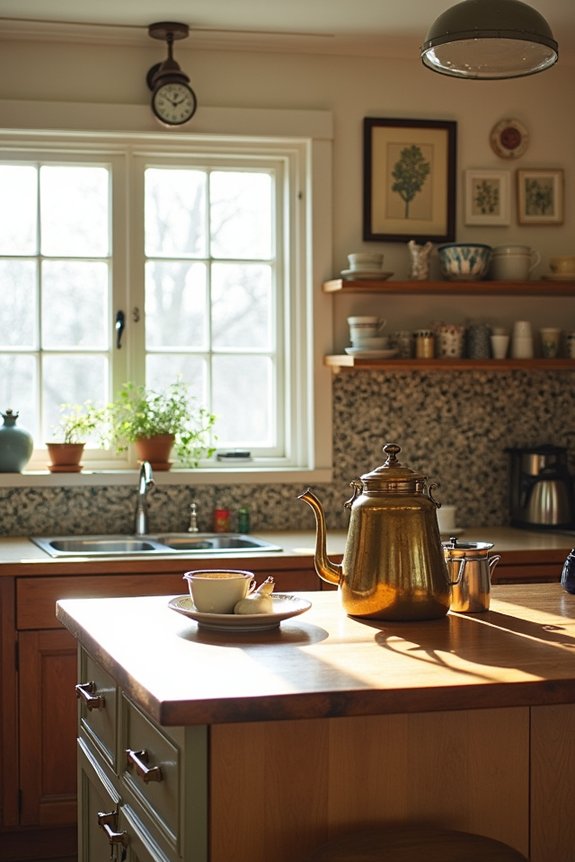
One of my favorite kitchen shortcuts—and I mean this truly, not as some humble-brag about my “eclectic aesthetic”—is loading open shelving with stuff I actually care about instead of pretending mason jars and matching dinnerware sets are personality.
I’ve mounted antique plates I inherited from my grandmother alongside vintage finds from flea markets—each piece tells a story rather than screaming “I bought this at Target.” My oyster tins sit next to a Chuck E. Cheese cup my kid insists belongs there, creating honest, lived-in decor that beats sterile perfection.
These personal collected art pieces and vintage accents turn my kitchen into a gallery of memories. It’s functional display-worthy storytelling—no expensive remodel required, just deliberate curation of what genuinely moves me.
Grow Herbs and Greenery That Works in Your Kitchen
While curating those inherited plates and flea market finds fills my shelves with soul, I’ve discovered that living plants do something even my favorite vintage cup can’t—they actually grow and change, which is either deeply metaphorical or just what happens when you remember to water them more than twice a year. I’ve learned that kitchen greenery makes countertops into living displays. Here’s what works:
- Potted herbs in terra-cotta containers provide visual interest against sleek cabinetry while providing fresh basil for dinner
- Window gardens with hanging shelves maximize southern light and deliver year-round greenery
- Handmade vases with trailing plants plus brass accents create visual depth
This approach blends functionality with design—my herbs actually earn their counter real estate, unlike that decorative cheese grater gathering dust.
Pick a Color Palette That Grounds Your Kitchen Space
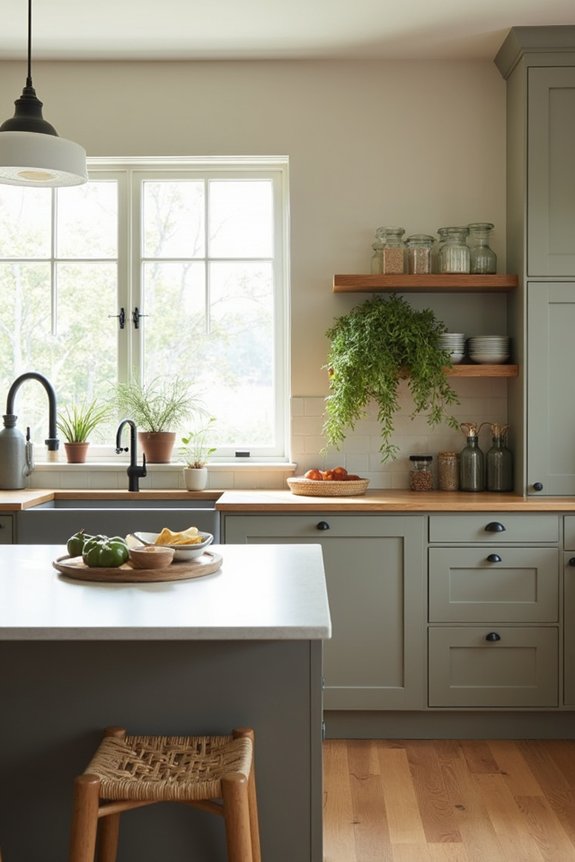
After years of impulse-buying cabinet paint in shades with names like “Whispered Sage” and “Existential Beige,” I’ve finally grasped what designers have known all along—a grounded kitchen palette isn’t about chasing trends, it’s about creating a backdrop that won’t make you regret your life choices at 6 a.m. when you’re standing in front of your cabinets in questionable lighting.
I’ve discovered that pairing light whites with warm neutrals works well. My two-tone cabinet scheme—white uppers with darker lowers—brightened the space while keeping things visually balanced. Adding brass hardware and marble-simulated countertops tied everything together without demanding attention.
Your color palette should whisper, not shout. When you establish this foundation, you’re not just decorating—you’re building a kitchen that actually functions as home.