I used to think fixing up my backyard required either deep pockets or a designer on speed dial, but I’ve discovered seven moves that actually work—mostly under a hundred bucks. Start by mapping zones with rugs and string lights, then anchor seating strategically. Layer in thrifted plants, mismatched planters, and shade structures (pergolas are your friend). Add a proper dining table so you’re not standing around like it’s a Chuck E. Cheese parking lot. Build gradually across seasons, hunting sales like your life depends on it. The specifics on making each element work without looking, well, *trying*? Scroll ahead.
Add Coziness With a Rug and Lighting
How’s your backyard looking right now—like a blank concrete canvas or a jungle your spouse keeps threatening to “handle this weekend”? I’ve been there, staring at nothing but weeds and regret.
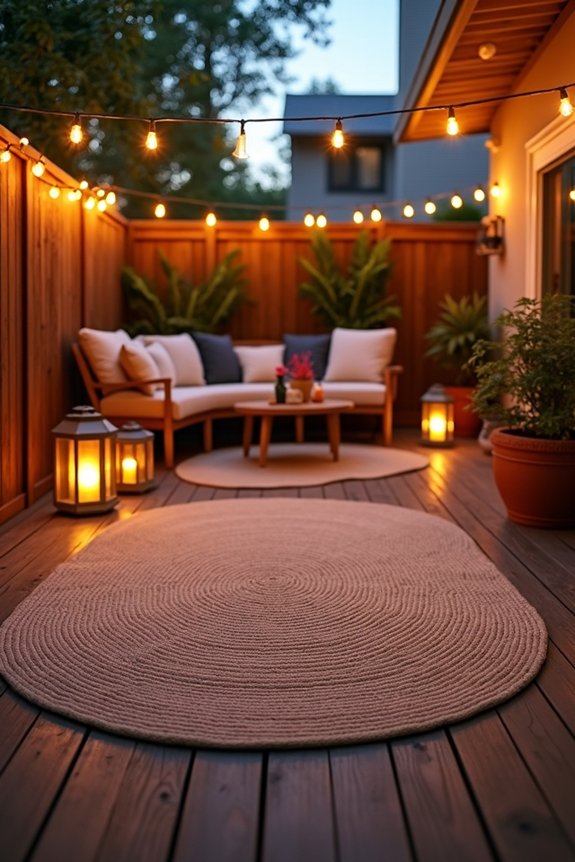
Here’s the truth: an outdoor rug anchors everything. I grabbed mine from Facebook Marketplace for twenty bucks, and suddenly my seating area felt settled—less “we gave up” and more “we belong here.” Pair it with string lights or solar lights, and you’ve changed that sad patio into somewhere you’d actually want to sit.
The lighting ideas matter most. Those white string lights? They work well. They turn my backyard from “where did I leave my phone” into a pleasant atmosphere. Add lanterns or tiki torches—budget solar options exist—and you’re not just decorating. You’re creating a space where people want to linger, ketchup stains and all.
Choose Budget-Friendly Seating for Lounging and Relaxation
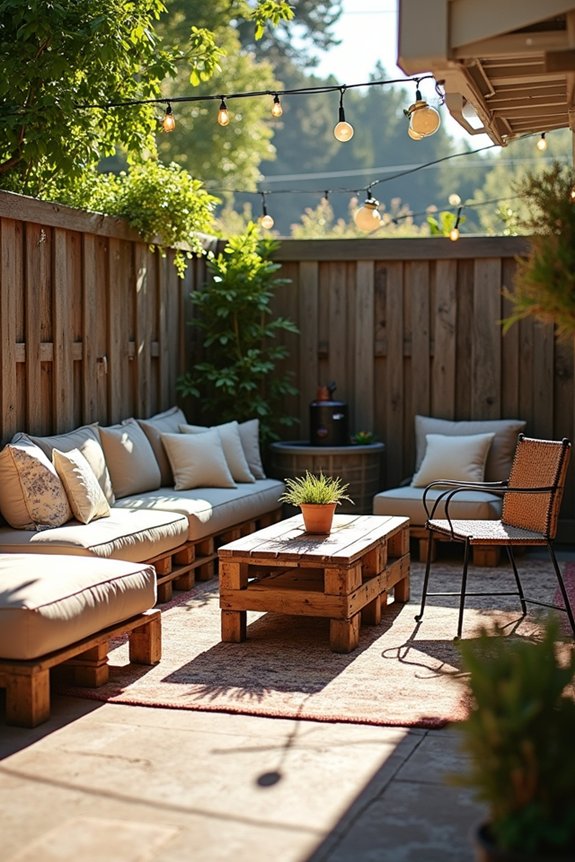
Now that your seating area’s got a proper foundation—rug, lights, the whole vibe—you’ll actually need somewhere to sit that doesn’t scream “we bought this at a liquidation sale.” Here’s where I’ve learned to get scrappy: Facebook Marketplace has become my personal furniture playground, especially when summer winds down and people panic-sell their barely-used lounges for pocket change.
Your end-of-season deals goldmine awaits:
- Zero gravity chairs—portable, flexible, and ridiculously affordable when August hits
- Thrifted sectionals and chaises that need nothing but a DIY paint refresh
- Hanging couches or swings that give your backyard that dreamy Pinterest moment
Budget-friendly outdoor seating doesn’t mean sacrificing comfort. I’ve nabbed lounging setups for less than a decent dinner out. Pair whatever you score with an outdoor coffee table and some florals—suddenly your mismatched finds look planned, not desperate.
Use Plants and Mix-and-Match Decor for Visual Interest
I’ve learned the hard way that throwing random plants at a problem—much like my parents insisting a single ficus could somehow absorb spilled ketchup from last summer—doesn’t actually work, so I started hunting thrifted planters and dollar-store containers to create arrangements that looked deliberate instead of like a plant graveyard. Mixing colorful pots with hanging baskets and vertical wall displays takes even the saddest corner and makes it worth photographing, and honestly, rotating seasonal annuals beats maintaining one sad, dying specimen that my kids treat like a Chuck E. Cheese cup holder. The real payoff happens when you stop overthinking and just pair mismatched textures—weathered wood stands next to shiny metal tins, trailing succulents next to spiky grasses—because that chaotic energy is exactly what makes a backyard feel lived-in rather than like a catalog shoot.
Colorful Plant Arrangements
- Mix potted plants at various heights with hanging baskets and planter boxes to create a vertical garden effect
- Choose cheap annuals for instant colorful flowers—they’re forgiving and replaceable when you inevitably neglect them
- Repurpose random containers (rusty tins, old jars) to add texture without guilt-spending
Combine foliage textures with pops of color, positioning arrangements near seating areas. You’re not just decorating; you’re claiming space where you’ll actually want to sit. That’s what matters—making your backyard feel like somewhere worth lingering, even if your succulents don’t survive.
Thrifted Furniture Styling
Your plants are looking great—now let’s talk about what they’re sitting on, because honestly, a thriving pothos can only do so much to distract from mismatched lawn chairs that look like they survived a yard sale reject pile. I’ve been there—surrounded by plastic furniture that screams “we gave up”—and I’m here to tell you thrifted furniture styling works.
| Source | Price Range | Best For |
|---|---|---|
| Facebook Marketplace | $10–$50 | Wooden benches, metal frames |
| Estate sales | $15–$75 | Quality vintage pieces |
| Local thrift stores | $5–$40 | Wicker chairs, side tables |
| Curb alerts | Free–$20 | Repurposed indoor pieces |
Mix wood, metal, and wicker—skip matching sets. Throw on budget-friendly cushions, toss a blanket over that sketchy upholstery stain (ketchup? don’t ask), add potted plants, and suddenly you’ve got a space that actually feels intentional instead of furniture rejection.
Add Shade Structures for Comfort and Privacy
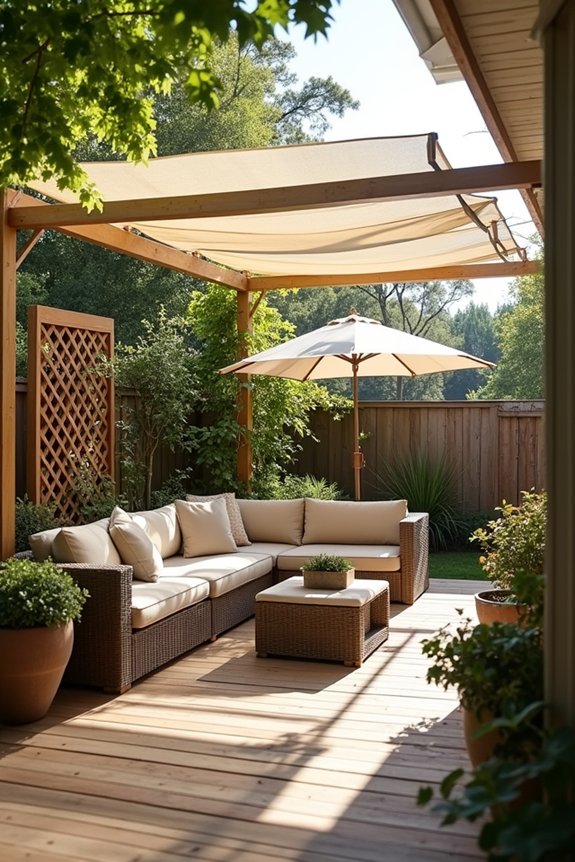
I’ve learned the hard way that a backyard without shade is basically just a sun trap where my kids spill ketchup on everything while complaining they’re hot—so I finally invested in a pergola, paired it with some climbing vines, and suddenly we’ve got this legitimately cool (literally and figuratively) entertaining zone that doesn’t require me to hose down sticky Chuck E. Cheese cups every five minutes. Canopies and gazebos work too if you’re on a budget, especially during end-of-season sales when you can snag deals that feel like a real win. The privacy bonus? That’s just the cherry on top—you get to enjoy your backyard without every neighbor knowing exactly when your kids are melting down.
Umbrellas, Pergolas, And Gazebos
Shade structures—umbrellas, pergolas, and gazebos—are basically the difference between hosting a pleasant evening gathering and watching your guests slowly melt into your patio furniture like expired ice cream. I’ve learned this the hard way.
Here’s what I’d recommend:
- Start with umbrellas for flexible, affordable coverage you can reposition as the sun moves
- Invest in pergolas to define living zones while supporting climbing vines for natural privacy
- Hunt for deals on used gazebos or end-of-season sales to slash costs considerably
DIY options like Toja Grid brackets keep expenses reasonable—roughly $1,100 total with hardware and lumber. You’ll extend outdoor use from late morning through evening, making your backyard a functional hangout spot instead of a solar oven where Chuck E. Cheese cups get permanently welded to tables.
Budget-Friendly Shade Solutions
end-of-season sales hit different. I scored pergola hardware for $800, lumber for $300—total win. Skip the premium stuff; second-hand options work brilliantly. Your outdoor space doesn’t need perfection; it needs functionality.
Umbrellas, pergolas, gazebos—pick one that fits your budget and vibe. Cost savings come down to timing your purchases right. Late August through September? That’s when retailers practically beg you to take shade structures off their hands.
Pair whatever you choose with a seating area. Suddenly you’ve got a legitimate hangout spot instead of a sun-scorched wasteland where your kids spill ketchup and sticky Chuck E. Cheese cups.
Privacy And Cooling Benefits
While you’re sitting in that seating area you just created, you’ll notice something happens: you’ve actually created a reason to stay outside longer than five minutes before the sun turns you into a lobster. I learned this the hard way after my pergola arrived.
Here’s what makes your patio an actual hangout spot:
- Shade structures like pergolas define outdoor rooms while cooling everything beneath them—no more ketchup melting off hot dogs
- Privacy benefits emerge when you layer in light-filtering curtains or mosquito nets, creating retreats that feel intentionally yours
- Cooling power compounds when shade combines with strategic seating, making your deck inviting instead of a Chuck E. Cheese parking lot in July
That’s it. You’re not decorating—you’re engineering comfort.
Set Up a Functional Backyard Dining Space
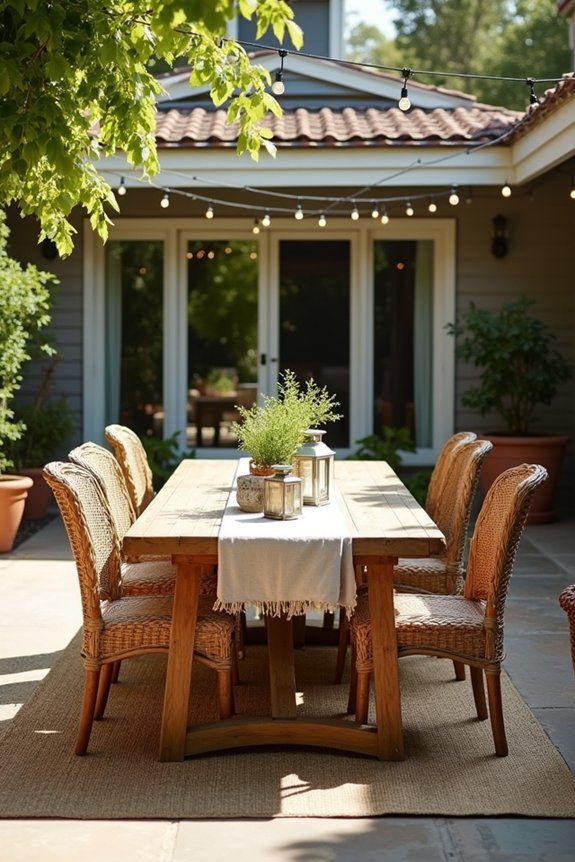
Why do we pretend our kids’ll eat vegetables outdoors when they won’t touch them inside? I learned the hard way that a functional backyard dining area requires actual strategy—not just wishful thinking.
A functional backyard dining area requires actual strategy—not just wishful thinking and hopes kids’ll suddenly eat their vegetables outdoors.
I invested in weatherproof furniture and a sturdy table, then anchored the space with a rug to define my outdoor living zone. It worked. Suddenly, family dinners happened outside, ketchup stains on fabric notwithstanding.
I’d caught end-of-season sales around July, scoring deals that’d’ve been expensive otherwise. Mixing thrifted chairs with new pieces kept costs reasonable while creating cohesion—no matchy-matchy desperation needed.
The reality? A designated dining area with proper seating encourages actual meals instead of Chuck E. Cheese chaos. Your outdoor living improves when you commit to the space deliberately, not halfheartedly.
Start by Mapping Your Backyard’s Main Zones
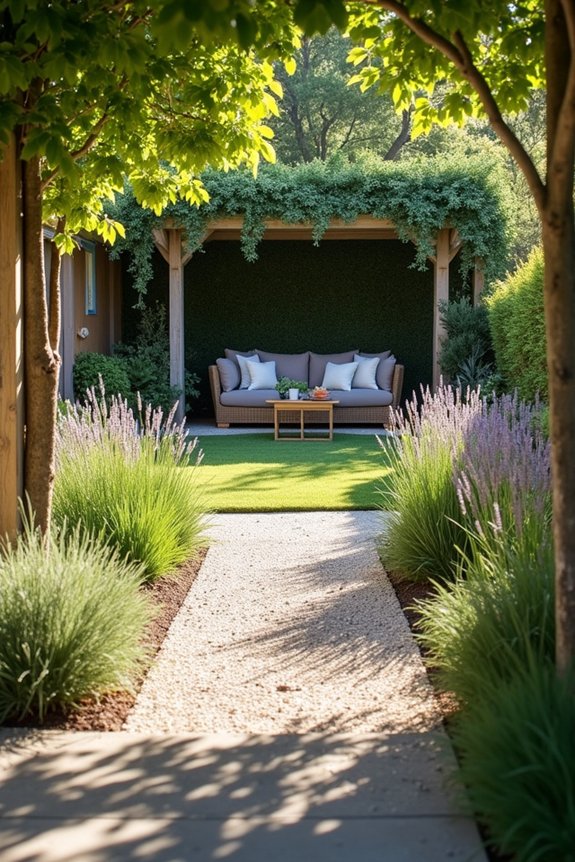
Before you start dropping $300 on outdoor pillows you’ll never sit on, take twenty minutes to actually map out what your backyard could become. I learned this the hard way after buying a fire pit that blocked the only path to my shed.
Divide your outdoor spaces into distinct zones that actually serve your life:
- A seating area where you’ll hang out instead of scrolling inside
- A dining space—because eating chips standing up loses its charm
- A plant nook or fire pit focal point for visual interest
Define these zones using potted plants, outdoor rugs, and string lights rather than walls. Plan your traffic paths first, creating clear sightlines and minimal clutter. This prevents the inevitable chaos of tripping over decorative lanterns at dusk. You’re creating flow, not an obstacle course.
Build Your Backyard Gradually Across Seasons
Now that you’ve mapped out your zones, resist the urge to furnish your entire backyard in one weekend—I’ve been there, and it’s a financial disaster wrapped in buyer’s remorse. Instead, build gradually across seasons. Your wallet—and your sanity—will thank you.
Start with foundational pieces this year: shade structures, basic seating, durable lighting. Then stockpile during seasonal sales. Memorial Day, Fourth of July, Labor Day—these aren’t just barbecue excuses; they’re your golden opportunities to snag next summer’s outdoor treasures at half price.
Hit thrift stores for weathered side tables and vintage planters. DIY what you can now. This measured, seasonal approach lets you decorate thoughtfully without the financial panic, building an outdoor space that actually matches who you are—not who Target’s marketing team thinks you should be.