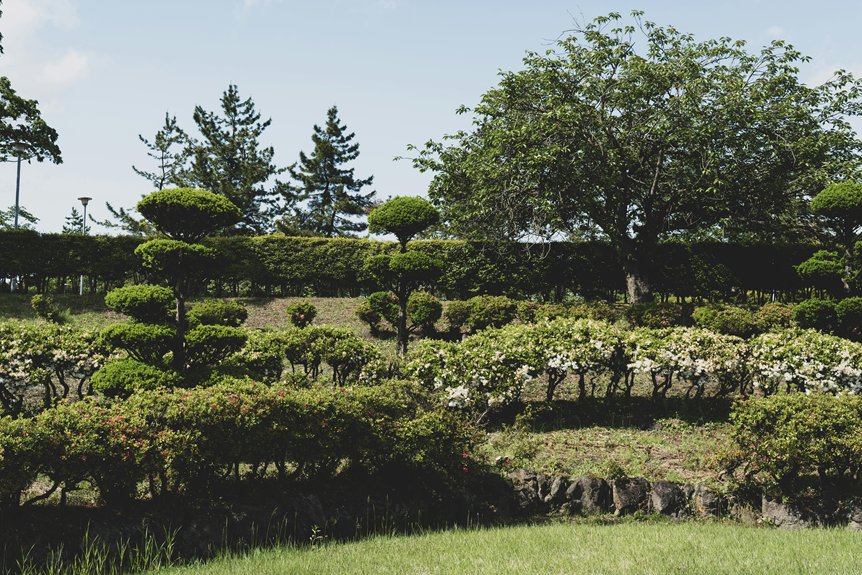
I’ll be honest—I used to think small decorative trees were just sad, stunted versions of the real thing. Then I realized they’re actually practical: compact woody plants reaching 5–20 feet, deliberately bred or grafted to deliver real landscape value without overwhelming your yard. They’ve got four-season bones, fit container life, and put awkward corners to good use. You’re not settling for less; you’re getting maximum impact with minimum fuss, which—if you’ve got a postage-stamp yard like mine—feels like a solid win.
What Makes Small Decorative Trees Different?
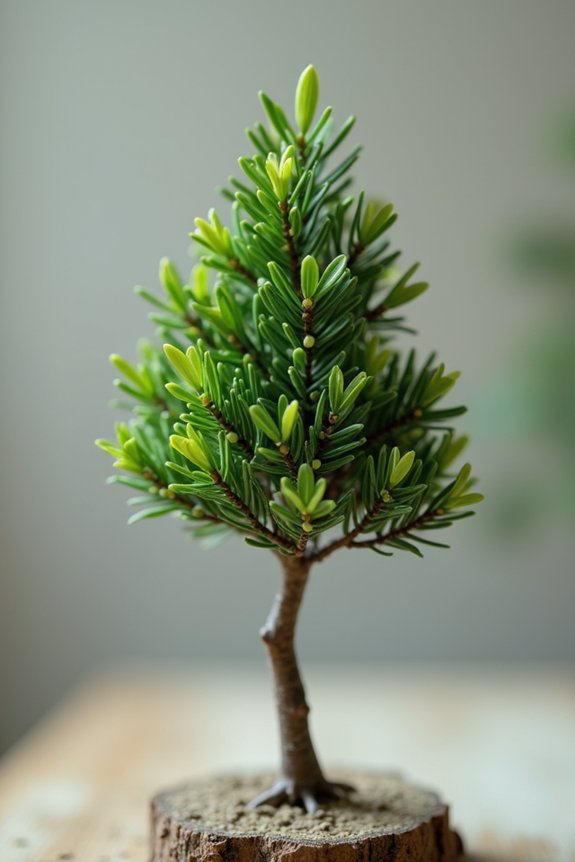
Why do small decorative trees feel like the right solution to every landscape problem I’ve ever bungled? They’re compact enough to fit anywhere—foundation beds, containers, that awkward corner where nothing thrives—yet substantial enough to actually matter. Unlike my previous attempts at gardening, which resembled neglected houseplants, these trees offer genuine versatility. They work in tight urban spaces where sprawling oaks would be like inviting a Great Dane into a studio apartment. The real advantage? Size control. Whether through genetics or rootstock, they stay manageable without constant pruning torture. As landscape designer Sarah Chen notes, “They’re right-sized solutions that maintain sightlines and accessibility.” Four-season structure, minimal fuss, maximum benefit—they’re basically the responsible older sibling landscaping finally deserved.
Small Trees That Thrive in the St. Louis Metro Climate
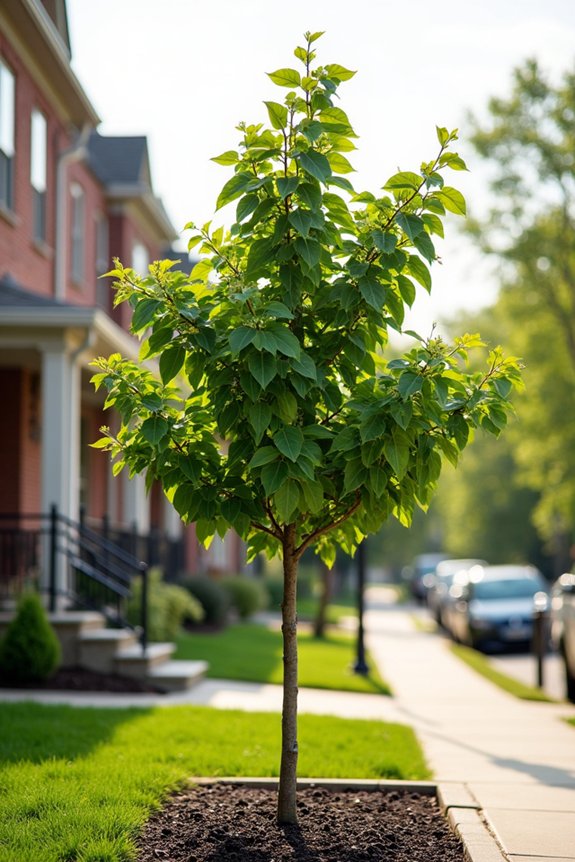
How does one go from killing a single Japanese maple to suddenly envisioning an entire St. Louis garden? I did—and I’m betting you’re wondering the same thing.
Here’s what changed: I stopped fighting the climate and started working with it. Redbud varieties like Alley Cat stay compact, fitting snugly into tight spaces without throwing tantrums. Dwarf magnolias such as Magnolia Genie rebloom throughout seasons, handling Missouri’s mood swings like a champ. Then there’s serviceberry—Smokey and Princess Diana grow 10–20 feet tall, deliver white spring blooms, and attract birds with edible berries.
These aren’t just surviving here; they’re thriving. That’s the difference between watching a tree slowly surrender and actually having neighbors ask where you got yours.
Container Options for Small Trees
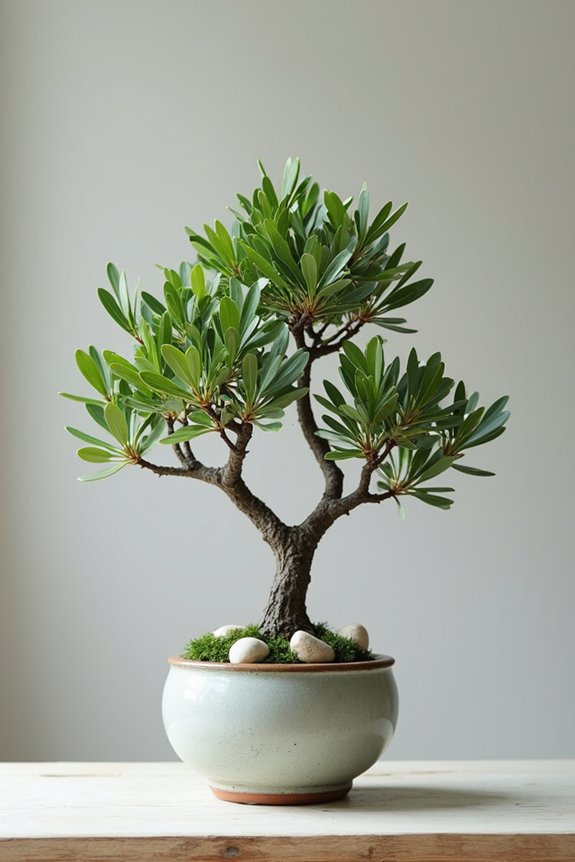
There’s something ironic about discovering that the same tiny spaces that made me feel inadequate—that cramped townhome courtyard, that narrow balcony—are actually where dwarf trees thrive.
I’ve learned that container care isn’t complicated, though it demands attention. You’re basically managing moisture levels, watering daily during hot, windy periods, then backing off to weekly during cooler months. The key? Consistency. Your dwarf trees need adequate space in their pots—larger root zones mean better growth.
| Compact Tree | Best Container Size | Watering Schedule | Winter Protection |
|---|---|---|---|
| Magnolia | 15-20 gallons | Daily-weekly | Sheltered location |
| Cherry | 20-25 gallons | Daily-weekly | Burlap wrap |
| Dogwood | 15-20 gallons | Daily-weekly | Wind protection |
| Fruit Trees | 25+ gallons | Daily-weekly | Cold frame ready |
Small spaces aren’t failures—they’re opportunities for the right botanical match.
How to Choose Small Trees by Size, Shape, and Color
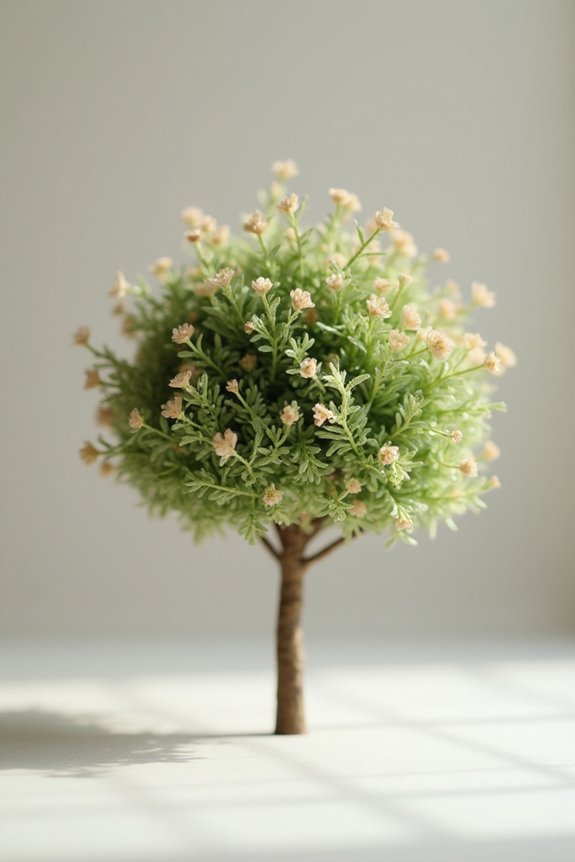
Picking the right dwarf tree feels like one of those parenting decisions where you’re simultaneously told to “let them be themselves” and “actually, here are seventeen non-negotiable requirements”—except the tree won’t resent you for it later. I’ve learned that small trees demand strategic thinking across three dimensions:
- Size matters: Most dwarf varieties top out at 5–12 feet, perfect for foundation plantings or containers without dominating your space like some overachieving houseguest.
- Shape speaks to your design intent: You’ll choose between upright formality or laceleaf weeping drama—think minimalist Zen versus that friend who’s “going through something.”
- Color carries seasons: Evergreen conifers deliver year-round presence; deciduous varieties offer spring promise and fall theatrics.
I’ve discovered that matching these elements to your specific conditions—sunlight, spacing, watering commitment—turns small trees from mere decoration into meaningful landscape components.
Four-Season Interest in Small Trees
I spent three years chasing year-round garden interest—spring blooms, summer foliage, winter bark drama—only to realize I’d planted everything too close together like a stressed parent cramming kids into a minivan, suffocating the whole operation. The truth is, achieving four-season interest requires thinking like a designer who actually plans ahead instead of me, frantically googling “why is my magnolia dying” in July while my kid spills ketchup on last year’s garden notes. You’ve got to orchestrate spring buds, summer color, and those architectural winter branches with the same precision you’d use avoiding Chuck E. Cheese on a Saturday—deliberate, strategic, and slightly exhausting but worth it.
Spring Blooms And Buds
Small trees that flower in spring remind you that winter doesn’t last forever—and honestly, there’s real value in that seasonal shift. You’ve got solid options for breaking that winter monotony:
- Redbuds and Magnolias burst with pink, purple, and early blooms before leaves even show up—a dramatic entrance for your yard
- Amelanchier delivers white spring flowers followed by berries, working overtime for your four-season landscape
- Fringe Trees offer fragrant, delicate late-spring blossoms that add botanical interest to small spaces
The practical part? Different species bloom at different times. Star magnolias kick off late winter while dogwoods follow suit in spring, letting you layer seasonal color through intentional planting. Strategic planning beats random selection, every time.
Summer Foliage And Color
While spring’s dramatic debut gets all the Instagram attention, summer’s where small trees actually earn their keep—and I’ve learned this the hard way after spending three seasons staring at a magnolia that basically checked out come July.
That’s why I’m obsessed with ornamental foliage now. Burgundy redbuds, variegated maples, bronze dogwoods—these small trees deliver sustained summer color that doesn’t quit. They’re like the reliable friend who shows up, versus spring’s flaky date who disappears.
I’ve started pairing laceleaf maples with dwarf conifers for textural contrast. One designer friend calls it “creating visual rhythm,” which sounds pretentious until you’re standing in July heat, genuinely impressed by your own yard. Persistent blooms on reblooming magnolias help too. Finally, my tree earns its square footage.
Winter Structure And Bark
once the leaves drop, you’re basically standing in front of your tree’s skeleton, hoping it doesn’t look like it lost a fight.
But here’s the thing—that bare silhouette? It’s actually your tree’s moment to shine. I’m talking about the real features worth noticing:
- Winter bark in cinnamon, gray, or peeling textures that make you forget leaves ever existed
- Compact form that stays tidy and sculptural without looking neglected or sad
- Branching structure so architectural, it works as living art
Dwarf conifers keep their year-round color while redbuds and serviceberries flaunt their bones like they’re posing for a magazine shoot. Late winter pruning emphasizes these structural branches, turning what could’ve been an eyesore into genuine four-season interest. Suddenly, your yard doesn’t look abandoned—it looks deliberate.
Keep Small Trees Healthy: Watering, Pruning, and Establishment
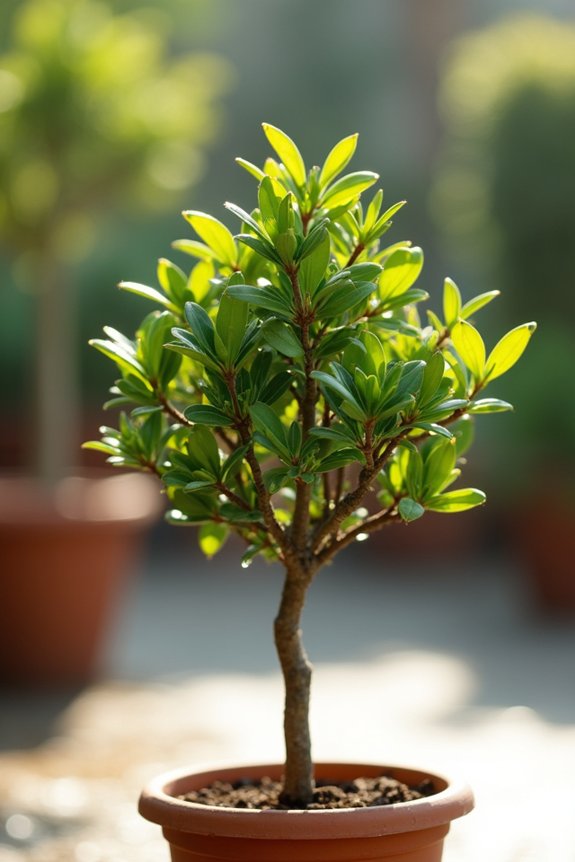
How many times have I killed a freshly planted tree by ignoring it for a week, assuming it’d figured out the whole “surviving in my yard” thing on its own? Yeah—too many. Here’s what I’ve learned: newly planted trees demand daily watering for the first 3–12 weeks, then weekly once roots establish. I now check soil moisture instead of guessing, keeping that root zone moist but not soggy. Pruning comes next. I target dead or crossing branches first, then shape conservatively in late winter when my Japanese maples won’t protest. Honestly, it’s less surgery, more gentle guidance—preserving what makes them distinctly individual. Once established with proper mulching? Minimal fuss. We can handle this.
Small Tree Companion Plantings and Understory Design
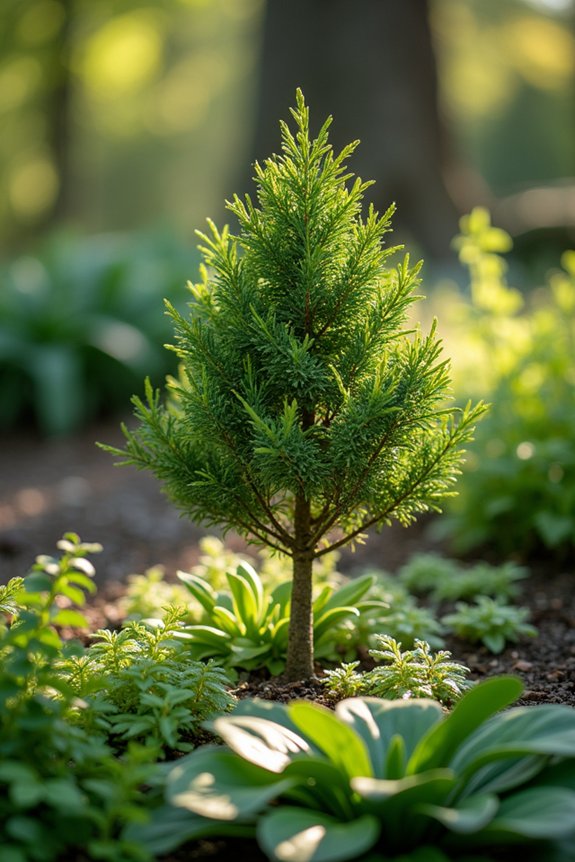
A small tree standing alone in the scene looks a bit like I do at parties—technically present, but desperately needing context to feel like it belongs. I’ve learned that companion planting creates isolated specimens into connected surroundings.
Here’s what actually works in small spaces:
- Underplanting with shade-tolerant groundcovers beneath your tree’s canopy—think hostas or sedges that create visual layers without competing for root space
- Pairing deciduous trees with evergreen shrubs so your understory maintains structure year-round, preventing that awkward winter skeleton look
- Clustering perennials around the base to anchor the design while respecting the tree’s mature spread
Designer Jinny Blom says companion planting “creates belonging through repetition and rhythm.” I call it giving my tree some actual friends. When you orchestrate these relationships thoughtfully, your small space becomes a more inviting sanctuary—moving from isolated specimen to a place that feels lived-in and intentional.