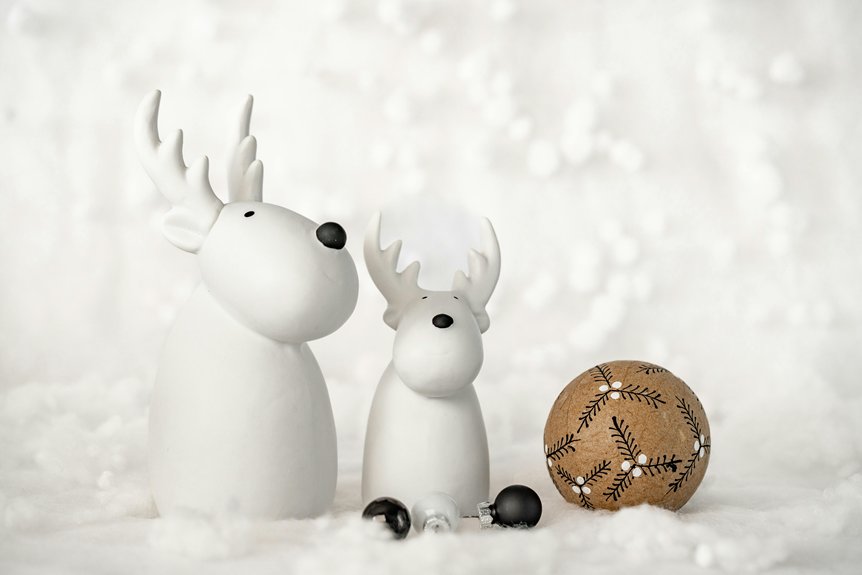
I call them tchotchkes—though my Tennessee relatives insist on “whodathunkits,” and honestly, they’re onto something. These small decorative items go by regional names that basically reveal whether you’re embracing your clutter with whimsy or admitting defeat.
Designers call ’em “accents,” but we all know what they really are: dust catchers that somehow make a blank shelf worth looking at. The terminology’s less about accuracy and more about self-preservation.
What Are Small Decor Items Called? Tchotchkes and Regional Terms
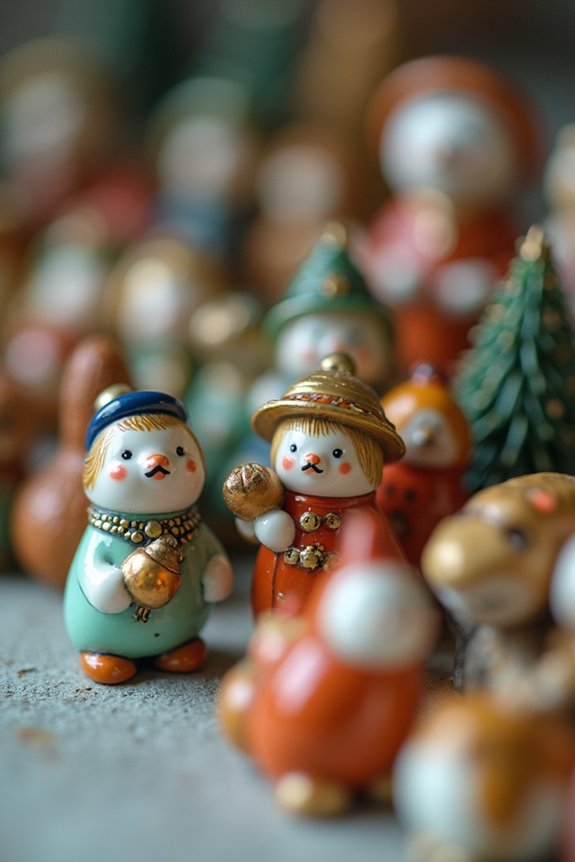
How’d you even start naming the clutter that somehow multiplies on your shelves? I call them tchotchkes—that Yiddish word that somehow feels like home, even if you’re not sure how to pronounce it. You’ve got your nick nacks, those dust catchers your mom swears she’ll organize “next weekend,” and then there’s the regional stuff: Wisconsinites call ’em sitabouts, while Tennessee folks adopted whodathunkits as family shorthand. Each term carries this gentle self-awareness, right? Like we’re all collectively admitting that our decorative choices—those Chuck E. Cheese cups, the ceramic lighthouse nobody remembers buying—aren’t exactly what you’d find in a design magazine. But here’s the thing: whatever you call them, tchotchkes or otherwise, they’re ours. They’re the proof we exist.
Regional Names That Reveal Local Flavor: Sitabouts, Whodathunkits, and Beyond
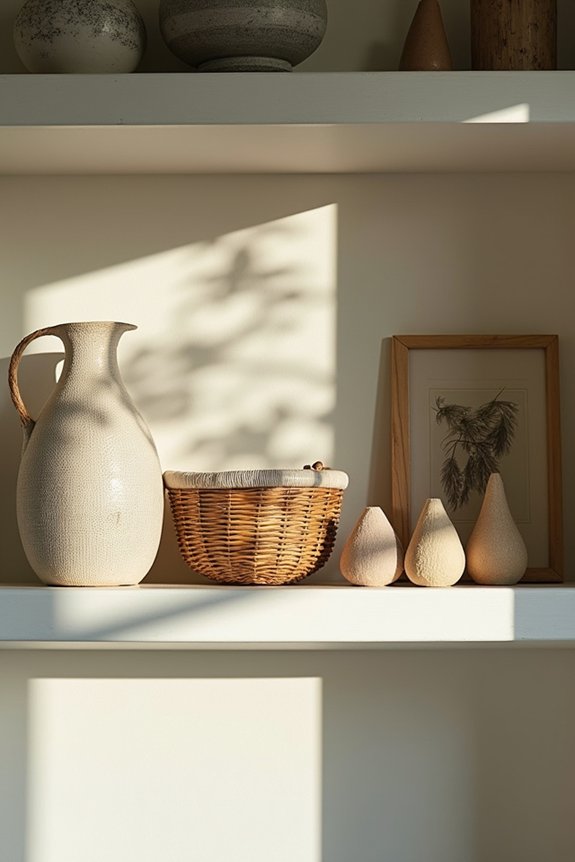
I’ve discovered that what I call “junk on shelves” has wildly different names depending on where you’re from—my Wisconsin relatives swear by “sitabouts,” while my Tennessee friends won’t stop using “whodathunkits,” which somehow makes their collection of ceramic cats sound intentional rather than like they’ve never thrown anything away. It’s hilarious how regional naming conventions give what’s really just dust-collecting chaos some personality; I’m over here envying people who can call their ketchup-stained Chuck E. Cheese cups “whodathunkits” instead of admitting they’re too lazy to do dishes. These colloquial terms—tchotchkes, nick nacks, dust catchers—prove that whether you’re being fancy or brutally honest, we’re all just trying to justify why we won’t stop buying small decorative objects that mock us from every surface.
Cultural Naming Conventions Worldwide
What you call the knickknacks gathering dust on your grandmother’s shelf probably isn’t what your Wisconsin cousin calls them—and that’s exactly the point.
I’ve realized that naming decorative trinkets reveals something deeper about who we are. Out West, they’re tchotchkes. Down South, your relatives might call them whodathunkits. Meanwhile, my Wisconsin friends swear by sitabouts, leaving me perpetually confused at family gatherings.
| Region | Term | Vibe |
|---|---|---|
| Wisconsin | Sitabouts | Cozy, understated |
| Tennessee | Whodathunkits | Quirky, curious |
| General Use | Tchotchkes | Whimsical, trinket-y |
These linguistic quirks aren’t random—they’re cultural fingerprints. When someone uses their regional term, they’re inviting you into their world, their family’s specific brand of charm. That’s belonging right there: speaking the same decorative language.
Colloquial Terms Across Regions
Ever noticed how your friend from Wisconsin gets genuinely offended when you don’t know what a sitabout is? Yeah, I’ve learned that decorative terminology varies wildly across America—it’s a linguistic minefield I didn’t know I was walking into.
Here’s what I’ve discovered about regional naming conventions:
- Sitabouts dominate Wisconsin conversations with quirky charm
- Whodathunkits capture Tennessee’s playful spirit for unexpected pieces
- Tchotchkes remain the widely recognized term most people understand
- Dust catchers serve as brutally honest descriptions we all secretly think
My parents collected those ketchup-stained Chuck E. Cheese cups, calling them “treasures” while simultaneously complaining they gathered dust. Interior designers call this contradiction “aspirational curation.” I call it hilarious. Whether you’re team tchotchkes or team sitabout, we’re all just trying to justify our decorative clutter to skeptical spouses.
Decorative Objects, Accents, and Finishing Touches: What’s the Difference?
I’ve spent years confusing decorative objects with accents—basically cramming every thrifted bowl and ceramic cat onto my shelves like I was running a clearance sale—until I realized interior designers actually distinguish between the items themselves (decorative objects), their strategic role in highlighting your design (accents), and those final, curated touches that complete the look (finishing touches). My mom’s approach was shoving everything visible in a cabinet while simultaneously leaving mysterious Chuck E. Cheese cups on the coffee table, which taught me absolutely nothing except that the difference between intentional design and chaos is, apparently, whether you can explain your choices without sounding deranged. Here’s what separates the three: decorative objects are the standalone pieces you choose, accents are how you deploy them to enhance your theme without taking over, and textiles and framed art tie everything together—a distinction that matters way more than I’d admit when defensive about my ketchup-stained throw pillow collection.
Defining Core Design Terms
Decorative objects, accents, and finishing touches sound like they’re basically the same thing—I’d know because I’ve absolutely called a throw pillow all three names in the span of one afternoon—but here’s where they actually differ.
Think of it this way:
- Decorative objects are your standout pieces—the vase that commands attention or that sculpture you actually dusted last week
- Accents are the supporting players, smaller items that work with your main design without stealing the spotlight
- Finishing touches are those final details—throws, pillows, lamps—that complete your room’s mood
- Scale and intent matter most; decorative objects dominate, accents support, finishing touches whisper
Designers group accents in odd numbers, repeat materials, and use cohesive color palettes. It’s not rocket science, but it’s definitely intentional—which explains why my random pile of stuff always looks messier than anyone else’s.
Functional Versus Aesthetic Purpose
Where’s the line between something that actually does a job and something that just sits there looking pretty? I used to think my decorative objects were basically useless—until a designer friend explained the difference. Functional items, like ottomans or shelving, earn their real estate by *doing* something. But decorative objects? They’re the visual contributors, emphasizing color, texture, form without apology. They don’t store your Chuck E. Cheese cups or prevent ketchup stains on fabric. Instead, they *feel* like they belong—which, honestly, is the whole point. My parents spent years lecturing me about practicality while surrounding themselves with vases nobody could touch. Turns out, ambiance matters. Who knew?
Wall Art and Sculptures: Creating Focal Points
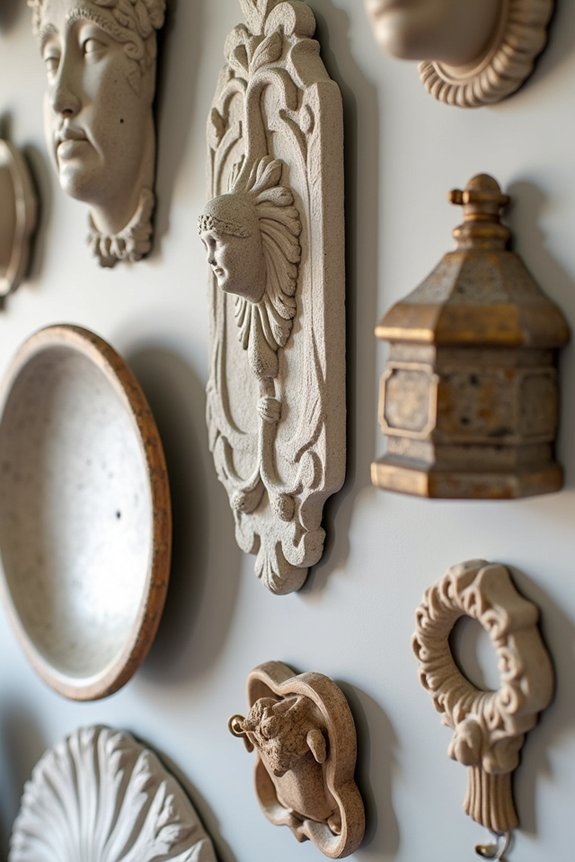
Wall art and sculptures anchor your space visually, affecting how a room functions. Consider these options:
- Abstract geometric prints energize spaces instantly
- Line art canvas prints add sophistication without effort
- Botanical wall art brings nature indoors—zero maintenance required
- Gallery walls unify scattered pieces into cohesive statements
Canvas prints are affordable, ready-to-hang, and come in sizes fitting any wall dimension. Layer textiles around your anchor piece, let it inform your color scheme, and your living room takes on a more intentional appearance.
Textiles and Lighting: Adding Warmth and Function
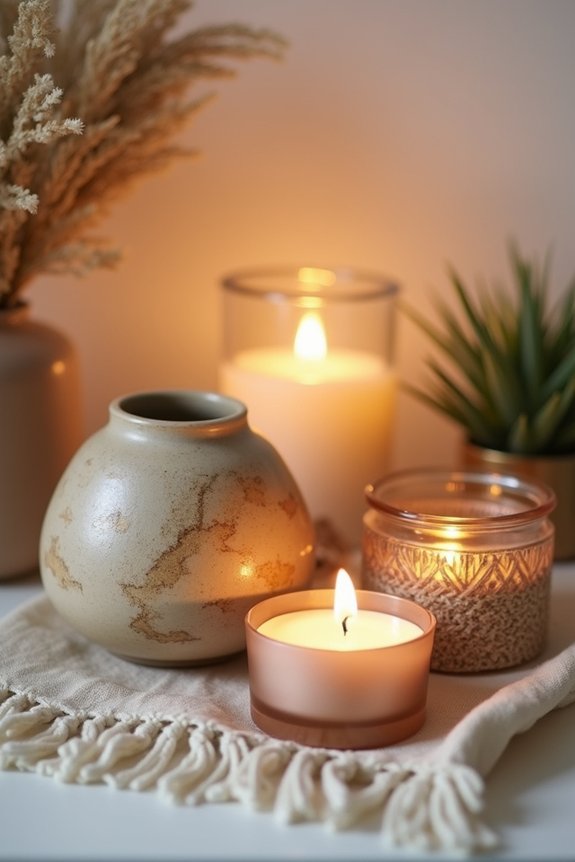
I’ve discovered that throw pillows and layered lighting work well together for making a space feel deliberate—though I’ll admit I spent three months rotating the same four pillows before realizing I could actually *buy* new ones. The practical benefit comes from combining textiles in different sizes and seasonal fabrics (cotton for summer, cozy knits for winter) with thoughtful lighting that doesn’t make your throw-pillow investment look like a crime scene under fluorescent glare. It’s the difference between a room that whispers “I have my life together” and one that screams “is that ketchup on the linen?”—and honestly, a well-placed floor lamp and a few strategically swapped cushions can bridge that gap.
Throw Pillows and Cushions
How come throw pillows somehow multiply like rabbits the moment you buy them—yet your sofa still looks like it’s staging a cry for help?
I’ve discovered that these small decor items work harder than my morning coffee. Here’s why they’re useful:
- Seasonal swaps – Cotton cushions in summer, cozy knits come fall
- Layering – Different sizes create that designer-curated vibe I’m endlessly chasing
- Color flexibility – Update your palette without demolishing your walls
- Texture play – Faux fur adds softness; linen breathes easy
Throws and blankets inject coziness while hiding mysterious stains (ketchup incidents happen). Pair them with proper lighting—table lamps, ambient glow—and suddenly your space whispers sophistication instead of screaming neglect. You’re not replacing furniture; you’re strategically refreshing. That’s what professionals call it, anyway.
Layered Lighting for Ambiance
Most of us treat lighting like we treat gym memberships—we know it’s important, we just don’t know where to start.
Here’s the thing: layered lighting changes a room from “sad dorm vibes” to “I’ve got my life together.” I’m talking ambient, task, and accent lights working together—table lamps, floor lamps, wall sconces creating depth and mood. These decor items aren’t just functional; they serve a real purpose.
| Lighting Type | Purpose | Decor Items |
|---|---|---|
| Ambient | General brightness | Ceiling fixtures |
| Task | Reading, dining | Table lamps |
| Accent | Highlight features | Wall sconces |
Pair warm-toned bulbs with textiles—throws, cushions—and suddenly your space feels inviting. The right combination makes fabrics look richer, warmer, more appealing. Your ketchup-stained sectional? Still ruined, but at least it’s beautifully ruined.
Plants and Vases: Adding Depth and Personality
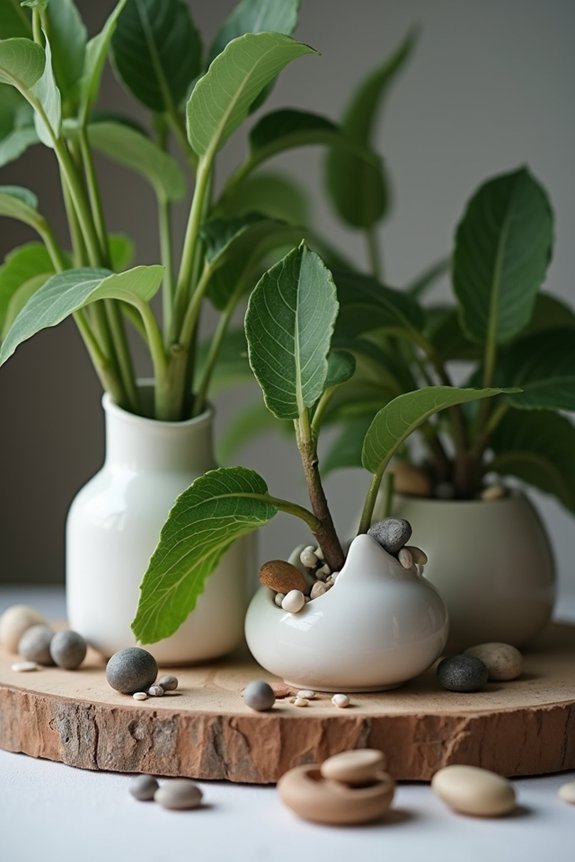
When did vases stop being just containers for sad grocery store flowers and become actual art? I used to think mine existed solely to hide dead stems—turns out, they’re doing substantial work as sculptural decor. Here’s what I’ve learned about making my space feel less like a Chuck E. Cheese waiting room:
- Group vases of different heights to create focal points that draw eyes
- Skip flowers entirely—empty vases provide personality and depth alone
- Pair tall, trailing plants with varied planter containers for vertical dimension
- Display fresh flowers on dining tables where they maximize impact
The trick? Matching plants to your lifestyle. I chose pothos because let’s face it—I’m busy. Adding greenery deepens that welcoming, three-dimensional feeling without the maintenance guilt.
Mirrors as Small Decor: Expanding Light and Space
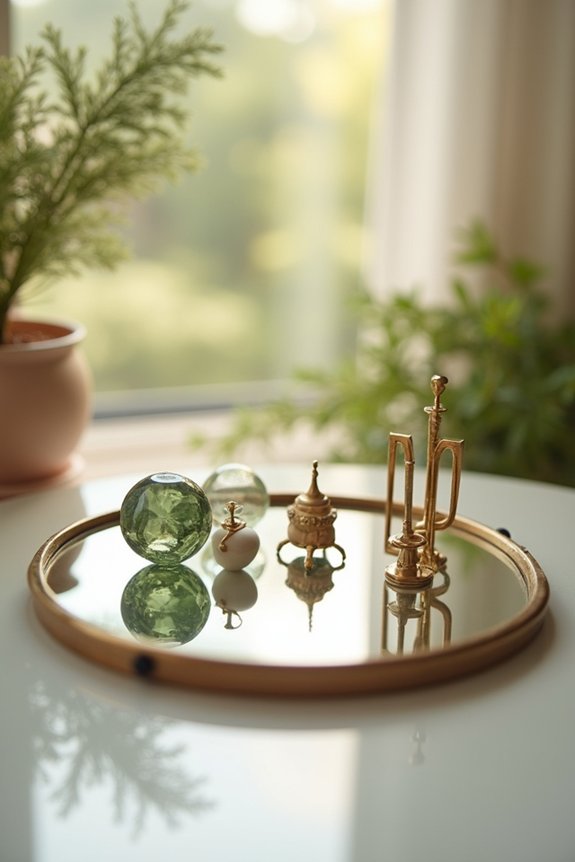
Why do mirrors feel like cheating? Because they’re basically interior design’s cheat code—and I’m totally here for it. I’ve watched mirrors work in my cramped apartment, turning what felt like a “Chuck E. Cheese storage unit” into an actual livable space. When I position them opposite windows, natural light bounces around the room. The perceived depth? It’s absurd. My tiny hallway suddenly feels doubled, which my claustrophobic brain celebrates daily.
What’s wild is how they work everywhere—entryways, bedrooms, living rooms. They’re simultaneously practical and functional, serving as actual mirrors while expanding everything around them. Match your frame style to your aesthetic—ornate for traditional vibes, minimal for modern—and suddenly you’ve got a solid design choice without the designer price tag. That’s the real victory here.
Arranging Decor With the Rule of Three
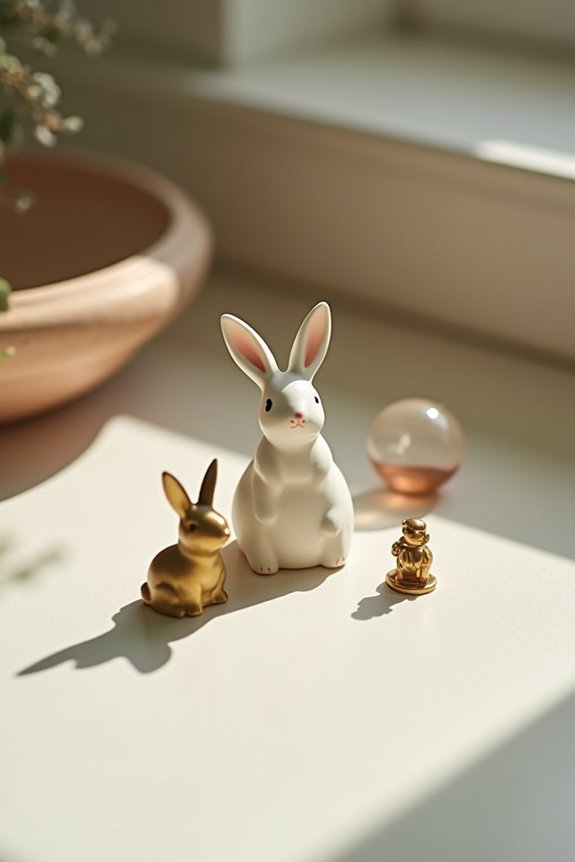
How’d I finally stop my shelf from looking like a ransacked thrift store? The rule of three—arranging decor items in odd numbers with intention. Here’s what actually works:
The rule of three—arranging decor in odd numbers with intention—finally stopped my shelf from looking like a ransacked thrift store.
- Pick a dominant anchor piece that commands attention
- Add two supporting items at varying heights for balance
- Mix textures and materials to avoid visual monotony
- Layer strategically with smallest pieces forward, tallest behind
I used to cram everything together like my mom displaying her ceramic cats. But designers know something I didn’t: constraints create elegance. Three vases—one tall ceramic, one short glass, one textured metal—suddenly my shelf looked deliberate instead of accidental. No more Chuck E. Cheese cups masquerading as decor. This approach turns chaotic collections into organized displays, which honestly feels like winning at adulting.
Budget-Friendly Small Decor: Thrifting, DIY, and Repurposing
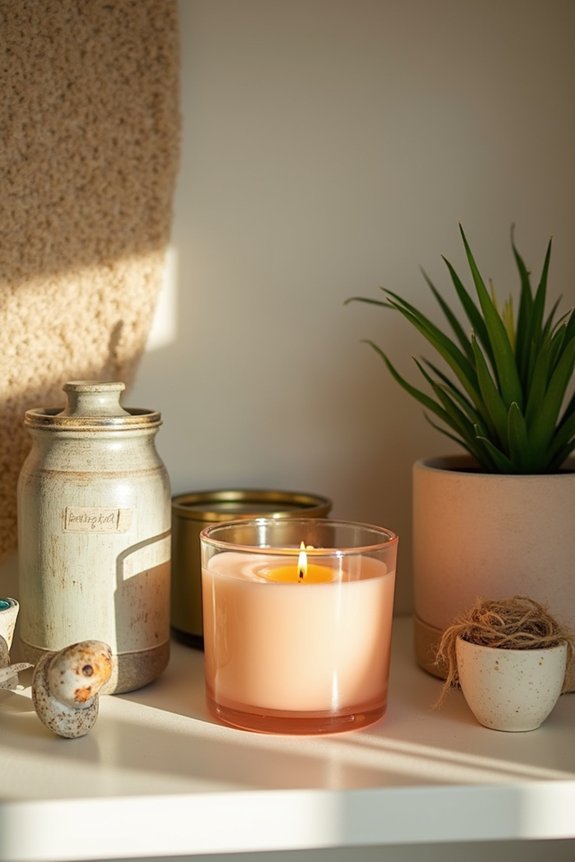
So there I was, staring at my shelf—three months post-rule-of-three enlightenment—feeling pretty smug about my aesthetic choices until I remembered I’d spent enough on those anchor pieces to fund a small vacation. Enter: thrifting, DIY projects, and repurposing. I started hunting thrift stores for vintage decor items, scoring genuine brass candlesticks for three dollars. Then came the repurposing phase—mason jars became vases, old teacups turned into candleholders. My mom called it “trash decoration.” I called it resourceful. Designer Nate Berkus once said, “Your home should tell the story of who you are,” not drain your bank account doing it. Rotating seasonal decor items and layering textiles kept things fresh while staying within budget. Suddenly, my shelf was both visually pleasing and truly mine.
Where to Source Small Decor Items on Any Budget
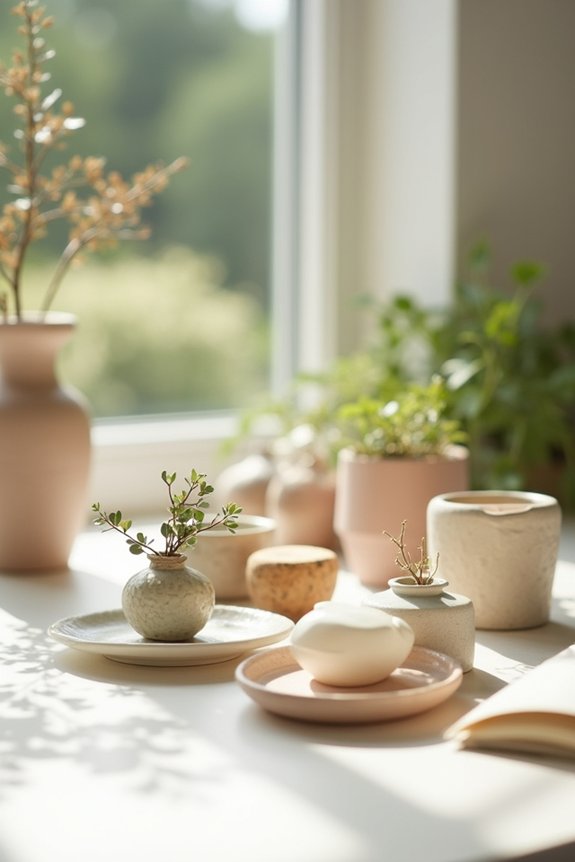
Where’s the line between “investing in your home” and “my credit card statement makes me weep”? I’ve found it—and it’s achievable.
You don’t need designer connections or a trust fund to source good decor items. Here’s where I hunt:
- Thrift stores (where vintage vases hide among the Chuck E. Cheese cups)
- DIY projects repurposing what you’ve already got gathering dust
- Budget retailers and online marketplaces for seasonal textiles
- Discount outlets stocking mirrors, candleholders, and prints
I layer affordable planters using the rule of three—suddenly my sad corner looks intentional. Canvas prints arrive ready-to-hang, adding visual interest to bare walls without guilt. Throws and cushions refresh everything seasonally without major redesigns.
The real point? You’re not decorating for anyone else—you’re building a space where you belong.
Real Signs Your Small Decor Changes Are Working
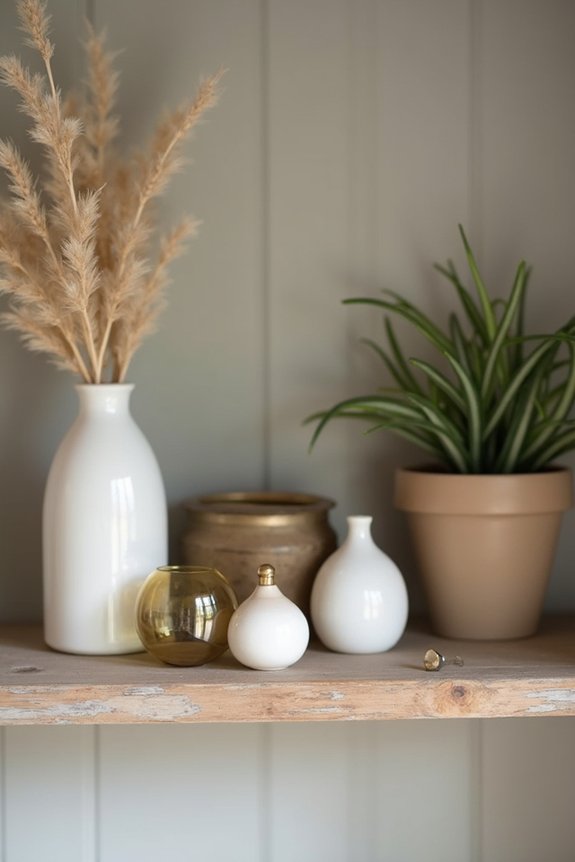
You’ll know your little tweaks are landing when people actually *linger*—not the uncomfortable “waiting for the bathroom” kind of lingering, but the genuine pause where someone notices your throw pillow arrangement and doesn’t immediately pivot to asking about your WiFi password. I’m talking real engagement: compliments that aren’t backhanded, lingering glances at your decor items instead of the dust bunny collection beneath the couch.
Your space works when textures layer without screaming chaos—pillows and throws that whisper “I have my life together” rather than “I raided a clearance bin.” Functional wins matter too. When guests navigate your living room without dodging obstacles you’d strategically placed, you’ve nailed it. Even mood shifts count: that calmer, more inviting atmosphere signals your wall art and lighting adjustments are doing their job.