
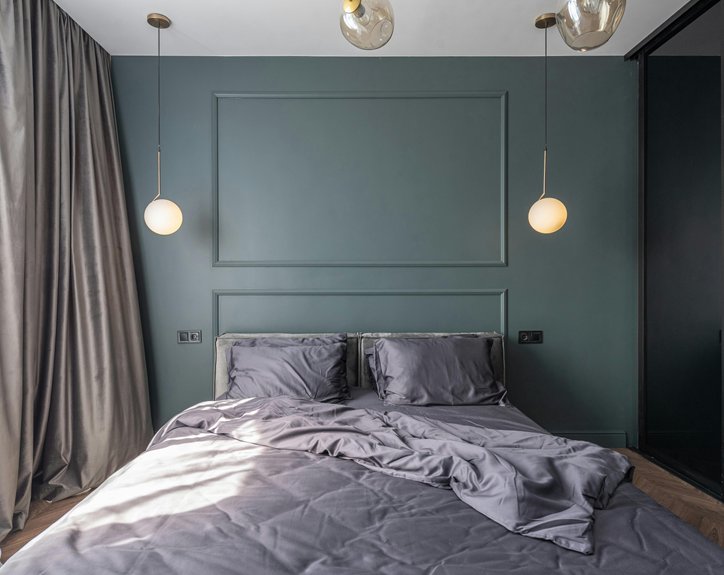
I’ve learned the hard way—after painting over ketchup stains and strategically hiding Chuck E. Cheese cups—that bedroom improvement doesn’t require a designer budget. Start by setting a hard spending limit and identifying your actual style, not Pinterest’s.
Prioritize paint and lighting, which update spaces affordably, then repurpose what you have. Choose furniture serving multiple purposes—ottomans with storage, wall beds—and layer affordable textures like velvet and faux fur.
Stick to a consistent color palette, and your space will feel planned rather than chaotic. Dig deeper to discover which tactic works best for your specific room.
Set Your Budget and Define Priorities
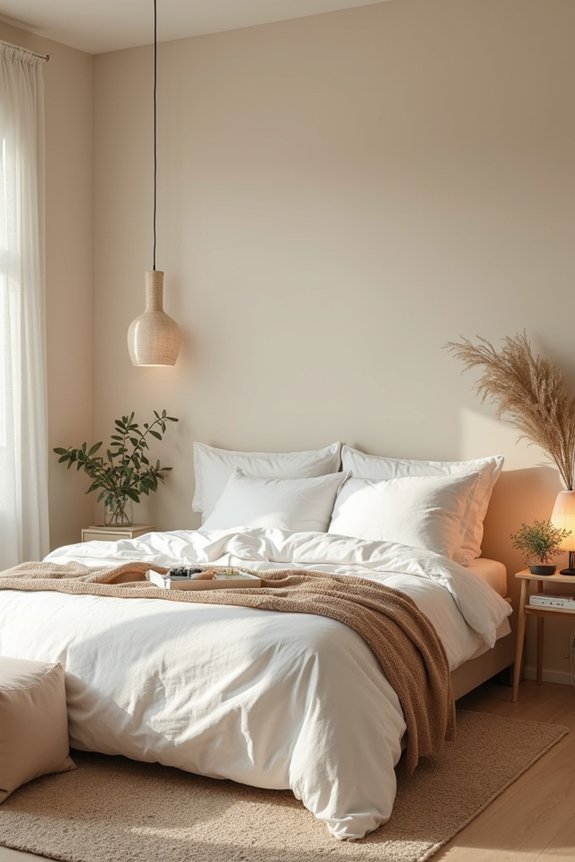
How many times have you stood in a home decor store, wallet in hand, convinced that a $200 accent chair would “really tie the room together”—only to get home and realize you’ve blown through your entire budget on one item?
Yeah, me too.
Yeah, me too. We’ve all made that impulse purchase we instantly regretted.
Here’s what actually works: set a hard spending limit before you start shopping—and stick to it like your mom stuck to her “no ketchup on the furniture” rule. I reserve 10–15% as a contingency buffer because unexpected costs happen. Research prices at local stores and online first. This cost control prevents impulse buys and helps you make deliberate decisions instead of acting on whim.
When you define what matters most—lighting? Paint? New pillows?—you’re not just spending money. You’re making intentional choices that align with your vision, not some designer’s Instagram fantasy.
Find Your Style Before You Shop
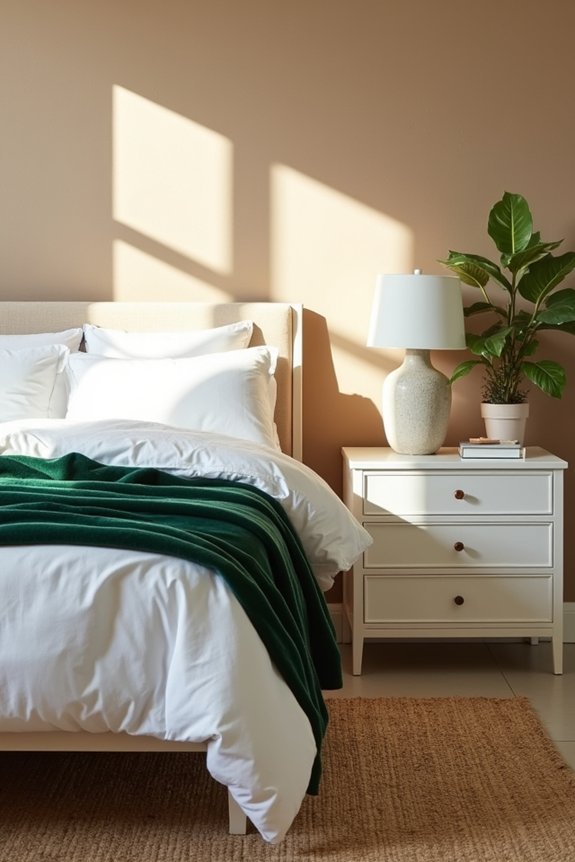
Before I’d drop cash on a single throw pillow, I realized I needed to figure out what I actually wanted—not what my mom insisted looked “nice” or what influencers were cramming into their perfectly lit corners. Taking a free interior design style quiz felt ridiculous at first (I mean, multiple choice about fabric preferences?), but it stopped me from buying that bohemian macramé wall hanging that’d clash with my mid-century modern nightstand. Once I knew my style, every purchase became a filter: Does this fit my vibe, or am I just impulse-buying because it’s on sale and reminds me of that guest bedroom I envied in 2019?
Discover Your Personal Style
When I first tried decorating my bedroom solo, I bought a bohemian throw pillow, a mid-century modern nightstand, and some cottagecore wall art—then wondered why it all looked like a design identity crisis. That’s where a style quiz helped. Taking one let me identify my actual preferences instead of impulse-grabbing whatever caught my eye that week. The quiz clarified what I genuinely loved: colors, textures, furnishings—basically, my consistent theme. Suddenly, shopping felt purposeful rather than chaotic. I wasn’t wandering Target like my parents at Chuck E. Cheese, grabbing random stuff. By discovering my personal style upfront, I budgeted smarter, avoided costly mistakes, and created a bedroom that actually felt like *mine*—consistent, deliberate, and complete.
Align Purchases With Preferences
Why’d I spend thirty bucks on a macramé wall hanging that clashed with literally everything else in my room? Because I skipped the style quiz—that’s why. Taking one before shopping changed my entire budget strategy. Here’s what I discovered:
- My style quiz revealed I’m boho-minimalist, not maximalist chaos
- Knowing this steered my color choices toward warm neutrals instead of impulse buys
- I prioritized multipurpose pieces that actually fit my aesthetic
Now my purchases align with my preferences. Each item reinforces a unified decor rather than fighting it. Interior designer Emily Henderson says, “Your style is your compass”—and she’s right. By identifying what I genuinely like first, I stopped wasting money on trend pieces that’d sit gathering dust. My budget went further because every purchase served my established theme.
Plan Your Spending: Paint, Lighting, and Furniture
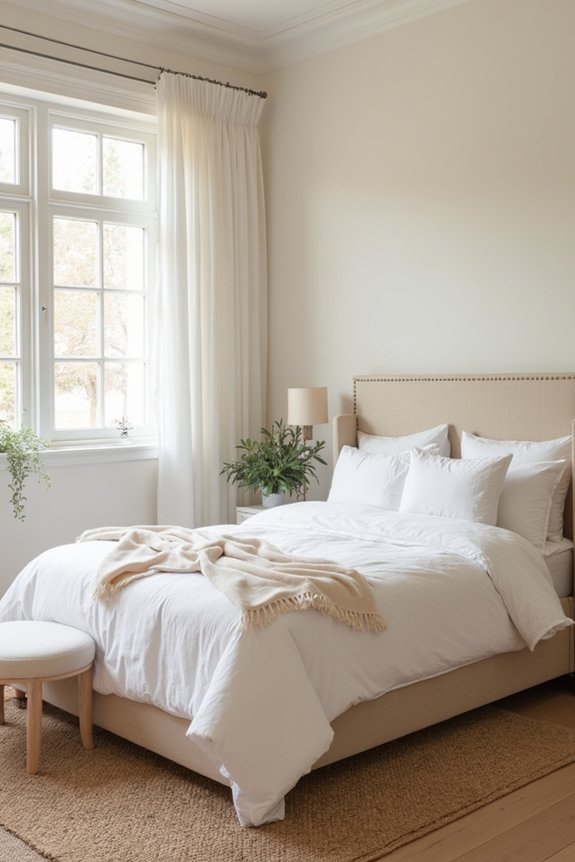
How’d you like to redo your bedroom on a $400 budget? I started by setting a hard spending limit, which my optimistic self thought covered everything. Spoiler: it didn’t, but that’s why I reserved 15% as a contingency buffer. Paint became my approach of choice. A fresh coat costs maybe $50 in materials, and honestly, watching dingy walls change was satisfying work I’d actually created myself. Next, I tackled lighting. Swapping out old fixtures for budget-friendly options instantly brightened everything—literally and metaphorically. For furniture, I researched prices obsessively online and at local stores before committing to anything. The DIY approach meant I’d paint and assemble myself, saving hundreds. These high-impact, low-cost updates? They’re the real MVP of bedroom renovation.
Refresh With Paint Color and Better Lighting
I’ve learned the hard way that slapping paint on walls without a strategy is like my mom telling me to “just wear what’s in your closet”—theoretically sound, completely unhelpful—so I’m tackling paint color selection and lighting upgrades as the one-two punch that actually works in a bedroom without costing much. A fresh coat of paint on an accent wall costs next to nothing compared to new furniture, and pairing it with layered lighting (think dimmed overheads plus a task light or two) creates actual depth instead of that flat, Chuck E. Cheese birthday-party vibe I used to have. Here’s the thing: the right color becomes your design anchor, guiding everything from bedding to accessories, while upgraded bulbs and fixtures do the work of setting a mood—no designer needed, just deliberate choices.
Paint Color Selection Strategy
When you’re staring at a blank bedroom wall at 11 p.m., scrolling through paint swatches on your phone like you’re dating apps for your decor, here’s the truth: that color you picked under fluorescent lighting at the hardware store will look completely different once it’s on your walls—I’ve got a “Soft Sage” accent wall that’s apparently “hospital waiting room green” depending on the time of day.
Here’s my strategy that actually works:
- Test large swatches on multiple walls at different times—morning, noon, sunset—because lighting changes how you perceive color
- Layer your lighting with ambient, task, and accent options to see accurate color representation
- Start with an accent wall, not full commitment, letting you define your room’s mood without total repaint anxiety
Your paint color choice sets everything else—textiles, furniture, decor—so take your time. I won’t judge your “hospital waiting room green.”
Lighting Upgrade Impact
Now that you’ve picked your paint color—and hopefully it doesn’t look like a hospital waiting room in your actual lighting—it’s time to tackle the thing that’ll actually make or break whether anyone can see that color: your lights.
Here’s the thing: I grew up under fluorescent panels that made everyone look like extras from a zombie film. My mom insisted they were “practical.” Turns out, she was wrong—and inexpensive doesn’t mean settling for that institutional vibe.
Start by switching to energy-efficient bulbs, then layer your lighting with overhead, task, and ambient fixtures. Add dimmers to overhead lights. Strategic placement near your headboard, artwork, or reading nook changes the feel of your room instantly. You’re not just upgrading fixtures; you’re engineering mood. Your bedroom becomes a space you actually want to spend time in, not a basement recreation of institutional design.
Upcycle and Repurpose What You Already Own
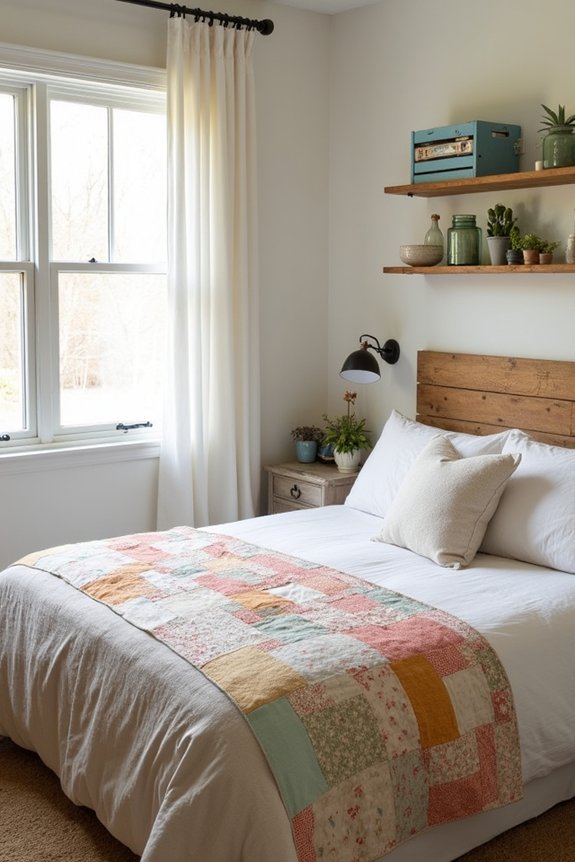
Why buy new when you’ve got a closet full of stuff that’s basically been waiting for its comeback tour?
Why buy new when your closet holds forgotten treasures just waiting for their comeback tour?
I’ve learned that upcycling brings forgotten pieces back into use. Here’s how I’m doing it:
- Reupholster that sad headboard with budget-friendly fabric—suddenly it’s a bold focal point without dropping cash on new furniture
- Repaint and swap hardware on dressers gathering dust, giving them fresh life that feels deliberate rather than hand-me-down
- Repurpose unused items like old picture frames or storage boxes to serve new functions
The benefit? Using what’s already around reduces purchases while coordinating finishes creates cohesion. I’m not replacing anything; I’m resurrecting it. These removable updates—fabric covers, paint, simple swaps—let me change my mind tomorrow without commitment or guilt. Budget-friendly doesn’t mean compromising style; it means getting creative with what you’ve already got.
Choose Furniture That Does Double Duty
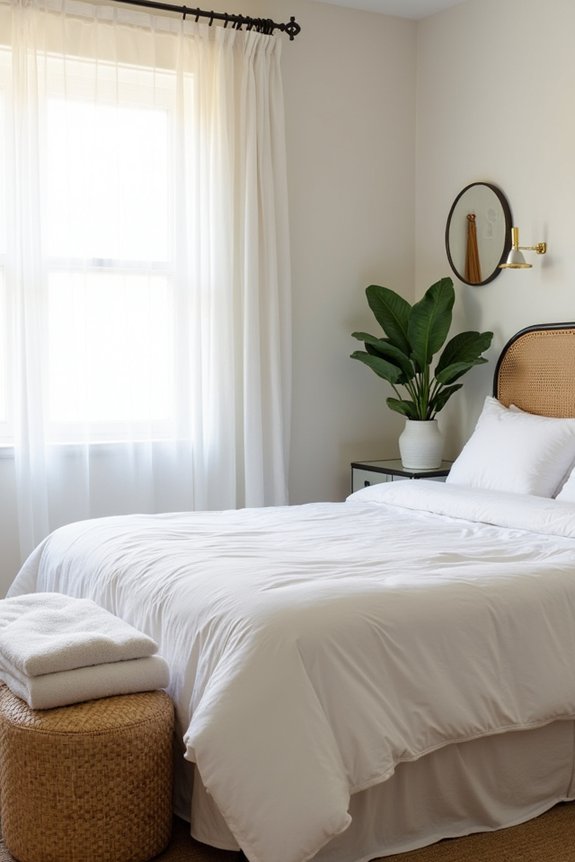
Once you’ve squeezed every drop of potential from what’s already hanging around your room, it’s time to think smarter about what you actually bring in—because let’s face it, bedroom real estate is precious, and I’m not about to waste it on a nightstand that just sits there looking decorative like some kind of furniture trust fund.
Multipurpose furniture makes your space work harder. I’m talking ottomans with hidden storage, sofa beds that moonlight as guest accommodations, and upholstered benches that handle seating, storage, and display duty simultaneously. A Murphy bed practically doubles your daytime square footage—suddenly you’ve got actual floor space instead of a mattress monument.
| Piece | Function | Storage | Guest-Ready | Budget |
|---|---|---|---|---|
| Ottoman | Seating | Yes | Optional | $ |
| Sofa Bed | Seating/Sleeping | Some | Yes | $$ |
| Wall Bed | Sleeping/Space | No | Yes | $$$ |
| Bench | Seating/Display | Yes | No | $ |
| Dresser | Storage | Yes | No | $$ |
Hidden storage quietly declutters while space-saving design means you’re not drowning in furniture.
Layer Textures and Soft Furnishings Affordably
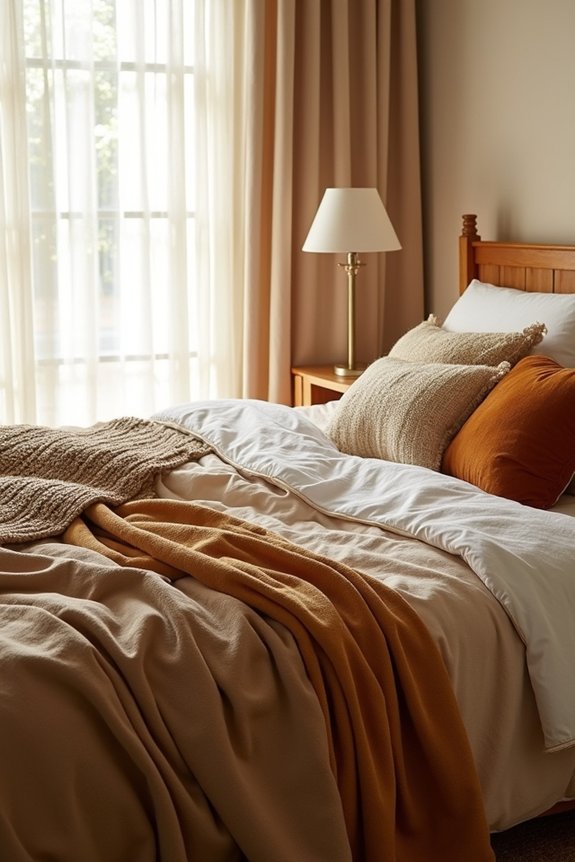
Here’s where I finally figured out that you don’t need a designer’s salary to make your bedroom feel like something other than a dorm room where someone spilled ketchup on the walls—you just need blankets, throws, and pillows in different textures stacked like you’re building a fort for adults.
I’m talking layering:
- Faux fur, velvet, and knit textiles create tactile depth without furniture replacements
- Budget-friendly rotating combinations of bedding and curtains refresh your space seasonally
- Oversized rugs plus plush cushions define comfortable zones and warm cold floors
Mix soft bedding with textured wallpaper and herringbone flooring to keep things visually interesting while your color palette stays consistent. Pair neutral bases with subtle metallics or patterns—rich without the renovation cost. You’re basically creating a personal retreat on a tight budget, which honestly feels like winning.